HMP Winchester was unsafe, dilapidated and failing to keep prisoners occupied, inspectors found in a report published in January 2025.
HM Inspectorate of Prisons visited the jail between 7 and 18 October 2024. It gave Winchester its lowest grade in three of its four healthy prison tests. Many concerns from the previous inspection in 2022 remained unresolved, and outcomes had grown worse in many critical areas.
The findings led the inspectorate to invoke its Urgent Notification protocol. Under this formal step, the inspectorate writes to the Secretary of State to raise urgent concerns about a prison.
This was the fourth inspection of Winchester since 2016. Inspectors wrote that “it continues to be a persistently underachieving prison”.
How inspectors graded Winchester
Inspectors judge every prison against four healthy prison tests: safety, respect, purposeful activity and preparation for release. Purposeful activity covers education, work and time out of cell.
Winchester scored poor, the lowest of four grades, for safety, respect and purposeful activity. It scored reasonably good for preparation for release. The report said only this area showed anything approaching capable or effective practice.
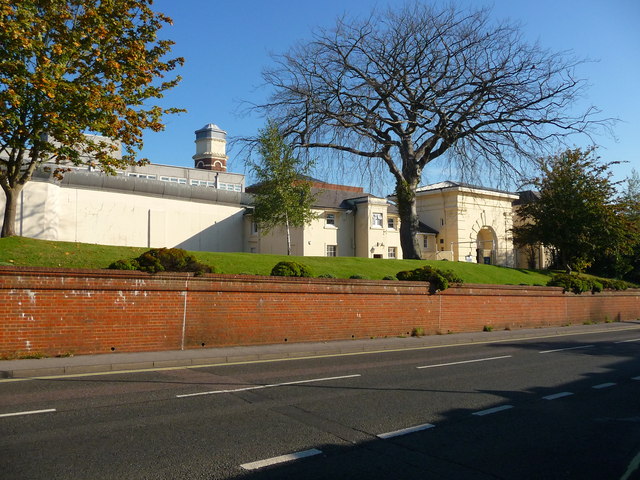
Winchester is a category B reception prison, built in 1849 to a Victorian radial design. It could hold up to 649 adult men from across southern England, most of them on remand or newly convicted. It held 625 during the inspection.
Another 129 longer-term category C prisoners lived on adjacent units known as West Hill and the Hearn unit. Inspectors had previously assessed the two sites separately. This time they assessed them together.
In 2022, the main site scored poor for safety and purposeful activity, and not sufficiently good for respect and for rehabilitation and release planning. Respect had therefore dropped a grade, while release work had risen by one.
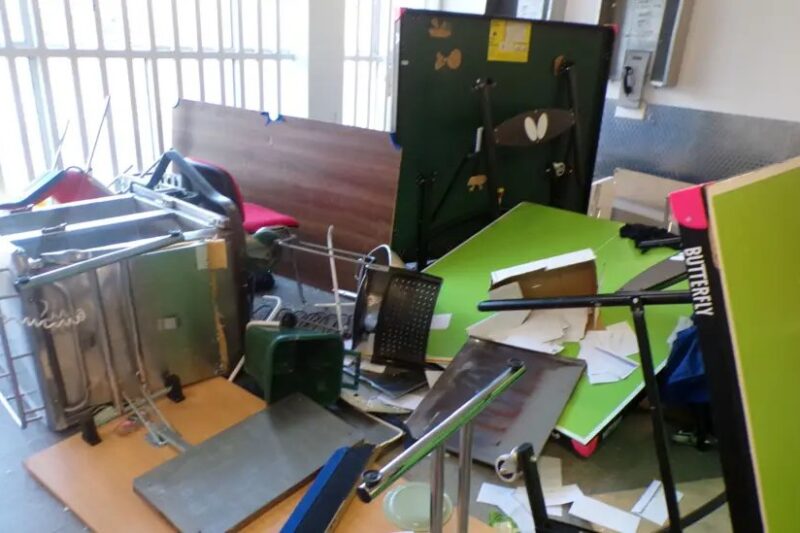
The prison environment was dilapidated, neglected and filthy, with the standard of accommodation very poor.
HM Inspectorate of Prisons report
Violence, drugs and self-harm
Violence had increased since 2022 and stood at a very high level. Serious assaults on staff were the highest of all reception jails. Serious assaults on prisoners were the second highest.
Prisoners told inspectors that drugs, debt and frustration fuelled the violence. They said staff failed to deal reliably with even their most basic requests. Actions to reduce violence lacked coordination and had little impact.
In the inspectorate’s survey, 47% of prisoners said illicit drugs were easy to get. The prison itself rated the supply of illicit items as a serious security risk. Even so, all drug testing stopped for five months during 2024. When random testing resumed in August, 41% of tests came back positive.
Physical security also had weaknesses, including the basic fabric of the prison. More than a third of CCTV cameras did not work.
The rate of self-harm had risen and was the third highest of all reception prisons. Inspectors also found high use of force and of unfurnished cells. They could not be confident that staff recorded every use of PAVA spray, batons and unfurnished accommodation accurately.
There was one clear positive. Inspectors praised new training for officers in naloxone, an opiate reversal agent, which they said was saving lives.
Filthy cells and long hours locked up
Living conditions drew some of the strongest criticism. The report said: “The prison environment was dilapidated, neglected and filthy, with the standard of accommodation very poor.”
Many cells had graffiti, often offensive, along with broken furniture and damaged phone sockets. Cold and poorly ventilated cells suffered from damp and mould. Inspectors questioned whether some cells were fit for habitation.
The problem extended to first night cells, a particular risk in a prison with a high turnover and daily new arrivals. Only a quarter of surveyed prisoners said staff offered them a phone call on arrival. Some men waited weeks before the prison approved their family phone numbers.
Most prisoners spent only 2.5 hours a day out of their cells. Inspectors’ checks found fewer than a third of men in purposeful activity during the working day. Ofsted, which inspects prison education, rated the overall effectiveness of education, skills and work as inadequate.
There were too few places in education and work, and the curriculum lacked ambition. Men were bored, and few could get to the gym or library. In the segregation unit, cells had no table, chair or electricity, and prisoners could not shower each day.
Health services operated from unsafe, dirty and unsuitable clinical rooms. Staff vacancies hit mental health and psychosocial care in particular.
Leadership and what needs to change
The report found clear failings in leadership. Winchester had recruited a full complement of prison officers, and relationships between staff and prisoners were benign. However, too many staff lacked competence and confidence. Some middle managers showed motivation, but most lacked experience.
Leaders had not made processes work consistently, enforced standards or met prisoners’ basic needs. The prison group director recognised the jail’s problems, and a support programme run by His Majesty’s Prison and Probation Service (HMPPS) had recently drawn up a delivery plan. Neither had yet had any effect.
Inspectors called the poor outcomes systemic failings under the oversight of HMPPS. They said the prison would need sustained support and investment to provide decent conditions and operate effectively.
In 2022, inspectors made 26 recommendations, 12 of them about key concerns. The prison had achieved none of those 12. Three were partly achieved and nine were not. This time inspectors set out 15 key concerns, seven of them priorities.
Inspectors did find good work in some areas. The Saints Restart project, linked to Southampton Football Club, offered mentoring and sport to men from the Southampton area after release. The family services provider, Spurgeons, had funded extra staff and gave strong support to fathers.
Since this report
Inspectors have reported on HMP Winchester again since, with a full inspection published in May 2026. This article covers the findings of the January 2025 report only.
About this story
This story is based on HM Inspectorate of Prisons’ report on HMP Winchester, published on 21 January 2025, following an inspection that ended in October 2024. It covers an earlier inspection: the prison’s profile has the latest findings. All figures and judgements are the inspectorate’s. Read the full inspection report · See the prison’s profile in our directory.