The Scottish Prison Service (SPS) says a disturbance at HMP & YOI Polmont was the worst disorder in its prisons for more than ten years.
About 30 prisoners took part in the incident on 26 September. The SPS called in prison officers from four other jails to restore control. Several officers suffered minor injuries.
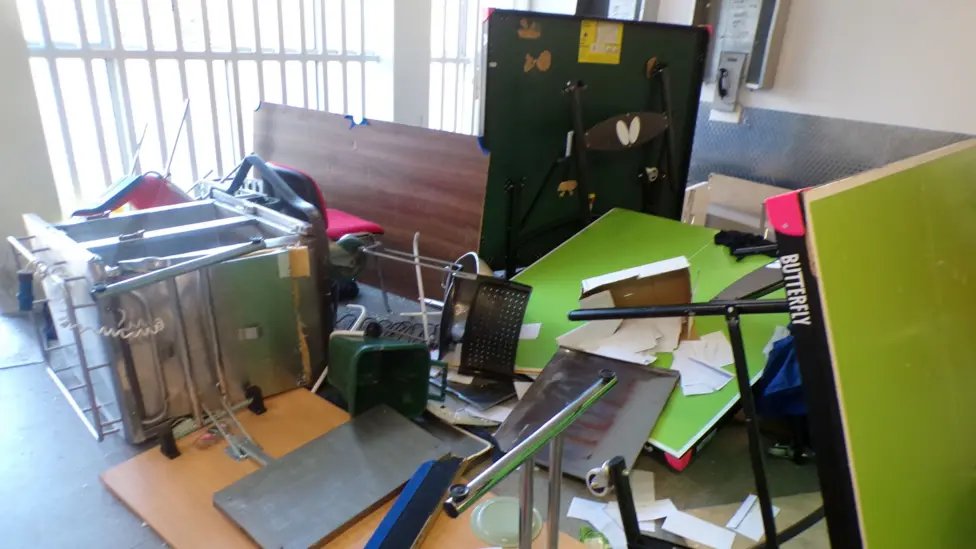
The SPS has released photographs of the damage. Panelling was torn out, furniture lay broken and strewn across a hall, and a glass window had cracked and shattered.
Overcrowding and tension
Linda Pollock, the chief executive of the SPS, linked the disorder to “bubbling tension” caused by growing overcrowding. She said the outbreak was “not unexpected”. The number of people in custody has risen sharply, adding to the strain.
She said people in custody were becoming frustrated by overcrowding and by fewer chances for rehabilitation. “We are seeing bubbling tension across the estate,” she said. “We pushed our prisons to the brink and now we are at the brink.”
Ms Pollock warned that a further predicted rise in prisoner numbers would make it impossible to hold people safely and protect the welfare of staff. She pointed to water supply problems at HMP Barlinnie as a sign of the estate’s “fragility”.
She warned of a serious risk of disorder “last seen in the 1980s” unless conditions improved. In her view, the system was “close to breaking point” and needed changes to stop it breaking. Scotland’s jails now hold about 8,500 people.
Political pressure
The Scottish Government is looking at reforms to “achieve a sustainable prison population”, according to Justice Secretary Neil Gray. He faced criticism in the Scottish Parliament for not telling MSPs the full scale of the disturbance.
Phil Fairlie, Assistant Secretary of the Prison Officers’ Association (POA), called the situation “shocking and depressing”. He said the SPS could reach the point of “saying the doors are shut” to new arrivals. That would happen if projected rises in prisoner numbers proved accurate.
Mr Fairlie said the union had always warned that early release would bring only “temporary relief”. In its view, newly convicted prisoners would quickly take up the spaces it freed.
He called for urgent action on the shortage of prison places and on understaffing. He also urged far better support for POA members working on the front line under what he called intolerable pressure.