
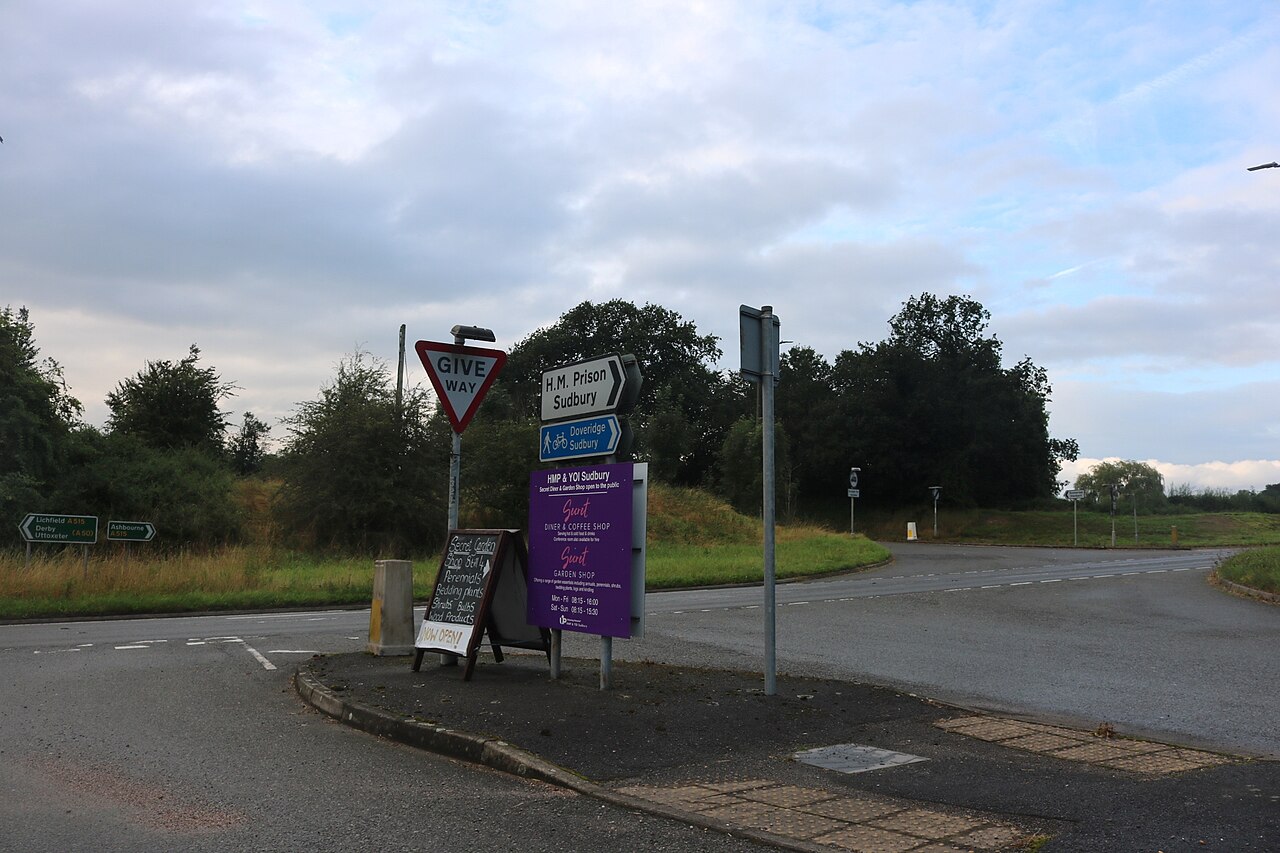
HMP & YOI Sudbury, an open prison in Derbyshire, had sustained its earlier success and improved its work on release planning, according to HM Inspectorate of Prisons. However, inspectors found that too many men were using drugs.
The inspectorate’s report, published in October 2023, followed fieldwork that ended in August 2023. It was the first full inspection since 2017. The Chief Inspector of Prisons, Charlie Taylor, found clear and visible leadership at every level and “a real sense of purpose about the prison and what it could achieve”.
Sudbury, near Ashbourne, is a category D open prison for adult men and young adults. Category D prisons hold men judged suitable for open conditions as they prepare for release. It held 603 men at the time of the inspection, against an operational capacity of 621.
Grades hold and one improves
Inspectors assess adult prisons against four healthy prison tests: safety, respect, purposeful activity and rehabilitation and release planning. Purposeful activity covers education, work and time out of cell.
In 2017 Sudbury achieved reasonably good outcomes in all four areas. This time it scored reasonably good for safety, respect and purposeful activity. Rehabilitation and release planning rose to good, the inspectorate’s highest assessment.
Inspectors also carried out a short scrutiny visit during the Covid-19 pandemic in 2021. That visit did not result in grades. Of the six key recommendations made then, the prison had achieved four, partly achieved one and not achieved one.
This time inspectors identified six key concerns, five of them priorities. They also found three examples of notable positive practice.
Leaders were honest in their assessment of the prison’s strengths and weaknesses and had a firm grip, leading to a real sense of purpose about the prison and what it could achieve.
Charlie Taylor, HM Chief Inspector of Prisons
Safe, but drugs getting in
Inspectors described the prison as overwhelmingly safe. New arrivals received good care, and violent incidents were rare. Very few men in the survey said they had ever felt unsafe, although a few said others had victimised them. Staff used force and segregation infrequently, and inspectors noted improvements in how leaders managed both.
Drugs were the main safety concern. Mandatory testing showed a positive rate of about 20%, more than at comparable prisons. Inspectors also heard of a recent death of a prisoner, attributed to a drug overdose.
The report made illicit drugs the first priority concern. It said not enough had been done to cut either supply or demand. Leaders had a drug strategy with sensible targets, but they lacked the resources for many searches or tests based on suspicion. A new incentivised substance-free living unit was not yet fulfilling its purpose.
Inspectors also found a comparatively high number of men sent back to closed prisons. Leaders did not routinely study the reasons for these failures in open conditions.
Old buildings, attractive grounds
The site was built in the late 1930s as an American Air Force hospital and became a prison in 1948. Many buildings and living areas were old and grubby. Men lived in 18 dormitories, each holding between 10 and 32 people, and in 80 modular pods with en suite facilities.
Leaders had found imaginative ways to fund repairs. They used income from external companies running workshops at the prison, and skilled prisoners refurbished showers and replaced windows. Inspectors said the accommodation still needed substantial investment from HM Prison and Probation Service.
Men also struggled to get cleaning materials and to wash clothes and bedding. In the survey, only 46% said their room had been clean on their first night. The grounds, by contrast, were attractive and well kept.
Relationships between staff and prisoners were respectful. Peer workers and better consultation arrangements supported this. Inspectors praised genuine enthusiasm in work to promote equality, with leaders using data to find disparities. They found few unequal outcomes.
Work, family ties and release
Nearly all men had an education or work place. Release on temporary licence, known as ROTL, lets men leave the prison for work, training or family contact. Sudbury used it extensively, and almost a third of men had jobs in the community.
Ofsted, which inspects prison education, graded education, skills and work as good. Inspectors still wanted more enrichment activities for men to develop interests and talents. They also wanted more detailed careers advice. The sports field was out of bounds unless a PE instructor supervised.
Support for family ties was very good, both inside the prison and through temporary release. Inspectors described partnership working on offender management and release planning as excellent. A through-the-gate hub brought prison staff and outside partners together in a drop-in resettlement service.
Inspectors praised talks by former prisoners about their experience of paid work. They also highlighted young adult peer ambassadors who visited closed prisons to explain how to progress to open conditions.
One key concern remained in public protection. Screening was not always prompt, and staff did not always manage measures to reduce risk well.
About this story
This story is based on HM Inspectorate of Prisons’ report on HMP & YOI Sudbury, published on 30 October 2023, following an inspection that ended in August 2023. All figures and judgements are the inspectorate’s. Read the full inspection report · See the prison’s profile in our directory.



