
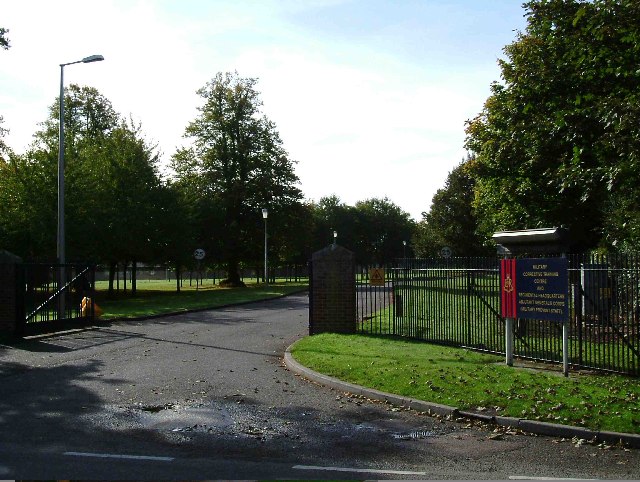
The Military Corrective Training Centre (MCTC) in Colchester achieved good grades in three of the four areas inspectors assess. The inspectorate’s report, published in May 2022, found that “a strong supportive and rehabilitative culture permeated the centre”.
Inspectors also restated a concern from earlier visits. Some detainees convicted of violent offences, who could continue to pose a risk to the public, received no supervision after release. The Armed Forces Act 2006 did not allow for it. The report noted that “there was no supervision for those convicted of a domestic violence offence who could return to their families”.
The MCTC is the Ministry of Defence’s single central custodial facility. It holds service personnel detained under Armed Forces law, and civilians subject to service discipline can also be held there. It held 33 detainees at the time of the inspection, against an operational capacity of 323. Inspectors completed their fieldwork in January 2022.
How the centre was graded
Inspectors judge custodial establishments against four healthy establishment tests: safety, respect, purposeful activity, and rehabilitation and release planning. Purposeful activity covers education, work and time out of cell. Each test receives one of four grades: good, reasonably good, not sufficiently good or poor.
The MCTC scored good for safety, respect and purposeful activity. It scored reasonably good for rehabilitation and release planning.
Compared with the previous inspection in 2017, outcomes stayed the same in three areas and improved in one. Purposeful activity rose from reasonably good to good. Inspectors said the centre had maintained the high standards seen in past inspections and responded impressively to earlier recommendations.
At the 2017 inspection, inspectors made 23 recommendations, one of them about a key concern in rehabilitation and release planning. This time they found that recommendation partially achieved.
A strong supportive and rehabilitative culture permeated the centre where a well-led and well-trained staff team knew the detainees well and offered very good levels of support and care.
HM Inspectorate of Prisons report
A safe and respectful centre
Inspectors found very few incidents of violence. There had been no self-inflicted deaths since inspectors started visiting the centre in 2004. Staff recorded no incidents of self-harm since the last inspection.
Staff had not used force at all in the previous year, and only five times since 2017. Two of those incidents involved full restraint techniques. The availability of drugs or alcohol was negligible.
Relationships between staff and detainees were excellent. In the survey, 93% of respondents said most staff treated them with respect. A further 86% said they had a member of staff they could turn to with a problem. Living conditions were good and inspectors called the food impressive.
The centre also handled the pandemic well. It avoided long lockdowns, and education stopped for only a matter of weeks. A new video calling system helped detainees keep in touch with family and friends, including relatives overseas.
Some weaknesses emerged. Some measures for low-risk detainees were disproportionate, such as checks three times an hour and night lights left on all night. The centre had no adult safeguarding policy. Inspectors were concerned that staff had not investigated a serious safeguarding allegation appropriately. Only around half of detainees who complained felt the centre had dealt with their complaint fairly.
Education, training and time out of rooms
Every detainee spent at least 12½ hours a day unlocked, with ample time in the open air. All had daily access to structured gym sessions. The library opened every day, with a qualified librarian on site three days a week.
A new leader had rejuvenated education, which focused on literacy, numeracy and employability skills. Detainees leaving the armed forces took employability courses on writing CVs and interview skills. Inspectors said these prepared them well for civilian life. Those staying in service kept up their military skills through training.
Detainees showed a positive and mature attitude to learning. Tutors gave useful feedback, and much of the work exceeded course requirements. Detainees did not always receive enough support to improve their English, however. Leaders also had no suitable way to track the jobs detainees went on to after discharge.
Preparing detainees for release
The population had changed since 2017. Detainees now served longer sentences, with half serving over a year, and most would leave the armed forces. The centre can hold detainees sentenced to a maximum of two years.
Work to reduce reoffending lacked a detailed strategy based on an analysis of need. The partnership with Essex Probation Service was developing well. Almost all detainees completed Choices, a short cognitive behavioural group course. Those convicted of sexual offences and domestic abuse had just begun one-to-one work with probation staff.
The pandemic had restricted chances for detainees to work outside the centre before discharge. Inspectors said the centre needed to build links with local employers as restrictions eased. Weekend town visits lacked structure and robust risk assessment, but reintegration leave was more purposeful.
Inspectors also highlighted an anomaly in the regulations. Staff could monitor detainees’ phone calls or letters only with permission from the Secretary of State for Defence. The report said that decision should rest with the centre’s commandant, who was better placed to judge the risk.
About this story
This story is based on HM Inspectorate of Prisons’ report on Military Corrective Training Centre, published on 5 May 2022, following an inspection that ended in January 2022. All figures and judgements are the inspectorate’s. Read the full inspection report · See the prison’s profile in our directory.



