Illicit drug use was widespread at HMP Coldingley, HM Inspectorate of Prisons found, and safety at the Surrey prison had declined. Its mandatory drug testing rates ranked among the highest of any prison in the country.
The inspectorate’s report, published in February 2026, followed fieldwork that ended in November 2025. The previous full inspection took place in 2022.
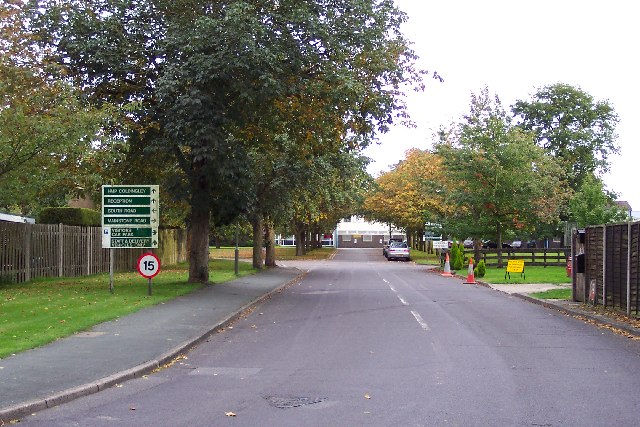
Coldingley is a category C training and resettlement prison for adult men. It opened in 1969 and is an ageing site. It held 505 men at the time of the inspection, against an operational capacity of 513.
How inspectors graded Coldingley
The inspectorate assesses prisons against four healthy prison tests: safety, respect, purposeful activity and preparation for release. Purposeful activity covers education, work and time out of cell. Each test receives one of four grades: good, reasonably good, not sufficiently good or poor.
Inspectors rated Coldingley not sufficiently good for safety and purposeful activity. They judged respect and preparation for release reasonably good.
Safety has fallen a grade since the previous full inspection, published in April 2022, when inspectors rated it reasonably good. The other three grades are unchanged.
The prison had made solid progress on earlier recommendations. Of 22 recommendations from 2022, inspectors found 10 achieved, nine partly achieved and three not achieved.
This time inspectors raised nine key concerns, six of them priorities for immediate action. They also recorded four examples of notable positive practice.
Senior leaders were visible and accessible, and the governor’s weekly drop-in session in the library was exemplary and highly valued.
HM Inspectorate of Prisons report
Drugs and violence
Inspectors could smell cannabis around the prison. In the inspectorate’s survey, 43% of men said drugs were easy to get.
Leaders now accepted the scale of the problem. They had reset their drug strategy, strengthened their partnership with the police and appointed a new manager to lead the work. But many changes were still at an early stage, and they had not yet improved outcomes.
Some fixes lay beyond the prison’s own budget. Better gate security, adequate CCTV and secure windows all required significant investment that had not yet been approved. Inspectors said leaders still needed a stronger operational response to the risks those gaps created.
Inspectors also found that a small number of managers appeared resigned to high levels of drug use. That contrasted with the governor’s priorities, and the report called for closer alignment across all levels of leadership.
Serious assaults between prisoners remained high. Weak supervision, searching and CCTV coverage gave violence and the illicit economy room to flourish. Staff were too often absent from the landings and did not always challenge poor behaviour or rule breaking.
Peer mentoring schemes offered some positive counterweight. The Turning Lives Around project and work by Belong helped promote conflict resolution and good behaviour. Inspectors listed both as notable positive practice.
Respect and living conditions
Relationships between staff and prisoners were generally good. In the survey, 80% of men said staff treated them with respect.
Senior leaders were visible and easy to approach. Inspectors called the governor’s weekly drop-in session in the library “exemplary and highly valued”. The democratically elected prisoner council also worked well to bring about change.
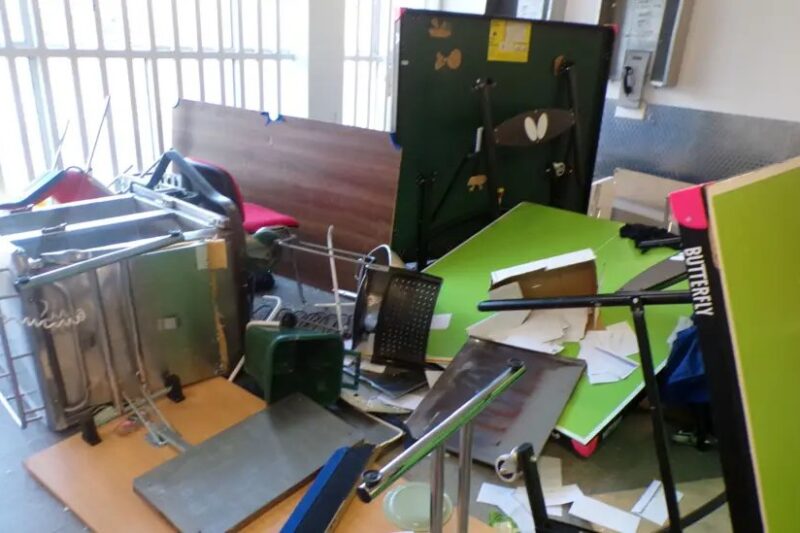
Living conditions on the older wings remained poor. Two wings, each holding 93 men, had no in-cell sanitation. Some communal facilities were shabby and even unpleasant.
Leaders had secured money for refurbishment, but contractual problems had stalled the work. There were improvements, however. B wing had been refurbished, and the G wing modular units now served as enhanced accommodation to reward good behaviour.
Despite the challenges, cleanliness was reasonably good and prisoners took pride in their surroundings. The kitchen was in poor condition, though, and food quality varied. Inspectors saw some food served that had not been fully cooked.
Leaders had improved staff retention and reduced sickness. However, around a third of frontline officers came from Commonwealth countries, and Home Office visa changes had caused them uncertainty.
Activities and release
Men were generally positive about time out of cell, and the regime ran reliably. Yet inspectors found too little meaningful activity during the working day. They said this contributed to boredom and, for some men, increased drug use.
Attendance at work and education was too low. There were not enough education places in English and maths, waiting lists were too long, and too few men completed their qualifications. A recent switch to a new education provider had unsettled the curriculum.
The prison offered a wide range of enrichment activities, but poor promotion and co-ordination meant few men took part.
Preparation for release was reasonably good. Inspectors found effective support for family ties and sound resettlement planning. The prison also held information events where men serving indeterminate sentences could meet Parole Board representatives.
Gaps in offending behaviour work remained a priority concern. Accredited programmes were not running, so some men left without the interventions they needed to reduce their risk.
Charlie Taylor, HM Chief Inspector of Prisons, said Coldingley faced significant challenges, especially from drugs. He added that it “also demonstrated real strengths and some notable positive practice”.
About this story
This story is based on HM Inspectorate of Prisons’ report on HMP Coldingley, published on 23 February 2026, following an inspection that ended in November 2025. All figures and judgements are the inspectorate’s. Read the full inspection report · See the prison’s profile in our directory.