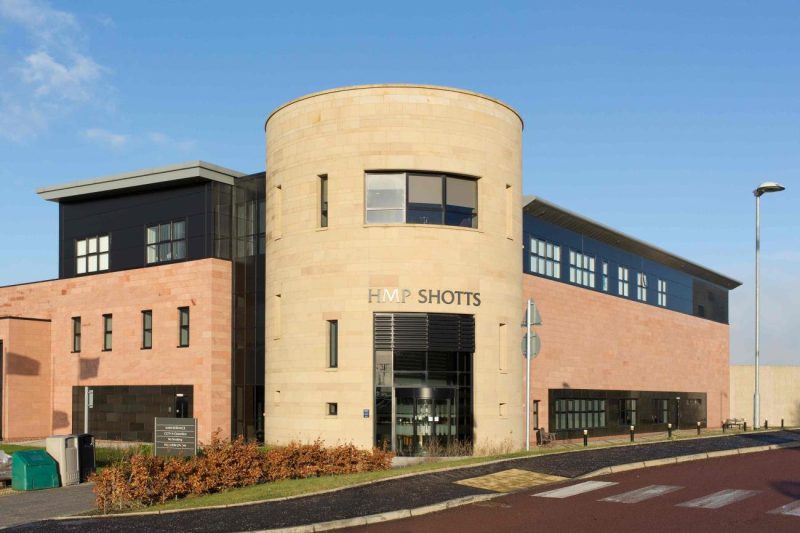
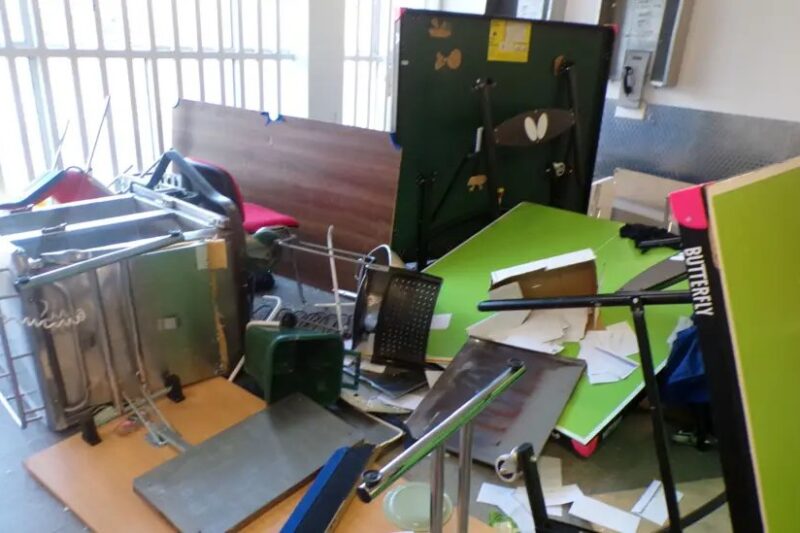
Scotland’s prison service believes no other prison system in the world has brought pain-free restraint into every one of its jails.
The Scottish Prison Service (SPS) calls its new technique “the tripod”. It will reach prisons across Scotland in stages, starting this year.
Under the method, two officers hold a prisoner by the arms and wrists and restrict the movement of their legs. Meanwhile, a lead officer holds the prisoner’s head and lowers it to their upper chest. The three officers aim to give the stability of a tripod, with the prisoner held in the middle. The lead officer also tries to talk to the prisoner and calm the situation.
The tripod aims to keep prisoners standing rather than taking them to the floor. It replaces pain-inducing holds such as “wrist flexion”. In that hold, an officer bends a prisoner’s wrists back painfully.
Training and pilots
The SPS said the technique builds on methods used in social care settings and secure hospitals. It expects the change to reduce injuries among both officers and prisoners.
Training all 3,500 of its front-line staff will take time, the service said. Pilot schemes took place with young offenders at HMP Polmont, women at HMP Stirling and men at HMP Low Moss. Those pilots have reportedly succeeded.
Human rights laws prompted the new approach. It comes a decade after the death of Allan Marshall, 30, at HMP Edinburgh in 2015. Up to 17 officers had restrained him face down. Last year, Scotland’s jails recorded 3,760 incidents in which staff restrained prisoners.
The SPS will still use wrist flexion in situations that carry a risk of death or serious injury.
Dr Frank Slokan led work on reducing restraint at the SPS. He has also written a PhD thesis on the subject.
“We found that the highest risk restraints are when you’re on the floor,” he said.
He added that using wrist flexions and pain-inducing holds on people in significant mental distress, or who have taken substances, can escalate situations. Other prison services have approached the SPS to learn more, he said. That interest has come from inside the UK and abroad.
Union backing
The Prison Officers Association (POA) supports the initiative. However, the union said the change needs careful introduction and appropriate training.
Phil Fairlie is the union’s assistant chairman. He said members had at first felt nervous and sceptical about whether the method would work.
He said: “What we’ve discovered is that we can take control of these situations every bit as effectively as we used to do with the old control and restraint training.”
Mr Fairlie added that the techniques bring a further benefit. They help to keep the prison environment calm and controlled.