
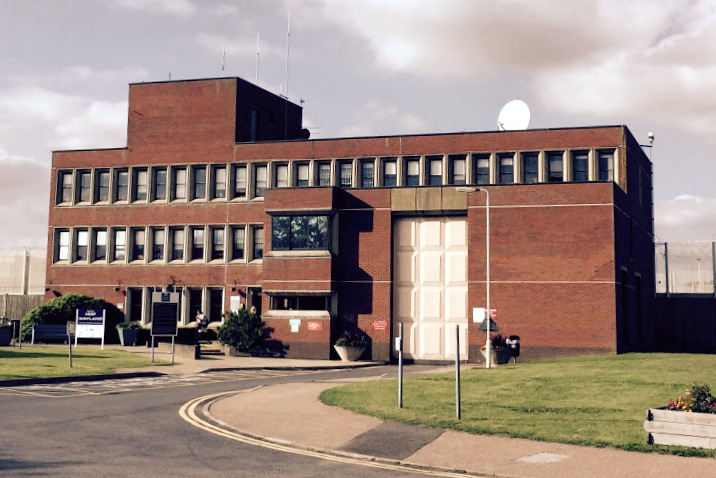
HMP Wayland did not have enough officers to run anything like a proper category C regime. That was the central finding of an inspection report published in August 2022.
HM Inspectorate of Prisons visited the Norfolk prison between 11 and 28 April 2022. Inspectors often saw prisoners breaking rules without challenge or adequate supervision. Many of the officers had only recently started work at the prison.
HM Chief Inspector of Prisons Charlie Taylor wrote: “With experienced prisoners and inexperienced staff, there is a real risk that things could get much worse.” He said the remote site, on an old RAF base at the edge of Thetford forest, had made recruiting staff very difficult.
The grades
Inspectors assess every prison against four healthy prison tests. At this inspection, Wayland received the following grades: safety, not sufficiently good; respect, reasonably good; purposeful activity, poor; and rehabilitation and release planning, not sufficiently good.
The report said outcomes had stayed the same in two areas and declined in two. Purposeful activity had fallen from reasonably good at the 2017 full inspection to poor. Inspectors took account of the prison’s recovery from COVID-19.
Wayland was a category C training prison for men. It held 890 prisoners during the inspection, against an operational capacity of 915. The prison opened in 1985. In 2020, F and H wings were demolished because of fire risk, reducing capacity by 80 places.
At the 2017 inspection, inspectors had made two key recommendations on safety. Neither had been achieved by this visit.
With experienced prisoners and inexperienced staff, there is a real risk that things could get much worse.
Charlie Taylor, HM Chief Inspector of Prisons
Behaviour and safety
In the inspectorate’s survey, 22% of respondents said they felt unsafe at the time. Violence against staff and prisoners remained high, although serious incidents had fallen. Staff investigated all incidents, but not in enough depth, and victims received little structured support.
A lot of low-level poor behaviour went unchallenged. Inspectors saw prisoners improperly dressed, vaping in communal areas, shouting and swearing. Some staff also vaped around the prison.
Use of force had fallen since the previous inspection but remained high. Incidents often reflected a lack of control and supervision. As a result, force was not always necessary or proportionate, though oversight was beginning to improve.
Self-harm incidents were more frequent than at comparable prisons. The prison had no overarching strategy to reduce self-harm. However, its enhanced support service gave good help to men with more acute needs.
The new governor, in post since the end of 2021, had started to tackle the worst behaviour. She had sent some of the most troubled prisoners back to category B prisons. Staff appreciated her visibility, and they generally understood her priorities. The Chief Inspector of Prisons added that leaders would need positive ways to motivate good behaviour, not only sanctions.
Empty workshops and poor conditions
Purposeful activity, which covers education, work and time out of cell, was poor. Workshops and classrooms were mostly empty, and prisoners spent too long locked in their cells. Education had restarted just days before inspectors arrived. The report credited teachers for staying much more active during lockdowns than in other prisons.
The Chief Inspector of Prisons criticised limits on the number of prisoners allowed into classrooms and workshops. Prisoners could mix freely elsewhere, for example in the kitchens. He said the limits would have to go if the prison was to offer education and training to more than “just a lucky few”.
Leaders introduced a new regime during the inspection to open the prison up. However, the planning was rushed and communication poor. Prisoners and staff did not know who should be where, and when. For a minority, the new regime cut the minimum time out of cell to one and a half hours a day.
The site was in poor condition. Cells in the older part of the prison looked tired, and many windows needed repair. In the newer wings, poor ventilation had let mould grow around in-cell showers. The kitchens were in an awful state, and the visits hall roof had a gaping hole.
Respect and health care
Respect remained reasonably good. Most prisoners said staff treated them with respect, but very few key work sessions took place. Key work refers to regular one-to-one sessions between an officer and a prisoner. In the survey, 42% of prisoners rated the food as good.
Health services were well led and of good quality. However, regime restrictions and a lack of officer escorts limited access to some services. Mental health services gave strong support, and the dental service introduced notable innovations such as triage on the wings.
Wayland had recently become a ‘black’ site for staff recruitment and retention, allowing it to pay staff more. The Chief Inspector of Prisons said he hoped this would begin to resolve the critical staffing situation.
Inspectors have reported on Wayland again since, with an independent review of progress in May 2023 and a full inspection published in May 2026. This report covered the inspection carried out in April 2022.
About this story
This story is based on HM Inspectorate of Prisons’ report on HMP Wayland, published on 12 August 2022, following an inspection that ended in April 2022. It covers an earlier inspection: the prison’s profile has the latest findings. All figures and judgements are the inspectorate’s. Read the full inspection report · See the prison’s profile in our directory.



