The Chief Inspector of Prisons personally watched cell call bells go unanswered at HMP Wandsworth while groups of officers stood in wing offices. He recorded the scene in an inspection report published in July 2018.
Inspectors visited the south London prison between 26 February and 9 March 2018. In their survey, only 11% of prisoners said staff answered cell bells within five minutes. Cell bells are the emergency call buttons in each cell.
HM Chief Inspector of Prisons Peter Clarke wrote that the problem did not stem from a lack of staff. He added that staff appeared to assume prisoners were misusing the bells and so did not need a response. He called that assumption dangerous and said the prison needed a proper strategy to triage calls.
The grades
Inspectors assess each prison against four healthy prison tests. At this inspection, Wandsworth received the following grades: safety, not sufficiently good; respect, not sufficiently good; purposeful activity, poor; and rehabilitation and release planning, reasonably good.
Outcomes had stayed the same as in 2015 in three areas. Rehabilitation and release planning had improved.
Wandsworth was a category B local prison for men, with a category C resettlement unit. It held 1,428 men during the inspection, against an operational capacity of 1,452. The report described it as the most overcrowded prison in the country, with most men sharing a cell designed for one.
The prison had achieved 23 of the 86 recommendations from 2015 and partly achieved 18. It had not achieved 45.
Whereas in some prisons I have been told that new staff are a challenge because they lack the experience and confidence to be effective, at Wandsworth I was told very clearly that the new staff were seen as giving the prison a real opportunity to improve.
HM Inspectorate of Prisons
Safety and a culture in need of change
Six prisoners had taken their own lives since the previous inspection. Even so, inspectors found that not all staff carried anti-ligature knives, used to cut a ligature in an emergency. No member of staff would enter a cell alone, even if a prisoner’s life was at risk.
The Chief Inspector of Prisons wrote: “That cultural change is needed cannot be doubted.” He also identified a long-standing culture of not recording or analysing data to understand what was happening. As a result, a clear gap had opened between what senior managers intended and what actually happened on the wings.
The report found early days processes did not focus enough on risk, and induction was poor. Leaders took a thoughtful approach to reducing violence, but its effect was unclear. Governance of the use of force was weak. On the other hand, staff managed the segregation unit well and security was generally proportionate.
Drugs remained a serious issue. Some 40% of men said illicit drugs were easy to get, and 36% were receiving psychosocial help for substance misuse. Each month the mental health team received 450 referrals. Work to reduce the supply of drugs was improving but not yet effective enough.
Conditions and time out of cell
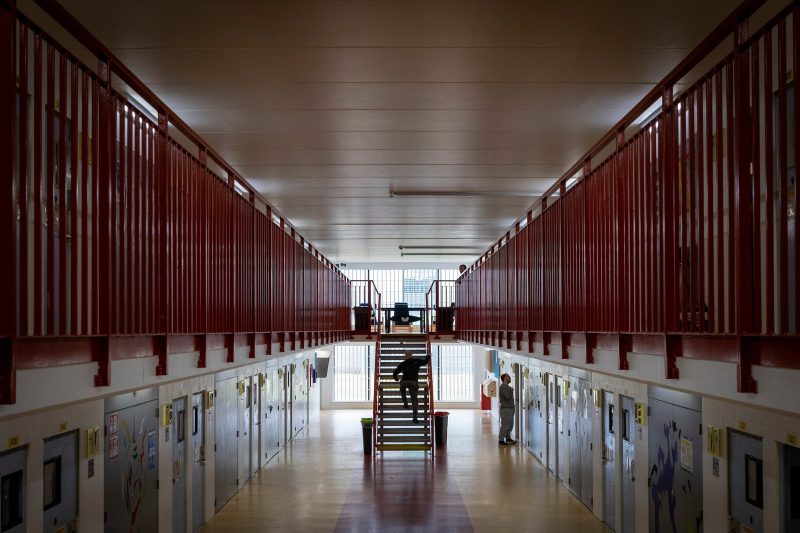
Living conditions were typical of older, overcrowded prisons. Two men occupied cells designed for one, with poorly screened lavatories. They spent far too long each day locked in them. Showers elsewhere in the prison were mouldy, leaking and dirty.
However, an extensive refurbishment programme was under way. The Chief Inspector of Prisons saw newly refurbished cells that were cleaner and brighter, with lids on the lavatories. He also urged staff to tackle the dirty and untidy wing offices he saw throughout the prison.
Purposeful activity, which covers education, work and time out of cell, was poor. In spot checks, 42% of men were locked in their cells during the working day. The prison had enough full-time activity places for only around a third of the population.
Ofsted, which inspects education in prisons alongside the inspectorate, judged the overall effectiveness of learning, skills and work as inadequate. At the previous inspection, inspectors had made 13 recommendations on purposeful activity. The prison had achieved none of them.
Progress on release planning
The report found real progress in rehabilitation and release planning, which inspectors rated reasonably good. Staff generally managed public protection procedures well. Home detention curfew, which allows some prisoners to finish their sentence at home under electronic monitoring, had recently become more timely.
More than 100 prisoners left Wandsworth for the community every month. The Chief Inspector of Prisons asked how much better their prospects might have been if they had served their time in more decent conditions.
He welcomed the senior team’s positive view of the many new staff joining the prison. Managers saw them as a chance to bring a fresh culture. The governor described the prison as on a “long journey”, and the report urged HM Prison and Probation Service to support her fully.
Inspectors have reported on Wandsworth again since. These include a full inspection in January 2022, an independent review of progress in July 2022, an Urgent Notification in May 2024, a full inspection in August 2024 and an independent review of progress in May 2025.
About this story
This story is based on HM Inspectorate of Prisons’ report on HMP Wandsworth, published on 13 July 2018, following an inspection that ended in March 2018. It covers an earlier inspection: the prison’s profile has the latest findings. All figures and judgements are the inspectorate’s. Read the full inspection report · See the prison’s profile in our directory.