HMP Wakefield ran well and stayed comparatively safe, but too many men spent too long locked in their cells, inspectors found.
The inspectorate’s report, published in February 2023, followed an inspection between 31 October and 11 November 2022. Wakefield, in West Yorkshire, is one of the highest-security prisons in the country. It held 743 men at the time, some of the most dangerous in the prison system. Almost all were serving over 10 years, and around 60% had convictions for sexual offences.
HM Chief Inspector of Prisons Charlie Taylor said that, given the challenges facing prisons, “this is one of the better inspections we have undertaken at an adult male prison recently”.
How the prison was graded
Inspectors judge every prison against four healthy prison tests. Wakefield scored reasonably good for safety, respect, and rehabilitation and release planning. It scored not sufficiently good for purposeful activity, which covers education, work and time out of cell.
Respect and purposeful activity had both declined since the previous inspection in 2018. Respect had fallen from good. The prison had not achieved any of the three key recommendations from 2018.
Inspectors raised 15 key concerns, six of them priorities for immediate action.
While this represents some deterioration in purposeful activity and respect, in the context of the times and challenges faced by the prison system, this is one of the better inspections we have undertaken at an adult male prison recently.
Charlie Taylor, HM Chief Inspector of Prisons
Relationships and key work
Mr Taylor said the quality of relationships between staff and prisoners remained a strength. Staff were competent and confident, although many lacked experience.
Leaders had made key work a priority. Key work means regular one-to-one sessions between an officer and a prisoner. Mr Taylor said delivery at Wakefield was much more positive than inspectors had recently seen across adult men’s prisons. He said effective key work supported safety, offender management and risk reduction.
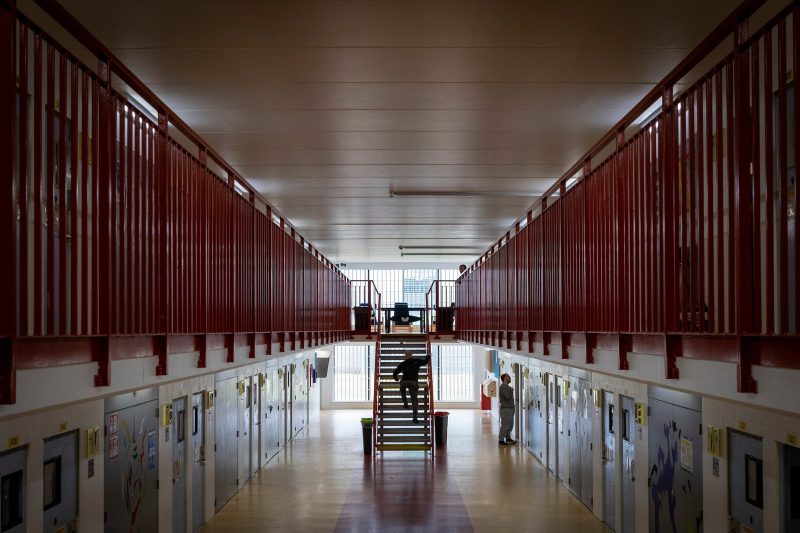
Most prisoners in the survey said staff treated them with respect and that they had someone to turn to. All men lived in well-equipped single cells. Communal and outside areas were generally clean and well maintained.
Violence overall was similar to 2018. Assaults between prisoners were rising and, while still quite low, were the highest among comparable prisons. Assaults on staff had fallen. Self-harm was lower than in similar prisons and had been reducing. However, there had been five self-inflicted deaths since the last inspection.
Physical and procedural security was rigorous and proportionate for one of the highest-security prisons in the country. A dedicated team managed counter-terrorism work. Random drug testing found a low positive rate of 2.1%.
Lock-up, buildings and health care
Inspectors found half of the population locked up during the working day. There were not enough activity places, and limited space and buildings hindered plans to add more. In most vocational workshops, men could not gain accredited qualifications. The education curriculum lacked ambition for men with higher prior attainment.
Most men had to rely on flasks for hot water during lock-up periods. Inspectors also found inadequate care and management of men’s risks and vulnerabilities on their first night.
Parts of the prison’s infrastructure were in very poor condition and needed investment from HM Prison and Probation Service. Inspectors listed broken lifts, leaking roofs, old showers and an inadequate electricity supply. The inpatient unit was in a poor state, and physical security systems were out of date.
Health care outcomes needed improvement. A shortage of health care staff meant patients did not get appropriate and timely care. Mental health therapies were seriously lacking, including for men in crisis. Medicines management was poor, and patients did not always receive their medicines on time. Some men waited up to nine months for dental treatment.
Men in the segregation unit, which sits alongside the close supervision centre for some of the system’s most disruptive prisoners, spent excessive periods there. The regime was minimal, though prisoners spoke positively about staff care. Reintegration planning was too limited.
Leadership and later reports
Mr Taylor said the settled nature of the prison reflected strong leadership. The governor had set a clear vision. However, the prison lacked data-informed strategies to improve safety or promote equality, and its drug and reducing reoffending strategies were out of date. Mr Taylor said that “leaders in particular impressed us with their capability”.
A lack of progress through their sentences often frustrated men. Contact with prison offender managers was mostly task driven, and access to treatment interventions was insufficient.
Inspectors have reported on HMP Wakefield again since, with a full inspection published in September 2025 and an independent review of progress in June 2026.
About this story
This story is based on HM Inspectorate of Prisons’ report on HMP Wakefield, published on 20 February 2023, following an inspection that ended in November 2022. It covers an earlier inspection: the prison’s profile has the latest findings. All figures and judgements are the inspectorate’s. Read the full inspection report · See the prison’s profile in our directory.