Violence rose sharply at HMP Wakefield as the high-security prison struggled with failing buildings and staff shortages, the prison inspectorate found.
The report, published in September 2025, followed an unannounced inspection that ended in July 2025. Inspectors recorded a 62% rise in violent incidents since the last inspection. Serious assaults had risen by 72%.
Many prisoners said they felt unsafe. Older men convicted of sexual offences felt this most, as they increasingly shared the prison with a growing group of younger prisoners.
The Chief Inspector of Prisons, Charlie Taylor, described Wakefield as “a prison under strain”. He called on the prison service to provide investment and strategic support.
Grades slip
The inspectorate judges adult prisons against four healthy prison tests: safety, respect, purposeful activity and preparation for release. Purposeful activity covers education, work and time out of cell.
Wakefield scored not sufficiently good for safety and poor for purposeful activity. It scored reasonably good for respect and for preparation for release.
At the previous full inspection in 2022, inspectors had rated safety as reasonably good and purposeful activity as not sufficiently good. Both grades have therefore dropped one step.
The prison held 630 men at the time, against an operational capacity of 648. Of these, 148 were category A, the highest security classification. Two-thirds had convictions for sexual offences.
Wakefield is one of five high-security dispersal prisons, holding men convicted of the most serious crimes. Many serve life or indeterminate sentences.
The inspectorate published an independent review of progress at Wakefield in June 2026. That follow-up visit assessed progress against the concerns raised in this report.
HMP Wakefield was a prison under strain. While there were pockets of good practice and committed staff working hard to deliver decent outcomes, the cumulative impact of infrastructure failures, staffing pressures and a changing prisoner population were significant challenges.
Charlie Taylor, HM Chief Inspector of Prisons
Broken equipment and lost regime
Inspectors found the prison’s buildings in a poor state. Essential equipment broke down repeatedly, and so did some significant parts of the perimeter security systems.
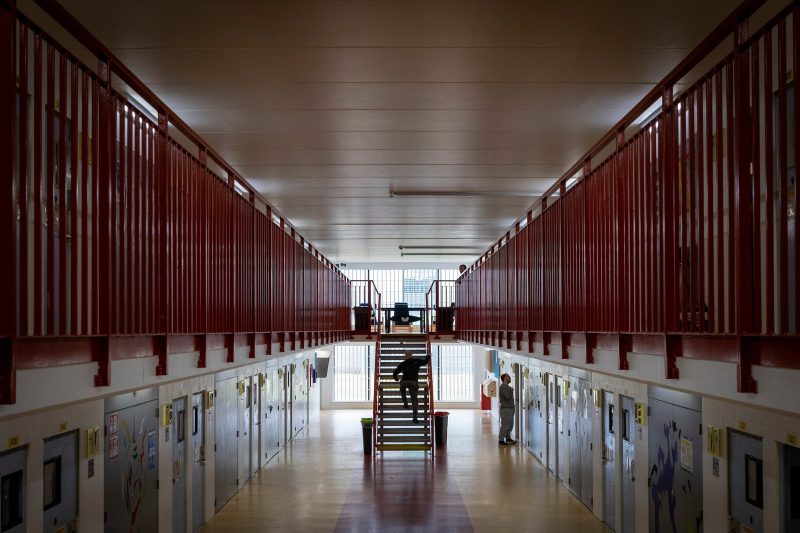
Wings were shabby and showers were in very poor condition. Water boilers and washing machines failed regularly. Electrical faults sometimes affected the emergency cell call bells.
Wakefield was almost fully staffed with experienced officers. However, managers had sent some officers to support other prisons, leaving Wakefield unable to run its regime consistently.
As a result, many men spent long periods locked in their cells. Inspectors found around half the population locked up during the working day. Some men could not reach basic amenities.
Staff morale had suffered. Leaders had no coherent plan to reduce violence or bullying. Men who isolated themselves out of fear faced a punitive regime with little help to return to normal location.
The governor had been in post for a year and had set out a clear vision. Leaders planned to reorganise how they deployed officers each day. That would give prisoners a consistent, though more limited, regime.
Education rated inadequate
Ofsted, which inspects prison education, judged its overall effectiveness inadequate.
Infrastructure failures had closed workshops for long periods. Even when they opened, poor management of the regime meant men often arrived late or not at all. The prison also lacked enough activity places for everyone eligible.
The curriculum lacked ambition, particularly for long-term prisoners ready for higher-level study. Leaders had not put the reading strategy into practice effectively.
Some men did gain qualifications and useful skills. But many had nothing meaningful to do, which inspectors linked to frustration and poor behaviour.
Of five concerns about purposeful activity from 2022, the prison had failed to address four, including two priority concerns.
Health care and release
Health care stood out as a clear improvement. Strong clinical leadership and successful recruitment had brought better access and safer services.
Problems remained. Some facilities fell short of infection control standards, and the committed mental health team was overstretched. Patients waited far too long for transfer to secure hospitals. The Mulberry unit, which houses autistic prisoners, offered no enhanced support for neurodevelopmental needs.
Family contact received reasonable support through accessible visits, family days and a well-run visitors’ centre. Public protection work was robust, though some high-risk men no longer faced routine monitoring on arrival.
Few men left Wakefield directly for the community, with 11 releases in the last 12 months. Even so, offender managers went to great lengths to secure safe transitions for them.
Of 15 concerns from 2022, the prison had addressed seven, including every concern about respect. Inspectors also recorded two examples of notable positive practice. In one, the recovery team trained two officers as recovery allies to support men with addictions.
Inspectors raised 13 key concerns, five of them priorities. The Chief Inspector of Prisons said leaders “must act swiftly” on the priority concerns.
About this story
This story is based on HM Inspectorate of Prisons’ report on HMP Wakefield, published on 29 September 2025, following an inspection that ended in July 2025. All figures and judgements are the inspectorate’s. Read the full inspection report · See the prison’s profile in our directory.