HMP Spring Hill, the oldest of the open prisons, had made a good recovery from pandemic restrictions, according to HM Inspectorate of Prisons. Yet inspectors found its men living in prefabricated huts that had outlived their design life by decades.
The inspectorate’s report, published in August 2022, followed an inspection that finished in May 2022. Inspectors described the accommodation as one of the prison’s most serious problems. “The accommodation in the prison was awful, showing a woeful lack of investment from the prison service,” the report said.
Spring Hill is a category D open prison for adult men near Grendon in Buckinghamshire. Category D prisons hold men whom the prison service judges suitable for open conditions, and they focus on preparing people for release. At the time of the inspection it held 227 men, against an operational capacity of 241.
How the prison was graded
Inspectors assess every adult prison against four healthy prison tests. These cover safety, respect, purposeful activity and rehabilitation and release planning. Purposeful activity covers education, work and time out of cell. Each test receives one of four grades: good, reasonably good, not sufficiently good or poor.
Spring Hill scored good for safety. It scored reasonably good for respect and for rehabilitation and release planning. Purposeful activity was the weakest area, rated not sufficiently good.
Compared with the previous full inspection in 2017, inspectors found that outcomes had stayed the same in three areas and declined in one. They identified 11 key concerns, three of which they treated as priorities needing immediate attention from leaders.
The Chief Inspector of Prisons, Charlie Taylor, had briefly visited in March 2021, during a scrutiny visit to neighbouring HMP Grendon. He wrote that men then felt bored and frustrated, unable to leave the site for work or to see family. “It was a pleasure to return just over a year later to find a much more productive and happier place,” he said.
The accommodation in the prison was awful, showing a woeful lack of investment from the prison service.
HM Inspectorate of Prisons report
Huts built to last 20 years
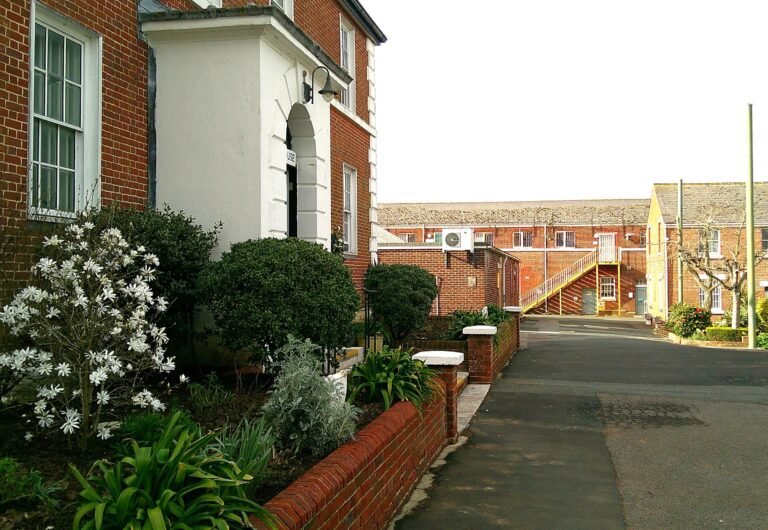
Most men slept in prefabricated blocks built in the 1960s. Builders designed them to last for 20 years. Half a century later, inspectors found holes in walls, erratic plumbing, lifting floors and windows that would not open.
Three larger blocks had been condemned because they no longer met fire safety standards. Two huts had closed completely, and a third ran at half capacity. As a result, the prison operated well below its baseline capacity of 335 places.
The prison service had supplied 40 temporary sleeping pods, which prisoners liked. A plan for 80 more had slipped by more than a year because of contractual problems, although inspectors saw installation under way during their visit. The Chief Inspector of Prisons warned that the pods would wear over time and called on the prison service to fund a full rebuild.
He also pointed to a wider effect. Across the country, men in category C prisons who meet the criteria for open conditions wait to move because category D spaces are scarce. He suggested that prisoners could help build new accommodation at Spring Hill, gaining construction skills for work after release.
Inspectors found Spring Hill otherwise largely safe. Violence was rare, and only 7% of prisoners said they felt unsafe. Staff used force infrequently, and self-harm stayed very low. Five men had absconded in the previous year, fewer than in earlier years, and the prison investigated each case. The positive rate for mandatory drug tests reached 9.2%, higher than at the last inspection.
Work, training and temporary release
Every new arrival received a job or an education place. However, inspectors found that many jobs felt contrived. Two or three men often appeared to share the work of one. The report said these roles at least built habits such as getting up in the morning.
During the inspection week, an average of 64 men worked or studied outside the prison each day. The Chief Inspector of Prisons said that more than half should be out at work daily once the regime settled, in an area with many vacancies.
Release on temporary licence, known as ROTL, lets men leave the prison for work, training or family visits. Many waited far too long for it. Inspectors blamed slow responses from community agencies, especially probation services in London, which the prison needed for risk assessments. A shortage of approved premises for overnight stays added to the delays.
Men also lacked a clear plan for their education, skills and work. Teaching quality varied too much, and there were not enough English and mathematics places for those who needed them most. Low pay and limited ROTL left many men on site underemployed and unmotivated.
Relationships, complaints and resettlement
Relationships between staff and prisoners had improved markedly. In the inspectorate’s survey, 85% of men said staff treated them with respect, up from 56% at the previous inspection. Most men had regular contact with a personal officer.
Confidence in complaints was weaker. Only 51% said it was easy to make a complaint, and 52% said complaints received fair treatment. Thirty-five per cent said someone had stopped them from complaining, against 15% in other open prisons.
Inspectors raised other concerns. Consultation with prisoners from protected groups had not restarted after the pandemic. Delays at every stage of the social care process affected men’s well-being. Support for family ties was thin, with little beyond Storybook Dads, a project that lets fathers record stories for their children.
Practical help with resettlement had also shrunk. A team of five resettlement workers had fallen to a single person. The Chief Inspector of Prisons nonetheless credited the governor and her team with restoring a sense of purpose at a well-run prison, while inadequate buildings held back their work.
About this story
This story is based on HM Inspectorate of Prisons’ report on HMP Spring Hill, published on 19 August 2022, following an inspection that ended in May 2022. All figures and judgements are the inspectorate’s. Read the full inspection report · See the prison’s profile in our directory.