
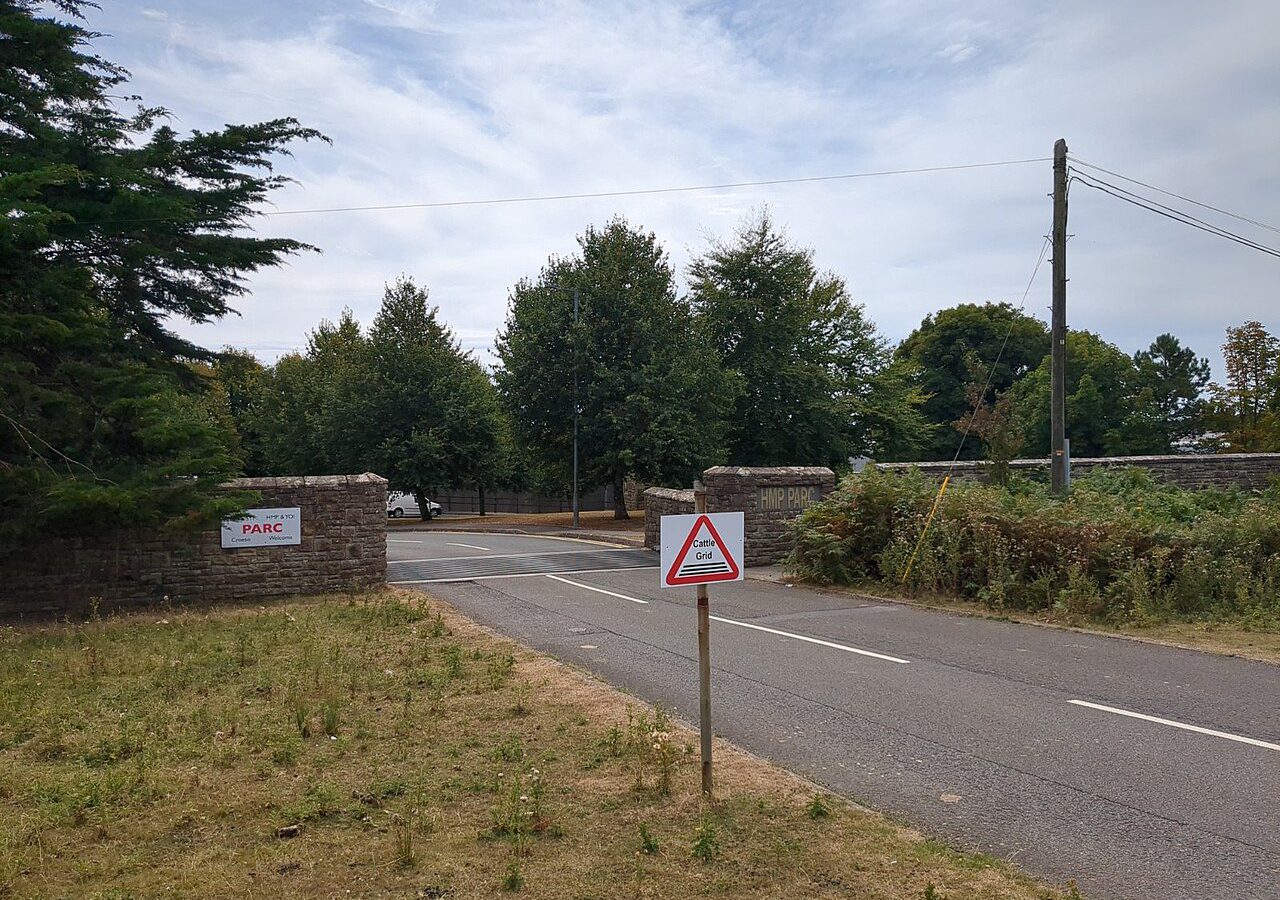
HMP Parc improved safety while violence rose across much of the prison estate. That was the finding of HM Inspectorate of Prisons in a report published in March 2020.
Inspectors visited the prison near Bridgend in South Wales between 11 and 22 November 2019. They raised the safety grade to reasonably good and singled out the oversight of force used by staff as good practice for other prisons.
HM Chief Inspector of Prisons Peter Clarke called the improved safety grade a significant achievement. “Parc had managed to buck the trend in terms of the overall and very large increases in violence that have been recorded,” he wrote.
Parc was a very large and complex prison. It held 1,612 men at the time of the inspection, against an operational capacity of 1,699. Its population included adults, young adults, remand prisoners, older men and a large number of men convicted of sexual offences.
G4S Care and Justice Ltd ran Parc under contract. It opened in November 1997 as the first UK prison built under the private finance initiative, and the company’s operating contract ran until 2022.
How the prison was graded
The inspectorate grades prisons against four healthy prison tests, each rated good, reasonably good, not sufficiently good or poor.
Safety improved from not sufficiently good at the previous inspection, in January 2016, to reasonably good. Respect was good. Purposeful activity, which covers education, work and time out of cell, was also good. Rehabilitation and release planning was not sufficiently good.
Mr Clarke said the prison had benefited from consistent leadership over many years. Staff were rightly proud of what they had achieved. He judged that Parc was fulfilling its core purposes and performing well, though some improvements were urgent.
Parc had managed to buck the trend in terms of the overall and very large increases in violence that have been recorded.
Peter Clarke, HM Chief Inspector of Prisons
Violence, drugs and self-harm
Violence had fallen over the previous two years. Inspectors praised the oversight of use of force, with a robust review process, strong management input and a clear drive to learn from incidents. They recommended the approach to other prisons.
Self-harm had recently fallen too, although it remained much higher than at the previous inspection. Inspectors noted good care for prisoners on their first night in custody. The safer custody team worked hard to get the most from challenge, support and intervention plans, known as CSIPs.
Positive drug test rates had fallen over the past year, and new measures may have helped. Drugs, however, remained too readily available. Mr Clarke said the prison was taking positive action on the problem.
He said early signs of improvement in several areas justified raising the safety grade.
Mental health, relationships and food
Over half of prisoners, 52%, told inspectors they had a mental health problem. Only 23% said they had received help, fewer than at comparable prisons.
The prison had not properly measured demand through a health needs assessment. Support existed for some needs but not for others. Inspectors made this a key concern and called for a full range of therapy for all psychiatric conditions.
Relationships between staff and prisoners were a very positive feature. Some 73% of prisoners said staff treated them with respect, and the key worker scheme appeared to work well. The prison was generally clean and well maintained, with reasonable access to laundry and showers.
Food was a weakness. Only 28% of prisoners said the food was good, and fewer than a third said they always or mostly had enough to eat. Inspectors’ own observations backed up these views. Mr Clarke welcomed the fact that prisoners took all meals communally, but said the poor perceptions of food needed attention.
Mr Clarke praised the range of specialist services. There was bespoke support for prisoners with learning disabilities or autism, an excellent unit for veterans, and dedicated provision for young adults, vulnerable prisoners and those needing assisted living. Parc also kept its international reputation for its work with children and families.
“Although there is a body of opinion that large prisons are inferior to smaller establishments, Parc shows that this need not be the case,” he wrote. He said the prison did not feel huge to those held there.
Release and sexual offending
Some 17% of prisoners at Parc had convictions for sexual offences. However, intervention provision for them was woefully inadequate, and the prison offered no interventions for this group at all. Some men moved to other prisons to receive the right programmes.
Mr Clarke said that, given the size of this population, Parc should have offered provision itself.
Housing on release was another concern. On average some 100 prisoners left Parc each month, and 17% of them had no address to go to. Mr Clarke saw a great deal of effort going into release planning but warned that a lack of accommodation could undermine it.
Inspectors therefore recommended that HM Prison and Probation Service work with the Welsh Government to make accommodation available for prisoners on release.
Inspectors have reported on the prison again since, with full inspections published in October 2022 and April 2025. An independent review of progress followed in February 2026.
About this story
This story is based on HM Inspectorate of Prisons’ report on HMP Parc, published on 17 March 2020, following an inspection that ended in November 2019. It covers an earlier inspection: the prison’s profile has the latest findings. All figures and judgements are the inspectorate’s. Read the full inspection report · See the prison’s profile in our directory.



