
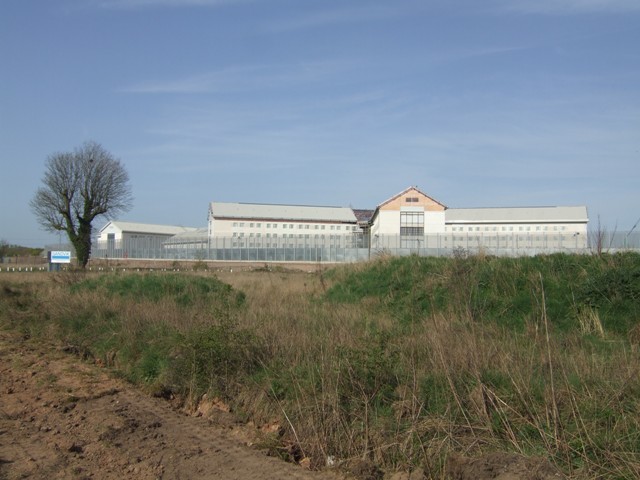
HMP Oakwood, the biggest prison in England, was a safe and respectful place where prisoners spoke highly of staff. That was the finding of HM Inspectorate of Prisons in a report published in September 2021.
Inspectors visited the category C training prison near Wolverhampton between 17 and 28 May 2021. They rated safety and respect good. However, rehabilitation and release planning had declined and was not sufficiently good.
HM Chief Inspector of Prisons Charlie Taylor said he was consistently struck by how positively prisoners talked about the prison. Many who had moved around the prison system told him something striking. Oakwood, they said, was “the best prison they had been to”.
G4S ran Oakwood, which opened in 2012. At the time of the inspection it held 2,087 men against an operational capacity of 2,106. Most lived in three large accommodation blocks on a relatively small site. A large proportion were serving more than four years, and 10% were on indeterminate sentences.
How the prison was graded
The inspectorate grades prisons against four healthy prison tests, each rated good, reasonably good, not sufficiently good or poor.
Safety improved from reasonably good in 2018 to good. Respect stayed good. Purposeful activity, which covers education, work and time out of cell, fell from good to reasonably good. Rehabilitation and release planning also declined, to not sufficiently good.
Inspectors took into account the prison’s recovery from COVID-19 and the stage of restrictions it was operating under.
At the 2018 inspection, inspectors made 34 recommendations, three of them about key concerns. The prison had achieved one of two key concerns on safety but not the other. It had also not achieved the key concern on rehabilitation and release planning.
Even those who were on the basic regime and were still subjected to protracted time locked in their cells because of COVID-19 restrictions, praised the prison, with many who had spent years moving round the secure estate telling me it was the best prison they had been to.
Charlie Taylor, HM Chief Inspector of Prisons
Safety and security
Most prisoners told inspectors they felt safe. Assaults were fewer than at the previous inspection and than at similar prisons, though violence was rising. The monthly violence meeting analysed incidents well, and work to reduce violence had restarted.
Reception was welcoming, efficient and very clean. The regime for most new arrivals, however, was poor. During 14 days of quarantine, many came out of their cells for only 10 minutes a day for domestic tasks and 30 minutes for outdoor exercise.
Use of force had fallen and paperwork was good, but senior managers did not scrutinise it enough. Inspectors were not confident that staff always used force proportionately. Mr Taylor said the governance and practice of use of force were not good enough.
Staff used full personal protective equipment when escorting some prisoners to the segregation unit, and routinely strip-searched prisoners on arrival there. Inspectors judged both practices disproportionate.
Over a quarter of prisoners said it was very easy to get illicit drugs, yet the prison had not restarted drug testing. The drug strategy and joint working on drugs were good.
Self-harm was similar to the previous inspection and about average for similar prisons. Almost two-thirds of prisoners supported through ACCT case management, the process for those at risk of suicide or self-harm, said they felt cared for.
Respect and prisoner-led work
Most prisoners said staff treated them respectfully and that they had an officer to turn to. Communal areas were impressively clean. However, 500 overcrowded cells were cramped and inadequately furnished, and meals came too early.
Inspectors found weaker results for some groups. Only 58% of black and minority ethnic prisoners and 54% of Muslim prisoners said staff treated them respectfully. Support for foreign national prisoners was insufficient, and strategic oversight of equality was weak.
Health care was well led and had kept core services running. Mental health and substance use services worked well together.
Mr Taylor singled out a network of prisoner-led initiatives. Without direct staff supervision, prisoners ran a workshop building tables, benches, bird boxes and hanging baskets for sale to the local community. Others maintained the grounds and a market garden that grew food for the prison.
Prisoner-led groups also supported new arrivals and those of different faiths. They took vulnerable prisoners and those on the basic regime out of their cells to talk and work. Mr Taylor said those leading the work told him it had given real meaning to their lives.
Work, education and release
COVID-19 restrictions still kept many prisoners locked in their cells for too long. Those in full-time work could spend at least nine hours out of cell, but many were still locked up for 22 hours a day. In spot checks during the working day, inspectors found 33% of prisoners locked in their cells.
Mr Taylor called the education provider’s performance disappointing. It had produced in-cell learning only after unnecessary delays and had offered no face-to-face teaching when restrictions eased in summer 2020. Classrooms and workshops had begun to reopen, but progress was slow.
Sex offenders made up a quarter of the population. Yet, as in 2018, the prison still offered no programmes to address their behaviour. Mr Taylor called this disappointing. Assessment of need and risk on arrival and before release was also insufficient.
Even so, Mr Taylor was confident the prison would keep improving if it maintained momentum after the pandemic. “Staff and prisoners should be proud of what they have achieved,” he wrote.
Inspectors have reported on the prison again since, with a full inspection published in August 2024.
About this story
This story is based on HM Inspectorate of Prisons’ report on HMP Oakwood, published on 3 September 2021, following an inspection that ended in May 2021. It covers an earlier inspection: the prison’s profile has the latest findings. All figures and judgements are the inspectorate’s. Read the full inspection report · See the prison’s profile in our directory.



