
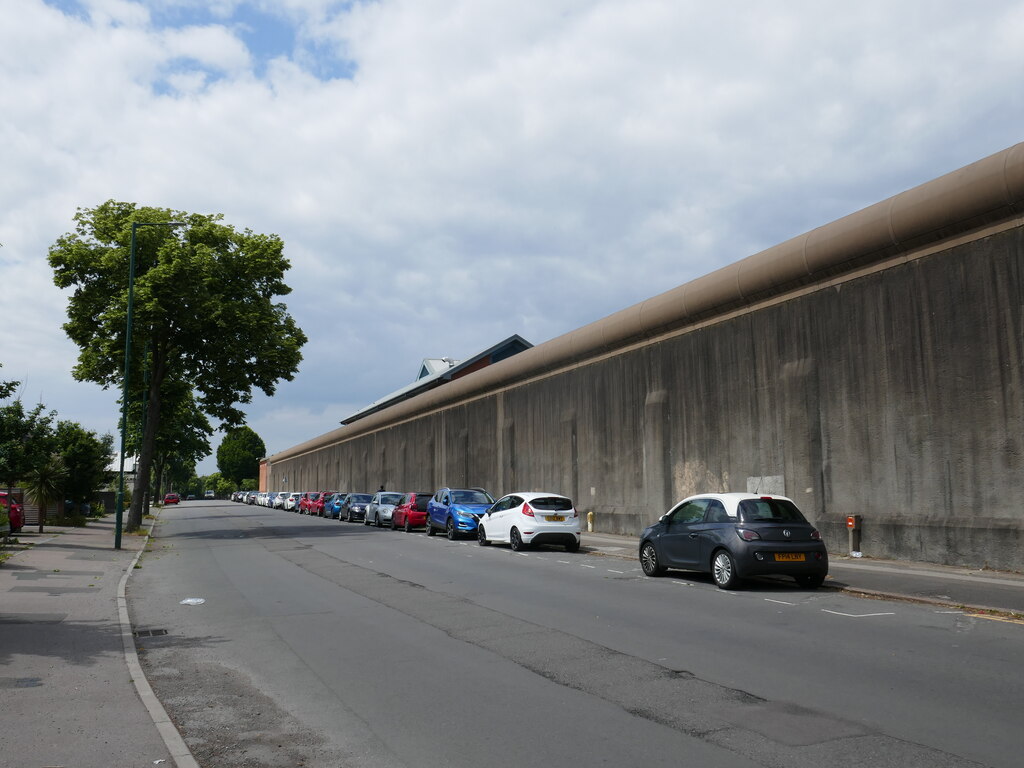
HM Chief Inspector of Prisons Peter Clarke formally warned the government in January 2018 that HMP Nottingham was fundamentally unsafe.
In a letter dated 17 January 2018 to the Justice Secretary, David Gauke, he invoked the Urgent Notification process. His principal reason, he wrote, was that “for the third time in a row HMI Prisons has found the prison to be fundamentally unsafe”.
An Urgent Notification is a formal letter in which the Chief Inspector of Prisons tells the Justice Secretary about urgent and significant concerns at a prison. The Justice Secretary must respond publicly within 28 days, setting out how the government will tackle the concerns. A protocol between the Chief Inspector of Prisons and the Ministry of Justice, dated 30 November 2017, set out the process.
Nottingham is a reception prison for men in the East Midlands. Inspectors carried out an announced inspection during the week of 8 January 2018, after surveying prisoners on 11 and 12 December 2017. Mr Clarke attached a debrief paper setting out the main findings.
A story of decline
Mr Clarke wrote that inspection findings at Nottingham told a story of dramatic decline since 2010. An unannounced inspection in 2014 rated safety poor, the lowest grade. An announced inspection in February 2016 reached the same verdict, and so did this one.
Inspectors could recall only one previous occasion when they had rated a prison’s safety poor after three consecutive inspections. Mr Clarke said this alone could justify the Urgent Notification.
The other areas inspectors assess are respect, purposeful activity, and preparation for release and resettlement. Outcomes in these had not fallen to the lowest grade. However, Mr Clarke said they had consistently been not sufficiently good.
The prison had also failed to act on earlier advice. After the February 2016 inspection, inspectors made 48 recommendations, 13 of them on safety. The prison had fully achieved only two of the 13 safety recommendations and partly achieved two more.
Across all 48, it had fully achieved 12, partly achieved 13 and not achieved 23. The prison knew in advance about both of the last two inspections. Mr Clarke called it extraordinary that it had not responded more robustly. HMPPS senior leaders had not given the action plan consistent, focused attention or close monitoring.
The principal reason | have decided to issue an Urgent Notification in respect of HMP Nottingham following this most recent inspection is because for the third time in a row HMI Prisons has found the prison to be fundamentally unsafe.
Peter Clarke, HM Chief Inspector of Prisons
Violence, drugs and force
Over two thirds of men surveyed, 67%, said they had felt unsafe at some point at Nottingham. Some 35% felt unsafe at the time of the survey. Over half said other prisoners had victimised them, significantly more than at comparable prisons.
In the six months before the inspection, the prison recorded more than 200 assaults, about half of them against staff. Inspectors estimated the rate of assaults on staff at over twice that in similar prisons. Fights were also much more common.
Staff had used force nearly 500 times in six months. Inspectors estimated this at more than twice the level normally seen in similar prisons. Staff had drawn batons at least 33 times.
Supervision and accountability over the use of force were poor. Inspectors could not explain why staff were failing to use the prison’s body-worn video cameras.
Drugs were widely available. Some 57% of prisoners said it was easy to obtain illicit drugs. Mandatory drug testing showed a positive rate of 14%, rising to over 30% when the figures included psychoactive substances.
Self-harm and early days
Most seriously, self-harm had risen very significantly in the two years since the previous inspection. Inspectors understood that eight prisoners had taken their own lives in that time. Some cases still awaited a coroner’s inquest.
The prison had repeatedly failed to achieve or embed improvements recommended by the Prisons and Probation Ombudsman. Mr Clarke called these facts shocking.
In the survey, 30% of prisoners said they had been on ACCT case management, the process for supporting prisoners at risk of suicide or self-harm. Too many felt the support they received was insufficient or inconsistent.
Only 14% of prisoners said staff normally answered their cell call bell within five minutes. Inspectors also found examples of very long delays.
More than 100 prisoners arrived each week. New arrivals had no private interview focused on their vulnerability before their first night, even if they were in custody for the first time. In the survey, 40% of new arrivals said they did not feel safe on their first night.
Staff still routinely strip-searched every prisoner on arrival without assessing whether this was proportionate. Vulnerable prisoners, held separately on D wing, had a poor experience. Inspectors did praise Signposters, prisoner mentors who supported new arrivals in reception and on the first night centre.
Staff experience and support
The prison was not short of staff and had recruited large numbers of new officers over the previous two years. However, more than half of staff had less than a year’s experience. Mr Clarke said this clearly showed in their dealings with prisoners.
Many staff were enthusiastic and willing. Prisoners, however, grew frustrated that they could not get simple things done. Mr Clarke judged it highly likely that many incidents of violence, disorder and self-harm arose partly from those frustrations.
Some managers were also temporarily promoted or new to Nottingham. Inspectors found the leadership team enthusiastic, committed and well intentioned. Good work had cut the backlog of disciplinary hearings, and staff were working to move men out of the segregation unit.
Mr Clarke said a lack of continuity among governors had not helped, and more change at senior level was not the answer. Managers and staff were doing their best but needed urgent support from HMPPS. He called for an unwavering focus on safety. Without it, he warned, “further tragedies and unacceptably high levels of violence will continue to blight HMP Nottingham”.
Inspectors have reported on the prison again since, with full inspections published in April 2020, September 2022 and August 2024. An independent review of progress followed in April 2025.
About this story
This story is based on the Urgent Notification on HMP Nottingham that HM Inspectorate of Prisons published on 17 January 2018. It covers an earlier report: the prison’s profile has the latest findings. All figures and judgements are the inspectorate’s. Read the Urgent Notification · See the prison’s profile in our directory.



