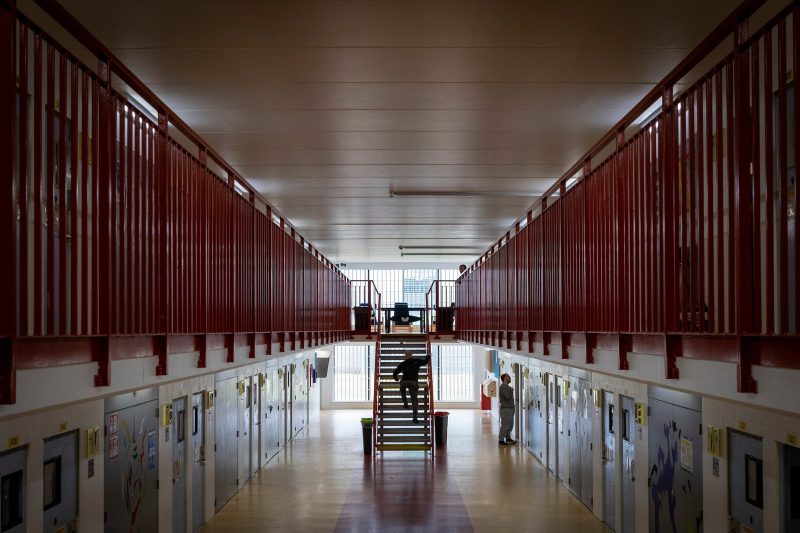
Purposeful activity at HMP Nottingham had fallen to poor, the lowest grade, according to the inspectorate’s report published in August 2024. Inspectors found many prisoners locked in their cells for 22 hours a day. On staff training days, men spent 23 hours behind their doors and did not even get a shower.
Inspectors did find stability at the top. The report said it was encouraging to find an experienced and capable governor and his team in place.
Purposeful activity covers education, work and time out of cell. About 40% of prisoners had no job or place in education and spent only two hours a day unlocked.
Nottingham is a reception and resettlement prison serving the courts of Nottinghamshire and Derbyshire. It held 924 men when the inspection ended in May 2024, against an operational capacity of 950.
Grades and history
The inspectorate judges prisons against four healthy prison tests: safety, respect, purposeful activity and preparation for release. Grades run from good through reasonably good and not sufficiently good to poor.
Inspectors rated Nottingham not sufficiently good for safety and preparation for release, and reasonably good for respect. At the previous full inspection, reported in September 2022, purposeful activity was not sufficiently good. The other three grades matched this time.
Leaders had made limited progress on earlier concerns. Of 14 concerns raised in 2022, inspectors found five addressed, two partially addressed and seven not addressed. Leaders had addressed only one of the four priority concerns, in the area of respect. This time inspectors identified 15 key concerns, six of them priorities.
The prison has a history of scrutiny. In January 2018, the Chief Inspector of Prisons issued an Urgent Notification, a formal warning to the Justice Secretary about urgent and significant concerns. Inspectors also carried out an independent review of progress after this inspection, with a report published in April 2025.
Overall Nottingham is a jail that is coping with the many challenges that it faces, but it remains a fragile institution that carries a lot of risk within its constantly churning population.
Charlie Taylor, HM Chief Inspector of Prisons
A prison under strain
Nottingham dealt with an enormous churn of prisoners. About 100 men arrived every week, some from as far away as North Yorkshire and County Durham. Staff also had to run an early release scheme, known as ECSL, which had reached its 18th version since its introduction at the end of 2023.
Violence was high, particularly assaults between prisoners, and leaders had no overarching plan to reduce it. Drugs partly fuelled this violence. Inspectors said drugs were less widespread than in some prisons but still too freely available.
Levels of self-harm remained high, and the prison had no local strategy to bring them down. The safer custody team had new staff. Inspectors said it was not surprising that self-harm stayed high, given the limited regime and the vulnerability of many prisoners.
Many prisoners had mental health difficulties. Some of the most unwell, waiting to move to hospital under the Mental Health Act, ended up in the segregation unit. Health staff had assessed them as unsuitable for segregation. A capable team there did its best, but inspectors described the conditions as wholly unsuitable.
Activity and relationships
The prison lacked enough activity places for its population. Yet when the Chief Inspector of Prisons visited the education centre, many classrooms stood empty or held only a handful of prisoners. Around 90% of the population had English and mathematics skills at entry level 3 or below. Ofsted rated both overall effectiveness and the leadership of education, skills and work inadequate.
The process for allocating men to activities was inefficient. Too many new arrivals waited a long time between induction and a place in education, skills or work. Medical, legal and other appointments often clashed with activity times, which hit attendance.
Relationships between staff and prisoners were mostly good. Capable middle leaders kept standards up on the wings and supported many inexperienced officers. However, inspectors received complaints about some officers’ behaviour, and too little key work took place. Prisoners spoke negatively about the quantity and quality of the food.
It was good to see the reintroduction of an evening regime for better-behaved men, the report said. Inspectors also praised support for prisoners with neurodiverse needs, including low sensory load cells, easy-read materials and calm gym sessions.
Preparing for release
Public protection arrangements remained weak, despite forming a priority concern at the last inspection. The risk management meeting did not consider all the prisoners it needed to. Telephone monitoring lacked resources.
Release planning under the early release scheme was often chaotic and rushed. About a quarter of sentenced prisoners had left the prison homeless in the previous 12 months. Outcomes for many others were largely unknown. Provision for family visits had improved, although remanded prisoners could not get their full entitlement.
The Chief Inspector of Prisons said Nottingham was coping but remained “a fragile institution that carries a lot of risk within its constantly churning population”. He added that leaders “could nevertheless do with spending more time out on the wings talking to prisoners and supporting staff”.
About this story
This story is based on HM Inspectorate of Prisons’ report on HMP Nottingham, published on 19 August 2024, following an inspection that ended in May 2024. All figures and judgements are the inspectorate’s. Read the full inspection report · See the prison’s profile in our directory.