
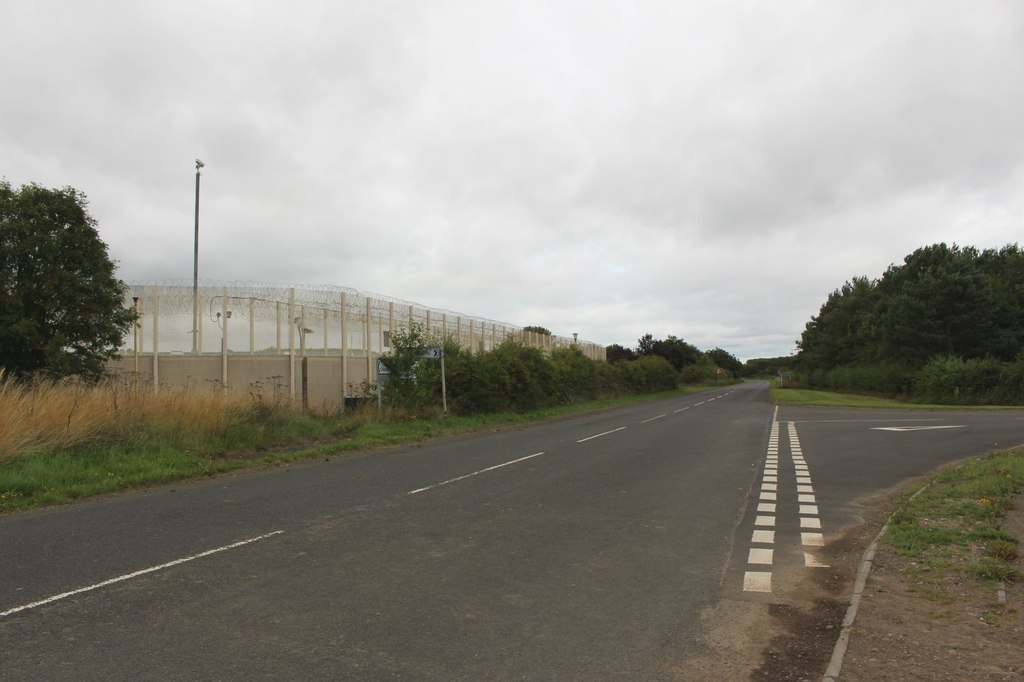
HMP Northumberland had become safer, but it was struggling to deliver its core job of training and resettling men, inspectors found. The inspectorate’s report, published in December 2022, rated rehabilitation and release planning as poor.
HM Chief Inspector of Prisons Charlie Taylor wrote: “Overall, we found Northumberland to be a settled and reasonably decent prison”. However, he said the main message of the inspection was the need to define and deliver the prison’s core rehabilitative mission.
Inspectors visited between 22 August and 8 September 2022. This was their first full inspection since 2017. Northumberland was a large category C training and resettlement prison, formed in 2011 from the merger of Acklington and Castington prisons. Sodexo, a private company, took over its running in 2013. At the time, it held 1,335 adult men, and a significant proportion had convictions for sexual offences.
How the prison was graded
Inspectors assess every prison against four healthy prison tests. They grade each one as good, reasonably good, not sufficiently good or poor.
Safety improved from not sufficiently good in 2017 to reasonably good. Respect, which covers how staff treat prisoners and their living conditions, scored reasonably good. Purposeful activity, which covers education, work and time out of cell, scored not sufficiently good. Rehabilitation and release planning, which looks at reducing reoffending and preparing men for release, scored poor.
Inspectors identified 12 key concerns and named six of them as priorities. The prison had made good progress on the 2017 key concerns, achieving four of five. During a shorter scrutiny visit in September 2020, inspectors had raised six further key concerns. The prison had achieved four, failed on one, and one no longer applied.
Overall, we found Northumberland to be a settled and reasonably decent prison.
Charlie Taylor, HM Chief Inspector of Prisons
Less violence, but deaths a concern
Violence had fallen considerably and was lower than at most other category C prisons. Fewer prisoners than in 2017 said they felt unsafe. Staff used force less often, and segregation had decreased significantly.
Officers, however, rarely switched on body-worn cameras during use of force incidents. Inspectors said this limited oversight by leaders.
Safeguarding was the important exception to the improving picture. Over the previous five years, six prisoners had taken their own lives. The report described this as a concerning figure, higher than at similar prisons. Inspectors found the prison’s approach to preventing suicide and self-harm was not robust, even though recorded self-harm had halved.
Drugs and alcohol remained key threats. Far more prisoners than in similar prisons said they were easy to obtain. Security was generally proportionate, but inspectors found no justification for strip-searching men on release.
Most men felt safe on their first night, and 91% said staff had treated them respectfully. Prisoners known as Insiders, who introduce new arrivals to prison life, ran an enthusiastic induction.
Too little activity and stalled rehabilitation
In the report’s words, “The quality of the daily regime did not meet the standards expected of a training prison”. Inspectors found a quarter of prisoners locked up during the core working day. A shortage of activity places left 19% of men unemployed.
Time out of cell varied greatly and fell as low as two hours a day for some men. Weekends were worse. Attendance at education and vocational training was low, punctuality was poor and staff often cancelled classes. Ofsted rated the overall provision as requires improvement, its second lowest grade.
The prison offered nothing for the substantial number of men who needed help with English and maths, or for those with a learning difficulty or disability.
Rehabilitation work had stalled after the pandemic. Staff shortages hit delivery, and many prisoners felt frustrated or lacked confidence that they could meet their sentence plan targets. Public protection work had significant weaknesses, including poor oversight of some high-risk men due for release. Access to offending behaviour courses was inadequate, although release planning at the end of sentences was better.
Staff, equality and what came next
Leaders had prioritised improving staff culture, and most prisoners said they felt respected. Inspectors still wanted better supervision of prisoners and more consistency in how staff dealt with them.
Shortages of officers, health care workers and offender managers caused significant problems. Staff turnover and absence also worried inspectors, and some staff felt leaders had neglected their well-being.
Consultation, applications and complaints worked better than inspectors often see. However, leaders had given equality little priority and paid too little attention to the experiences of prisoners from minority groups.
Inspectors have reported on HMP Northumberland again since, with a full inspection published in December 2025.
About this story
This story is based on HM Inspectorate of Prisons’ report on HMP Northumberland, published on 14 December 2022, following an inspection that ended in September 2022. It covers an earlier inspection: the prison’s profile has the latest findings. All figures and judgements are the inspectorate’s. Read the full inspection report · See the prison’s profile in our directory.



