
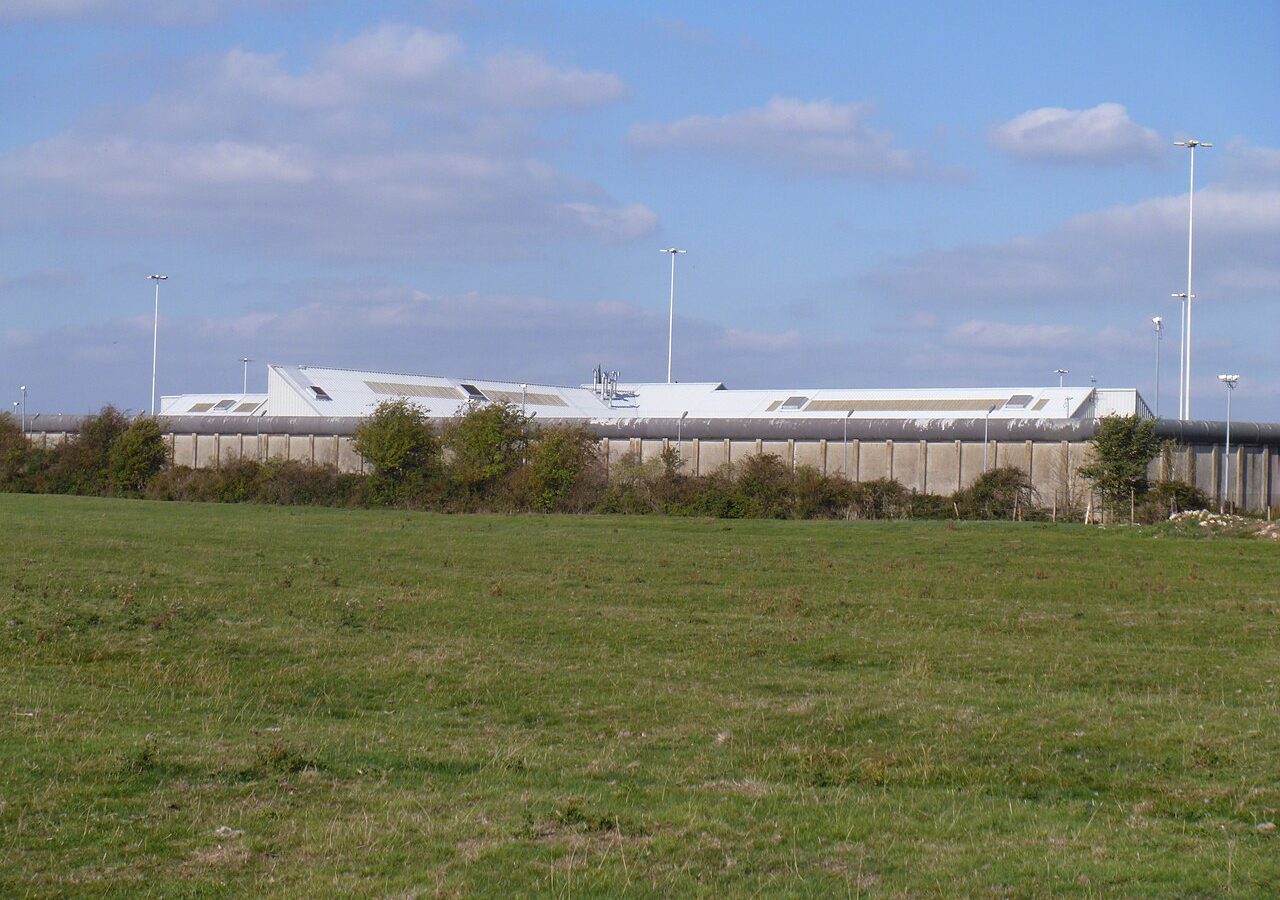
Leaders at HMP Long Lartin had sharply reduced the supply of illicit drugs, according to HM Inspectorate of Prisons. Positive results in mandatory drug tests had fallen steeply, which inspectors called a notable achievement.
Yet the inspectorate’s report, published in June 2026, found that outcomes had not improved enough to lift any of the prison’s grades. Fieldwork ended in March 2026. Inspectors described a well-led prison that was making progress, but too slowly.
Long Lartin is a high security prison near Evesham in the West Midlands. It holds Category A and B men, most of whom pose a very high risk of harm and serve long or indeterminate sentences. It held 537 men during the inspection, against an operational capacity of 564.
Grades unchanged
Inspectors judged outcomes not sufficiently good for safety, respect and purposeful activity, which covers education, work and time out of cell. They rated preparation for release reasonably good.
Those are the same grades as at the previous inspection, carried out in 2024 and reported in January 2025. This visit was an announced follow-up inspection.
Chief Inspector of Prisons Charlie Taylor wrote that “overall progress needed to speed up”. Too many previous concerns remained unaddressed, and several were still priorities. Inspectors raised 15 key concerns, five of them priorities.
Leaders had achieved a reasonable level of control over security, including notable success in reducing drug supply, but overall progress needed to speed up.
Charlie Taylor, HM Chief Inspector of Prisons
Violence, self-harm and force
Many prisoners told inspectors they felt unsafe. In the inspectorate’s survey, 39% said so at the time of the visit. The assault rate had begun to fall but remained higher than at similar prisons. In the year to February 2026, the prison recorded 185 assaults on prisoners and 214 on staff per 1,000 prisoners.
Serious assaults numbered 15 on prisoners and 11 on staff. A serious assault on an officer the previous summer had shaken frontline staff. The report said leaders had not done enough to understand what drove the violence.
Four more prisoners had taken their own lives since the last visit, and self-harm stayed above the rate at similar prisons. Support for men in crisis was poor. Ten prisoners were isolating themselves on the wings, some for more than a year, with very limited support.
Governance of force had improved in places. Even so, force was used more often than at any comparable prison. One mentally unwell man had waited 277 days for transfer to hospital under the Mental Health Act.
Security was a stronger area. The security team had invested in anti-drone wires and temporarily closed a wing that was vulnerable to drones.
Night sanitation and fragile relationships
Too many prisoners lived in unacceptable conditions. On older wings, men still relied on night sanitation, an arrangement for cells without toilets. Mr Taylor called it demeaning, and the report called it unhygienic. On other wings, many cells lacked heating or hot water. The governor had bid for in-cell toilets and sinks after the last inspection.
Inspectors said these long-standing problems would need substantial and sustained investment to fix. The main kitchen remained closed, and many prisoners complained about the food. The health centre was also in poor condition. Leaders had, however, worked hard to improve cleanliness in communal areas.
Staff-prisoner relationships were fragile. Too many staff did not engage confidently with prisoners, and minority ethnic prisoners reported especially poor relationships. Only 8% of prisoners said good behaviour was rewarded fairly. Staff morale was low, and the prison lacked experienced officers.
Activity, families and progression
Prisoners spent long periods locked up, particularly at weekends. Many men held full-time activity places, but frequent cancellations meant they worked only on and off. Attendance at workshops was poor, and teaching in two workshops was weak.
Some provision was better. The gym and library ran yoga, chess and an accredited course for young adults. An outreach tutor taught men in their cells, including those in segregation. Inspectors listed both as notable positive practice.
Family work had deteriorated significantly. Over half the population had not had a social visit in the past year. A chaplaincy scheme helped some men with neurodiverse needs or low literacy reconnect with relatives.
Preparation for release remained the strongest area. The offender management unit was well led and fully staffed, public protection work was effective and work with young adults had improved significantly. However, many men had too few chances to show progress, especially those seeking a lower security category or places on accredited offending behaviour courses.
About this story
This story is based on HM Inspectorate of Prisons’ report on HMP Long Lartin, published on 1 June 2026, following an inspection that ended in March 2026. All figures and judgements are the inspectorate’s. Read the full inspection report · See the prison’s profile in our directory.



