
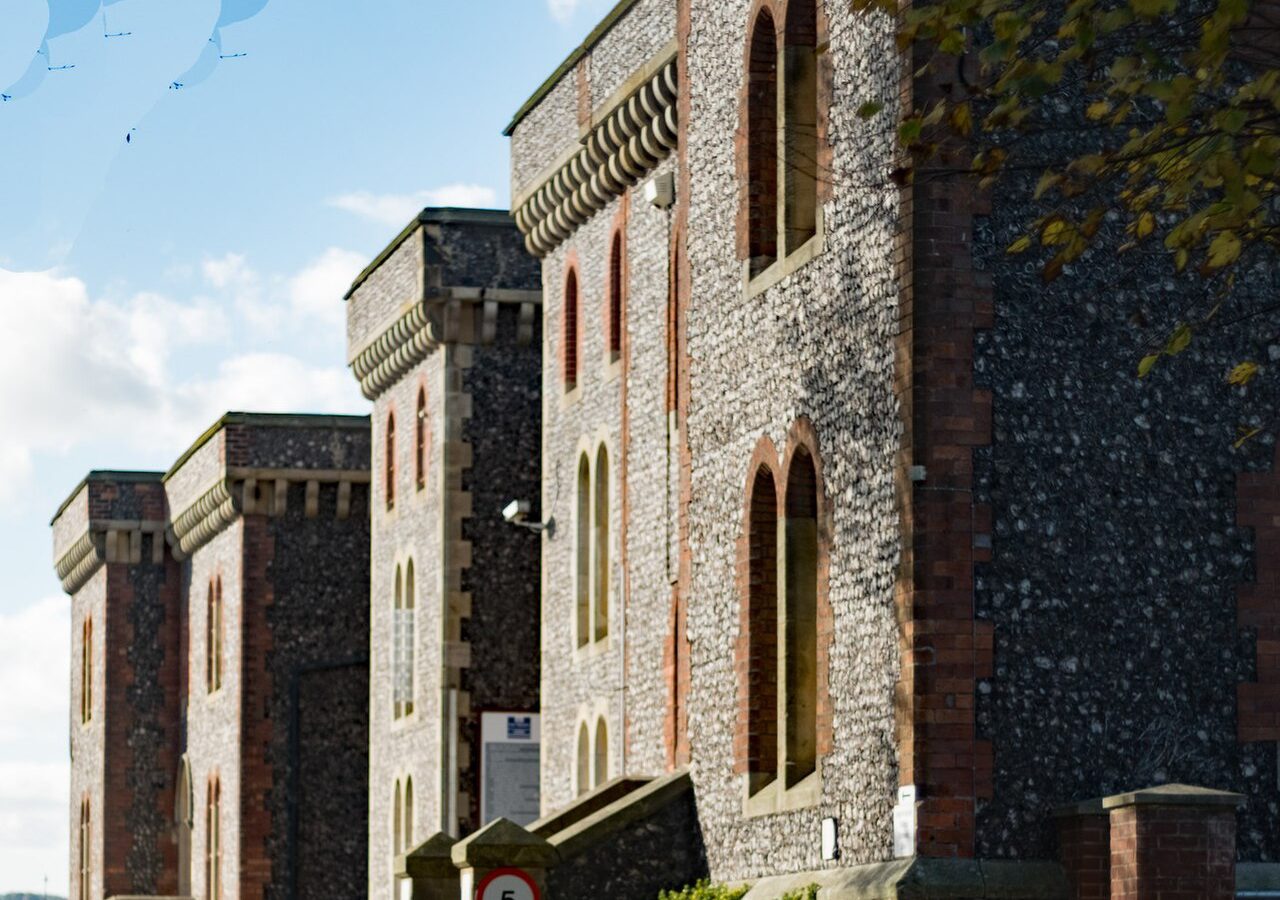
HMP Lewes had begun to recover under new leadership, according to an inspection report published in May 2024. Inspectors still judged that drugs were much too easy to get. Their roll checks during the working day also found more than half the population locked up.
HM Inspectorate of Prisons (HMIP) carried out its fieldwork at the Sussex jail between 5 and 16 February 2024. Lewes is a category B reception and resettlement prison for adult and young adult men. It held 578 prisoners at the time, against an operational capacity of 624.
This visit was unusual. Inspectors had found serious problems at Lewes in 2022 and returned for an independent review of progress in February 2023. That review found things had got even worse. HM Chief Inspector of Prisons Charlie Taylor therefore decided on an announced inspection, giving the prison six months’ notice to prepare.
A new governor arrived in summer 2023. The Chief Inspector of Prisons wrote that he had begun to make some good progress with the many challenges facing this run-down, overcrowded Victorian prison. Inspectors saw noticeably better relationships between staff and prisoners than on their last two visits. Staff morale had also improved.
How inspectors graded the prison
Inspectors judge every prison against four healthy prison tests. These cover safety, respect, purposeful activity and preparation for release. Purposeful activity covers education, work and time out of cell. Preparation for release covers resettlement work and contact with families.
Lewes scored not sufficiently good for safety, respect and preparation for release. It scored poor, the lowest grade, for purposeful activity. The preparation for release score had fallen from reasonably good at the 2022 inspection. The report linked that fall partly to the pressure of a fast-changing remand population.
Inspectors raised 15 concerns, five of them priorities. Of the 16 concerns raised in 2022, they found five fully addressed, eight partly addressed and three not addressed. Only one of the earlier priority concerns had been fully resolved.
There were some worrying holes in public protection arrangements with only four prisoners subject to phone or mail monitoring, a scarcely credible number in a prison of this type.
HM Inspectorate of Prisons report
Drugs, violence and self-harm
The report described the flow of drugs into Lewes as a serious problem. It linked drugs to some of the rise in violence and in the use of force by staff. Levels of violence were some of the highest for this type of prison. Assaults had recently fallen, but inspectors said it was too early to tell whether this marked a trend.
Leaders had recruited a dedicated manager to take forward a stronger drug strategy. Inspectors welcomed this. They also noted closer joint work between the residential, safety and security teams.
Self-harm remained too high and was rising. Prisoners did not get prompt answers when they pressed their cell bells, which created additional risks. The Chief Inspector of Prisons linked some of the self-harm to daily frustrations. These included long periods of lock-up, especially at weekends, unanswered applications, difficulty booking visits and long spells on remand.
Living conditions were still not good enough, despite a cleaner prison. Prisoners did not always have heating or hot water. Inspectors said the ageing buildings lacked investment. On a more positive note, the governor had introduced a cooked breakfast, which prisoners welcomed, although they complained that milk was no longer available.
Time out of cell and education
Prisoners spent more time unlocked than at the last inspection, but still less than inspectors have seen elsewhere. The regime had become more reliable. Leaders had ended the frequent, unplanned cancellations of education and the library closures that inspectors found before.
There were still not enough activity places for the population. The quality of some teaching was not good enough, particularly in mathematics. Many prisoners had poor literacy and maths. The prison had a reading strategy that inspectors judged much better developed than in other prisons, but it did not offer enough classes to meet the need. Attendance at education was poor, partly because gym sessions clashed with lessons.
Remand, release and public protection
Lewes now held a majority of remanded and unsentenced prisoners, at 55% of the population. Inspectors said its services had not changed enough to match their needs. Remanded prisoners did not always get their visits entitlement. They also got little help from the offender management unit with their immediate housing needs.
Inspectors found what they called worrying holes in public protection work. Only four prisoners were subject to phone or mail monitoring, which the report described as “a scarcely credible number in a prison of this type”.
The report also raised serious concerns about the end of custody supervised licence scheme, which allowed some prisoners to leave up to 18 days early. Under the scheme, some high-risk prisoners left at short notice without enough planning to manage their risk. Too many prisoners left Lewes homeless.
The Chief Inspector of Prisons called this a more encouraging inspection than the last two. He praised an enthusiastic and ambitious governor and an invigorated leadership team. He added a warning: “There is a long way to go at Lewes, which remains a fragile jail with crumbling infrastructure in need of substantial investment.”
Inspectors have reported on the prison again since, with a full inspection published in September 2025.
About this story
This story is based on HM Inspectorate of Prisons’ report on HMP Lewes, published on 14 May 2024, following an inspection that ended in February 2024. It covers an earlier inspection: the prison’s profile has the latest findings. All figures and judgements are the inspectorate’s. Read the full inspection report · See the prison’s profile in our directory.



