HMP Leeds had recorded the highest number of self-inflicted deaths of any adult male prison over three years, according to HM Inspectorate of Prisons. Inspectors counted 16 such deaths since their previous visit in 2022.
The inspectorate’s report, published in October 2025, followed fieldwork that ended in July 2025. It found that outcomes for prisoners had deteriorated across every one of the four healthy prison tests. These tests measure safety, respect, purposeful activity and preparation for release.
Leeds is a Category B reception and resettlement prison for men in Yorkshire and The Humber. A reception prison takes people straight from the courts, many of them on remand. Leeds received around 500 new arrivals a month. It held 1,088 men during the inspection, against an operational capacity of 1,110.
How the prison was graded
Inspectors rated Leeds poor for safety and poor for purposeful activity, which covers education, work and time out of cell. They judged respect and preparation for release not sufficiently good.
At the 2022 inspection, Leeds scored reasonably good for respect and for rehabilitation and release planning. It scored not sufficiently good for safety and purposeful activity. Every grade has therefore dropped by one step.
The report found that the prison had fully addressed just one of the 13 concerns raised in 2022. It had partly addressed three and had not addressed nine. Five of the six earlier priority concerns remained unresolved. This time inspectors raised six priority concerns and nine key concerns.
Immediate action is required to address the concerns identified in this report, and leaders must make sure that the needs of the most vulnerable prisoners are placed at the heart of this work.
Charlie Taylor, HM Chief Inspector of Prisons
Safety and mental health
Chief Inspector of Prisons Charlie Taylor wrote that safety was a serious concern, with high levels of mental health need and substance misuse. Leaders had responded to recommendations from the Prisons and Probation Ombudsman, which investigates deaths in custody. Their steps included random CCTV checks and a taskforce chaired by senior leaders.
Even so, many underlying problems persisted. Inspectors identified weak early days care, poor day-to-day support for people at risk of self-harm and long delays in moving acutely unwell men to hospital under the Mental Health Act.
During the inspection, five men awaited a transfer to hospital. One of them had waited for 155 days. The report describes them as “desperately unwell”. About 350 prisoners a month were referred to the mental health team.
Early days support also fell short. In the inspectorate’s survey, 32% of prisoners said they felt suicidal on arrival. Only 36% said they had a free phone call before being locked up on their first night. Safety interviews took place at a busy, noisy front desk, with other people close by. Reception staff were friendly, however, and new arrivals received a hot meal.
Drugs were too readily available, and too many prisoners developed a substance misuse problem while at Leeds. Around 30% of the population received opiate substitution treatment.
Crowded cells and little time out
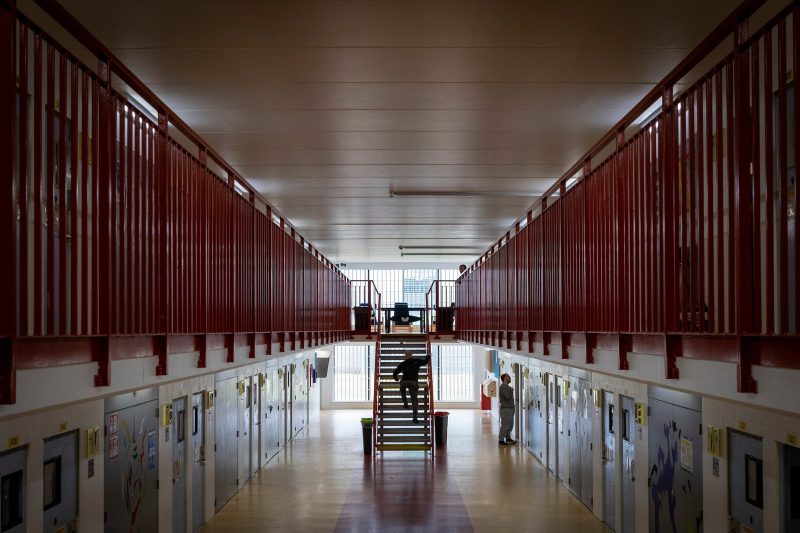
The prison was built in 1847, with two wings added in 1993. Its in-use certified normal capacity, the number it can hold without crowding, stood at 641. Inspectors found 78% of prisoners living in overcrowded cells designed for one. The governor had asked national leaders to reduce the population on the older wings, but they had not yet agreed.
Time out of cell was poor. Around 40% of the population had no purposeful activity, and most prisoners spent around 22 hours a day locked in their cells. Staff frequently curtailed the regime. Ofsted, which inspects education in prisons, judged the education, skills and work provision inadequate.
Inspectors said the curriculum did not suit the many short-stay and remanded men. Most prisoners with special educational needs and disabilities lacked effective support. Attendance at education was low.
Relationships between staff and prisoners were inconsistent. Inspectors praised staff on F wing and the complex needs unit, but found others disengaged or unhelpful. Key work, in which an officer meets a prisoner regularly for support, had stalled. Officers delivered fewer than 3% of planned sessions in the previous six months. Only 8% of officers who answered a survey described morale as high or very high.
Release, families and what comes next
Preparation for release had weaknesses. About 30% of prisoners left Leeds homeless in the previous 12 months. Remanded and recalled prisoners, who made up most of the population, lacked practical support. Public protection work also had gaps, including limited oversight of high-risk releases and delays in phone monitoring.
The report did record good practice. Leeds offered school-aged children early evening visits with their fathers. Inspectors called this a rare and commendable initiative for a busy reception prison and listed it as notable positive practice.
Mr Taylor credited the leadership team with commitment and a clear vision. Leaders had invested in training and leadership development. Yet he concluded that the scale of the challenges had limited the impact of their efforts. He wrote that “Immediate action is required to address the concerns identified in this report”.
HM Inspectorate of Prisons later carried out an independent review of progress at Leeds, published in May 2026. That follow-up visit assessed how far the prison had acted on the key concerns from this inspection.
About this story
This story is based on HM Inspectorate of Prisons’ report on HMP Leeds, published on 21 October 2025, following an inspection that ended in July 2025. All figures and judgements are the inspectorate’s. Read the full inspection report · See the prison’s profile in our directory.