HMP Lancaster Farms offered real opportunities to motivated prisoners, but others could drift through their sentence with little challenge. HM Inspectorate of Prisons reached that finding in a report published in March 2019.
Inspectors visited the category C resettlement prison between 29 October and 8 November 2018. They found a competent, calm and ordered jail. Yet many weaknesses from the previous inspection in 2015 remained, and the prison had achieved only a third of the inspectorate’s earlier recommendations.
HM Chief Inspector of Prisons Peter Clarke wrote that a less motivated prisoner “could easily opt out with too little challenge from the institution”. He called this a missed opportunity.
How inspectors graded the prison
The inspectorate assesses prisons against four healthy prison tests: safety, respect, purposeful activity, and rehabilitation and release planning. Purposeful activity covers education, work and time out of cell. Rehabilitation and release planning covers family ties, offender management, public protection and preparation for release.
At Lancaster Farms, inspectors judged safety and respect reasonably good. They rated purposeful activity and rehabilitation and release planning not sufficiently good. The report said there was some improvement, but the overall assessments stayed the same as in 2015.
The prison opened in 1993 and served the North West of England. At the time of the inspection it held 545 adult men against an operational capacity of 560. Most were aged between 21 and 40 and were serving between two and 10 years. Some 89 new prisoners arrived each month.
At the 2015 inspection, the inspectorate made 66 recommendations. The prison had since achieved 21 and partly achieved 12.
In contrast, if you were less motivated, you could easily opt out with too little challenge from the institution.
Peter Clarke, HM Chief Inspector of Prisons
Safety and drugs
Lancaster Farms remained a reasonably safe place. Arrangements for new arrivals generally worked well. Levels of violence broadly matched those at similar prisons, and most incidents were relatively less serious.
Some prisoners intimidated others, and several men sought sanctuary by isolating themselves or moving to segregation. Support for them had improved but remained insufficient. New case management plans for victims and perpetrators of violence were encouraging but at an early stage.
Use of force had increased noticeably. In the previous six months, 185 incidents had involved force. Staff documented these poorly, so leaders could not be sure force was proportionate and legitimate. The segregation unit was usually full, though staff there were supportive.
The report found considerable evidence of a drug problem despite a series of initiatives to combat it. Many prisoners said drugs were easy to get. Testing showed a high but falling positive rate.
Levels of self-harm were much higher than at the previous inspection. Care for men at risk was reasonably good, and prisoners in crisis said staff supported them well. The prison had met every recommendation from the Prisons and Probation Ombudsman.
Relationships and education
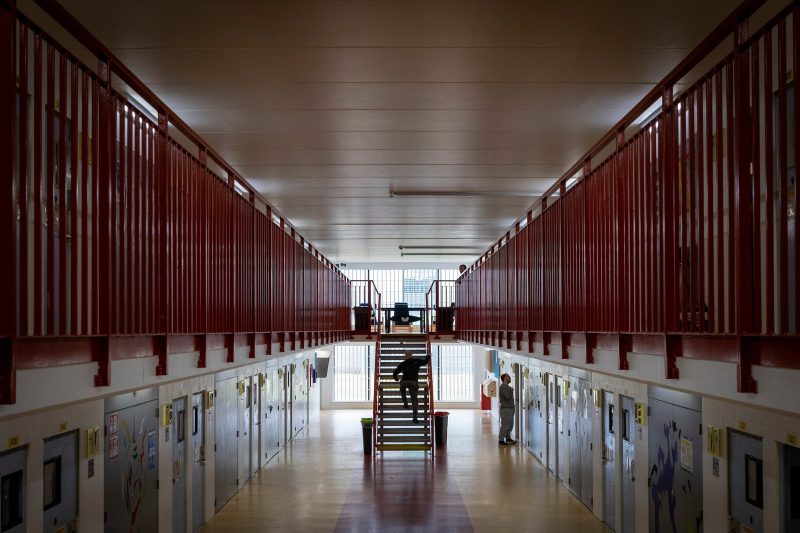
Relationships between staff and prisoners were very good. In the inspectorate’s survey, 84% of prisoners said staff treated them with respect. The environment was bright and spacious, and outside areas were clean. Cells and food were reasonable. However, the applications system was not yet working well, and delays undermined the complaints process.
Health care was improving and satisfactory overall, despite often long waits. Drug services were very good, helped by a new well-being unit for men recovering from drug misuse. Support for family ties and visits was good, thanks in large part to the Prison Advice and Care Trust and Partners of Prisoners.
The prison had enough activity places for all prisoners after recent increases. Yet about a third of prisoners were locked up during the working day. Too few attended education or work regularly or on time. Staff absences led to frequent cancellations.
Allocation to learning often ignored a learner’s abilities or experience. Shortcomings in teaching and assessment held back progress. Those who completed a course did achieve qualifications at a high rate on most courses. Ofsted, which inspects prison education, judged the effectiveness of provision as requires improvement.
Release planning and later inspections
Many weaknesses persisted in rehabilitation and resettlement work. Nearly 200 prisoners did not have an up-to-date OASys assessment, the system probation staff use to assess risk. Contact with offender supervisors was too limited or reactive. A shortage of probation staff raised concern about higher-risk cases. Public protection work had improved but was still not robust enough. Work with men about to leave, however, was much better.
Peter Clarke described Lancaster Farms as a competent prison with a capable management team. He wrote: “Lancaster Farms was a decent enough place in comparison to many similar prisons, but it can do more and do it better.”
Inspectors have reported on Lancaster Farms again since, with a full inspection published in December 2022. This article covers the report published in March 2019.
About this story
This story is based on HM Inspectorate of Prisons’ report on HMP Lancaster Farms, published on 12 March 2019, following an inspection that ended in November 2018. It covers an earlier inspection: the prison’s profile has the latest findings. All figures and judgements are the inspectorate’s. Read the full inspection report · See the prison’s profile in our directory.