
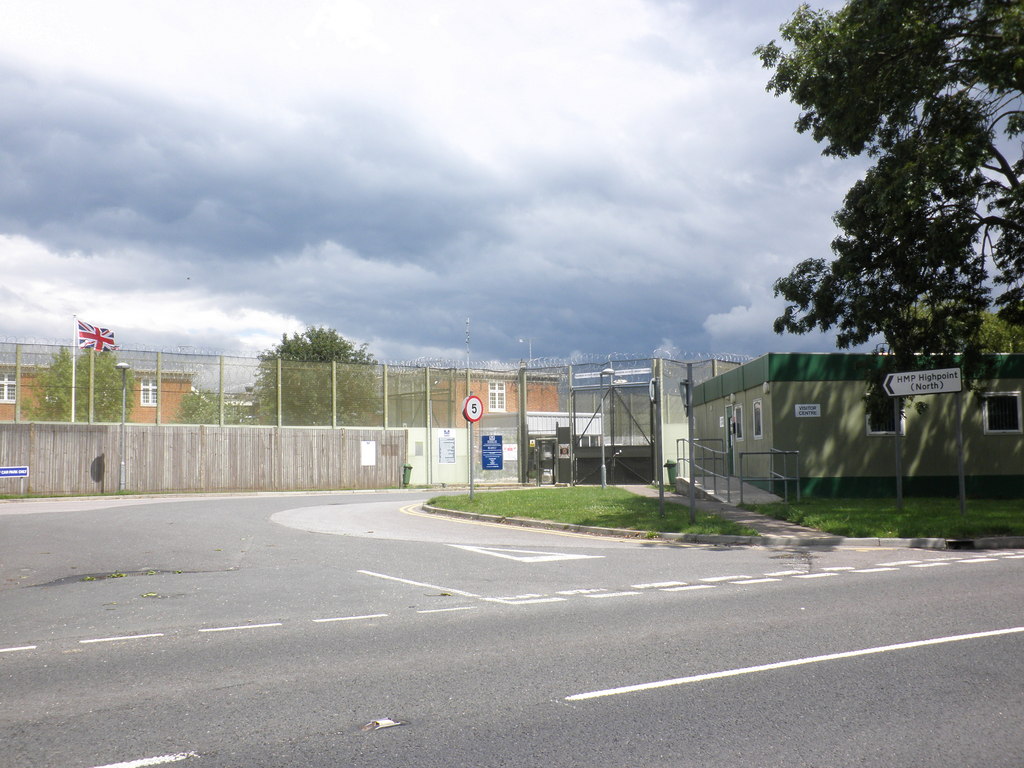
Drugs flown in by drone fuelled a thriving market inside HMP Highpoint, according to the prison inspectorate’s report on the Suffolk jail, published in October 2026.
Inspectors visited the category C training and resettlement prison for adult men in July 2026. Highpoint held 1,103 men at the time, against an operational capacity of 1,160.
Random drug tests at the prison showed a 28% positive rate. The report said: “There was a thriving drugs market within the prison with random drug tests showing a 28% positive rate.” Inspectors added that they often smelt cannabis, and that drugs were available around the prison.
The report links the drug problem to a lack of things to do. Too few men attended work, training or education, and the inspectorate rated purposeful activity as poor, its lowest grade.
How the prison was graded
HM Inspectorate of Prisons judges each jail against four healthy prison tests. These cover safety, respect, purposeful activity and preparation for release. Purposeful activity covers education, work and time out of cell.
At Highpoint, inspectors rated safety as not sufficiently good. They rated respect as reasonably good. Purposeful activity was poor, and preparation for release was not sufficiently good.
Those grades mark a decline in two areas since the previous full inspection, which the inspectorate reported in January 2024. At that visit, inspectors judged safety reasonably good and respect good. Purposeful activity was poor then too, and preparation for release was not sufficiently good.
Inspectors identified 15 key concerns. They listed six of these as priorities that need immediate attention from leaders.
There was a thriving drugs market within the prison with random drug tests showing a 28% positive rate.
HM Inspectorate of Prisons report
Drones, drugs and rising violence
Charlie Taylor, HM Chief Inspector of Prisons, named the arrival of contraband as the most important challenge. Drones often delivered it into the large, open site.
He said the prison service had failed to reduce the site’s vulnerability to drones. Many windows remained weak points. Prisoners had cut holes in window grilles so they could fish for large packages dropped at the site.
The problems were worse on houseblocks 1–4. Leaders had no overall drug reduction strategy, and men with a drug problem received too little support. Inspectors also described the prison’s approach to men found under the influence as often punitive.
Violence had grown since the last inspection. Data from the prison put the rate of overall violence at 239 incidents per 1,000 prisoners between June 2025 and May 2026. That rate had risen by 23%, but it stayed around the average for category C prisons.
Serious assaults had risen faster, by 43%. In the inspectorate’s survey, 21% of prisoners said other prisoners had physically assaulted them. That figure was higher than at similar prisons.
Leaders understood the main drivers of violence, such as debt, bullying and the illicit economy. However, they did too little routine analysis of data to spot trends. Use of PAVA incapacitant spray was among the highest of any category C prison. Leaders did not analyse trends in its use.
Too many men with too little to do
Time out of cell at Highpoint was better than inspectors usually see. Even so, too many men had nothing meaningful to do. Roll checks during the working day found only 42% of prisoners in purposeful activity.
Shortages of teachers and instructors often kept workshops and classrooms shut. All provision closed on Wednesday mornings. Cuts to the education contract and to the prison’s dynamic purchasing system budget, a fund for extra activities, had shrunk the vocational training offer.
Inspectors wrote: “The prison was still not fulfilling its purpose as a training and resettlement prison.”
Many men felt frustrated that they could not progress through their sentences. Limited places on the Building Choices programme meant many could only meet their sentence plan targets late on. That delayed any move to open conditions.
A fire had also closed unit 5. The closure disrupted the route that usually lets the best-behaved men move to the more open north site. Inspectors praised the case administration team in the offender management unit, which handles sentence planning. Staff there had worked very long hours on sentence recalculations ahead of further early releases.
Clean units, steady leadership and expansion ahead
Inspectors found a prison that was still generally well run by an experienced governor and his team. Leaders insisted on high standards of decency, and cells and communal areas were very clean and well maintained.
New arrivals received a good welcome. In the survey, 92% said reception staff treated them very or quite well. Peer workers sat with new arrivals in an unlocked holding room, which inspectors recorded as notable positive practice.
Staffing had improved after recruitment ahead of the expansion. However, leaders worried about the quality of new recruits, some of whom joined without a face-to-face interview. Staff-prisoner relationships on houseblocks 1–4 lagged behind the rest of the jail, and officers often stayed in offices.
Health care oversight was poor, and the different providers often worked in silos. The waiting list for psychology support was too long. Food on the south site was not good enough, and the applications system for prisoner requests did not work well.
Highpoint faces rapid growth. Three new residential units should add 741 places next year, and the Chief Inspector of Prisons said it will become the largest jail in the country within two years. He called on the prison service to do more to cut the site’s vulnerability to drones. He also urged leaders to build a drugs strategy that reduces both supply and demand.
About this story
This story is based on HM Inspectorate of Prisons’ report on HMP Highpoint, published on 5 October 2026, following an inspection that ended in July 2026. All figures and judgements are the inspectorate’s. Read the full inspection report · See the prison’s profile in our directory.



