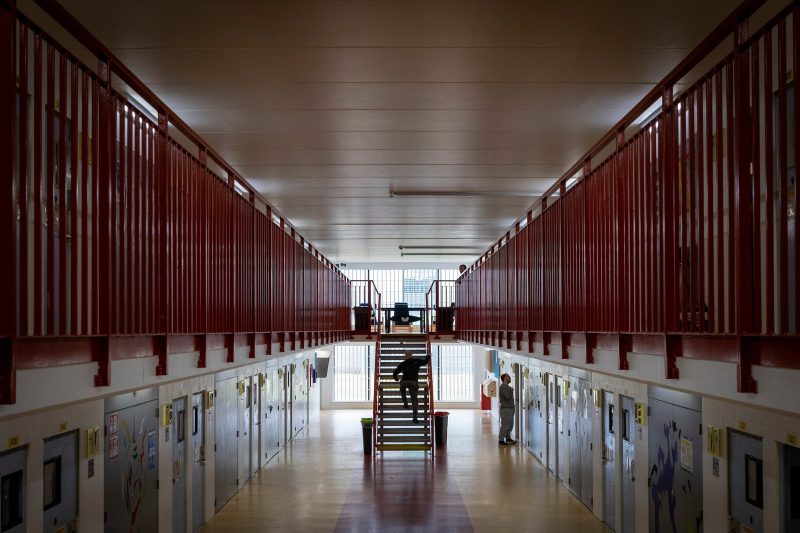
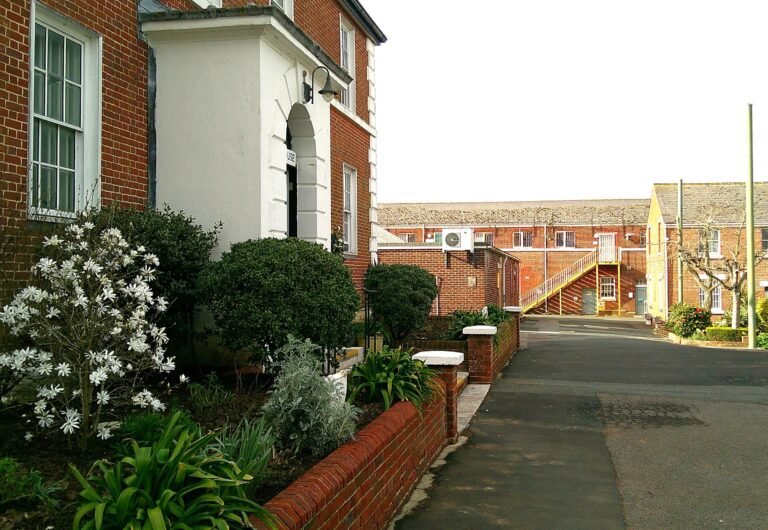
HMP Exeter had failed to make the progress inspectors expected after a damning inspection four years earlier. Their report, published in February 2023, found high self-harm, a chaotic induction process and constant changes in leadership.
HM Chief Inspector of Prisons Charlie Taylor found some small improvements and some potentially promising work. But he wrote that “the levels of care, particularly for the most vulnerable, were still nowhere near good enough”.
In 2018 the prison had become the subject of an urgent notification because it could not keep prisoners safe. After the 2022 visit, Mr Taylor said he had no alternative but to invoke the urgent notification again. He described it as “the first time this has happened in consecutive inspections of an adult prison”.
The prison and its grades
Exeter is a men’s reception prison with a small resettlement function. It serves courts in south-west England. Inspectors visited between 31 October and 11 November 2022, when the prison held 388 men.
Inspectors judge every prison against four healthy prison tests. These are safety, respect, purposeful activity, and rehabilitation and release planning. Purposeful activity covers education, work and time out of cell.
Safety stayed poor, the same grade as in 2018. Purposeful activity declined to poor. Respect received a grade of not sufficiently good. Rehabilitation and release planning, by contrast, scored reasonably good. Outcomes stayed the same in three areas and declined in one.
Inspectors raised 11 key concerns, four of them priorities. The prison had achieved two of its five key recommendations from 2018.
Although this report points to some small improvements and some potentially promising work, the levels of care, particularly for the most vulnerable, were still nowhere near good enough.
Charlie Taylor, HM Chief Inspector of Prisons
Danger in the first days
Inspectors worried most about care for men in their first days and weeks. Mr Taylor described this as a critical and risky time, when prisoners feel frightened and overwhelmed. More men at Exeter than at similar prisons arrived with mental health and substance misuse needs. In the survey, 77% said they had a mental health condition.
Yet the induction process was chaotic and lacked proper oversight from leaders. There had been 10 self-inflicted deaths since the last inspection. Failures in the substance misuse service meant health care staff did not regularly visit some new arrivals who needed supervision during detoxification.
Most vulnerable prisoners spent their early days on a wing with the general population. One man, held for the first time, described days locked up on C wing. Staff served his meals at his door while other prisoners shouted abuse outside. Nobody had given him a proper induction. He thought this was how he would serve his whole sentence.
The rate of self-harm, though lower than a year earlier, remained the highest of any reception prison in England and Wales. Staff shortages in health care left many men with mental health needs without the support they needed.
Locked up and bored
Men spent long periods locked up, and very few attended work or education even though places existed. Long delays to education induction stopped many from even applying for an activity. Staff seemed to assume that prisoners did not want to work. Inspectors, however, spoke to many who were bored and desperate to get off the wing.
The curriculum did not suit the prison, and completion rates were astonishingly low. Cells were in poor condition. Many had no glass in the windows, exposed electric wires or floors needing repair, and some contained mould.
Violence remained high, and leaders did not understand many of its causes. Assaults on prisoners had fallen but still exceeded the rate at comparable prisons. Assaults on staff had risen, though a small number of prisoners carried out most of them. There was no key worker scheme, and relationships between staff and prisoners were mostly transactional.
Leadership churn and later reports
Mr Taylor criticised the support the prison service had given Exeter. He said it did not appear to match the help given to other prisons after an urgent notification. Exeter had had three governors, eight deputy governors and eight heads of safety since the previous inspection. CCTV, already faulty in 2018, had got worse. During the inspection, four officers were on detached duty elsewhere.
The governor was well liked and visible, but lacked the oversight needed to make the prison safer. Where leadership had stayed stable, as in the offender management unit, inspectors found an effective and well-motivated team. Mr Taylor called for a period of stability and a relentless focus on safety and time out of cell.
Inspectors have reported on the prison again since, with an independent review of progress published in January 2024. A full inspection followed in March 2026.
About this story
This story is based on HM Inspectorate of Prisons’ report on HMP Exeter, published on 16 February 2023, following an inspection that ended in November 2022. It covers an earlier inspection: the prison’s profile has the latest findings. All figures and judgements are the inspectorate’s. Read the full inspection report · See the prison’s profile in our directory.