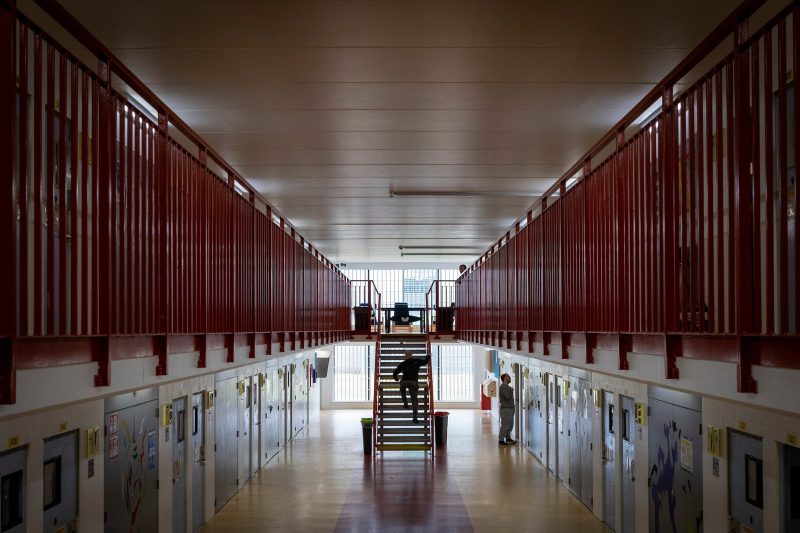
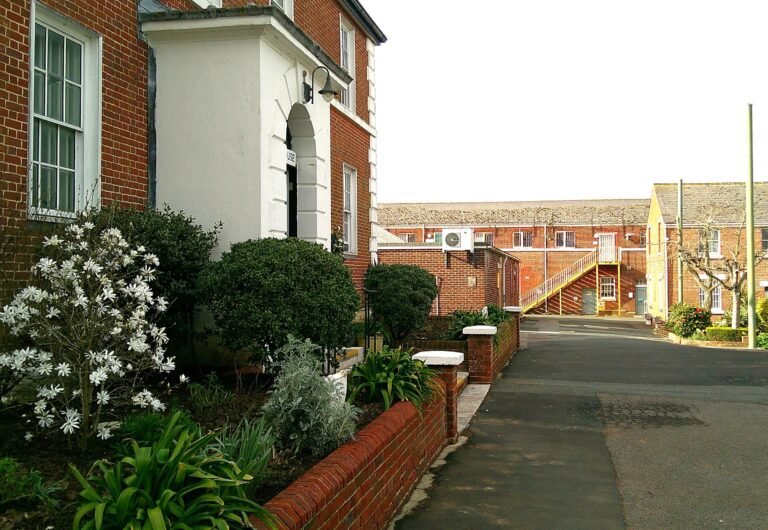
HM Chief Inspector of Prisons Peter Clarke invoked the urgent notification process at HMP Exeter in May 2018. He told the Justice Secretary that safety at the men’s reception prison had significantly worsened since 2016.
Mr Clarke set out his reasons in a letter dated 30 May 2018 to David Gauke, then Justice Secretary. It followed an unannounced inspection between 14 and 24 May 2018. Inspectors gave the prison their lowest possible grade, poor, for safety. Mr Clarke wrote that “the overall level of safety at HMP Exeter is unequivocally poor”.
What an urgent notification means
An urgent notification is a formal letter in which the Chief Inspector of Prisons tells the Justice Secretary about urgent and significant concerns at a prison. The Justice Secretary must respond publicly within 28 days, setting out how the government will address them.
The protocol lists factors the Chief Inspector of Prisons may weigh. These include poor or repeated poor grades, the type of prison, the vulnerability of prisoners and failure to achieve past recommendations. Inspectors also consider their confidence in the prison’s capacity to improve.
Inspectors judge every prison against four healthy prison tests: safety, respect, purposeful activity, and rehabilitation and release planning. At the previous full inspection in August 2016, Exeter scored not sufficiently good on all four.
Despite some creditable efforts to implement recommendations from the Prisons and Probation Ombudsman following those deaths, the overall level of safety at HMP Exeter is unequivocally poor.
Peter Clarke, HM Chief Inspector of Prisons
Deaths, violence and drugs
Six prisoners had taken their own lives since 2016, five of them in 2017. The prison had made some creditable efforts to act on recommendations from the Prisons and Probation Ombudsman. Even so, self-harm over the previous six months ran higher than in any similar prison. It had risen by 40% since the last inspection.
Assaults on prisoners had gone up by 107%. Mr Clarke said this was the highest rate inspectors had seen in local prisons in three years. Assaults on staff had risen by 60% and fights by 46%. Many assaults were serious, and weapons were a common feature.
Drugs were rife. In the survey, 60% of prisoners said drugs were easy to get, and 14% said they had developed a drug habit inside. Nearly a quarter were testing positive. Mr Clarke said he saw prisoners clearly under the influence of drugs. He judged that drugs were contributing to the violence.
Sixty-seven per cent of prisoners said they had felt unsafe at some point, a significant increase on 2016. Almost a third felt unsafe at the time of the inspection.
Use of force had risen by 39%, yet the prison had largely ignored the inspectorate’s main recommendation on its governance. Staff had used force in 187 recorded incidents since 1 January 2018. More than 250 related reports remained incomplete. The prison could provide film from only three of 39 planned uses of force.
A lack of care for vulnerable men
Mr Clarke described a lack of care that showed little empathy for the factors behind suicide and self-harm. More than half of prisoners said they had felt depressed on arrival, and 24% had felt suicidal. He wrote that “it was shocking to see the way in which cell call bells were routinely ignored by staff”. Inspectors saw bells go unanswered even when staff had nothing else to do.
Some vulnerable men spent their early days on overspill wings, facing abuse from other prisoners. Inspectors found one new arrival in a filthy cell with a blocked toilet. Staff moved him only after an inspector stepped in.
Another man, judged at heightened risk of suicide, spent three days on C1, a subterranean wing used in effect for segregation without the usual safeguards. Inspectors later found him in a squalid cell without bedding, a television or glass in the window. Staff responsible for checking on him had reported none of this.
In the segregation unit, a special cell had no furniture, toilet or bed. Managers had approved its use for prisoners needing constant watch, and staff had used it 17 times in six months. Many cells across the prison had broken windows, leaking toilets and sinks, and poor screening.
Some progress, and later reports
Mr Clarke acknowledged real progress. The prison now had significantly more staff, and many prisoners had a more predictable regime. Healthcare had improved. Better resettlement work lifted the rehabilitation and release planning grade to reasonably good, which he called a real achievement.
But only three of 14 safety recommendations from 2016 had been fully achieved. The senior management team was largely the same as in 2016. Mr Clarke said the poor response to past recommendations weakened his confidence that the prison would fix its problems.
Inspectors have reported on the prison again since. A scrutiny visit followed in April 2021, and a second urgent notification in November 2022. A full inspection was published in February 2023, an independent review of progress in January 2024 and another full inspection in March 2026.
About this story
This story is based on the Urgent Notification on HMP Exeter that HM Inspectorate of Prisons published on 30 May 2018. It covers an earlier report: the prison’s profile has the latest findings. All figures and judgements are the inspectorate’s. Read the Urgent Notification · See the prison’s profile in our directory.