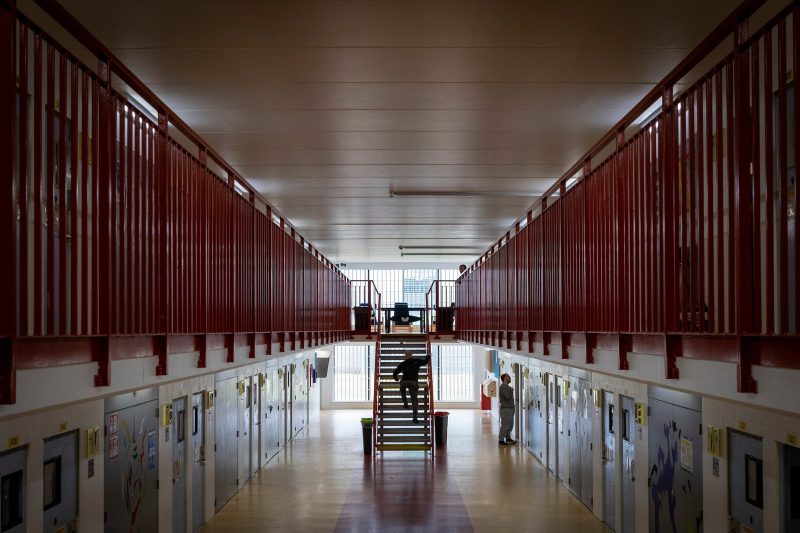
Most prisoners at HMP Bullingdon spent much of the day locked in their cells, and purposeful activity had fallen to poor, inspectors found. Purposeful activity covers education, work and time out of cell.
The inspectorate’s report, published in February 2023, followed a visit between 24 October and 3 November 2022. The reception prison near Bicester in Oxfordshire held 932 men, against a temporarily reduced operational capacity of 927.
Many men were out of their cells for as little as an hour a day, usually first thing in the morning. A random roll check found 58% of prisoners locked up during the main part of the working day.
Ofsted, the education inspectorate, rated the overall effectiveness of education, skills and work ‘inadequate’, its lowest grade. The report described the prison as “settled but subdued”.
Grades and progress
Inspectors rated safety and respect reasonably good, the same as at the previous inspection in 2019. Rehabilitation and release planning stayed not sufficiently good. Purposeful activity was the only area to decline.
In 2019 the inspectorate made 32 recommendations, 13 of them about key concerns. Inspectors found that the prison had achieved six of those 13 and partly achieved one. All three key concerns in safety had been met.
This time inspectors raised 12 key concerns, five of them priorities. Four of the five priorities related to education, work and time out of cell.
In our report we describe the institution as settled but subdued.
HM Inspectorate of Prisons report
A busy reception prison
Bullingdon served courts in the Thames Valley and other parts of central southern England. It received 3,591 new prisoners a year. Sixty or more arrived each week, and nearly three-quarters of the population stayed for less than six months.
HM Chief Inspector of Prisons Charlie Taylor said it was reassuring that new arrivals received a reasonable level of support and assessment. Reception was busy but well organised, and a peer-led induction worked well.
Violent incidents had fallen slightly since 2019, and staff investigated them well. Leaders used data effectively to understand the causes of violence. Too many disciplinary charges, known as adjudications, did not proceed after referral to the police, so some serious offences went unpunished.
Use of force had risen slightly, and its unplanned use was far higher than at comparable prisons. Some staff used force too quickly, before trying to calm situations down. Body-worn camera use was improving, but staff did not always switch them on.
The segregation unit held some men with very complex needs, and a good team of staff managed them well. Most stayed only briefly before returning to the wings, though accommodation and the regime on the unit were not good enough.
There had been two self-inflicted deaths since the previous inspection, and the prison was working hard to learn from them. Self-harm was in line with comparable prisons and falling.
Staff shortages at the heart
Mr Taylor wrote: “At the heart of this, and many other problems faced by the prison, was a chronic shortage of staff.” The prison lacked frontline officers and specialist staff in almost every department.
Relationships between staff and prisoners were mixed. Interactions were often friendly and relaxed, and some staff gave very caring support. But inspectors also saw a staff group with low expectations of prisoners and not enough interest in them.
Leaders had initiatives to improve recruitment and retention and to support staff well-being. A lack of visible leadership on the wings undermined that work, the report said.
Much of the main A to D accommodation was run down and needed refurbishment, and many communal showers were dirty. Far too many prisoners lived in overcrowded conditions. The newer house blocks were cleaner and better presented.
Health, equality and release
Inspectors found some clear positives. Outcomes in health care were good overall. Leaders had brought renewed energy and investment to equality work, and had started to improve consultation with prisoners and the use of peer support.
Rehabilitation and release planning had weaknesses. Prisoners had too little contact with their prison offender managers, the staff who oversee their sentence plans. Public protection arrangements were not robust enough, and remand prisoners fared worse than convicted men on education and resettlement support.
Mr Taylor said leaders held an honest view of the prison’s strengths and weaknesses, but some of their priorities needed to be more focused and measurable.
Inspectors have reported on Bullingdon again since, with a full inspection published in October 2025 and an independent review of progress in May 2026. This story covers the findings of the 2022 visit only.
About this story
This story is based on HM Inspectorate of Prisons’ report on HMP Bullingdon, published on 20 February 2023, following an inspection that ended in November 2022. It covers an earlier inspection: the prison’s profile has the latest findings. All figures and judgements are the inspectorate’s. Read the full inspection report · See the prison’s profile in our directory.