Drones carrying drugs and other contraband were having a hugely destabilising effect on HMP Onley, according to the inspectorate’s report published in August 2025. Random drug testing showed a positive rate of 34%. In the inspectorate’s survey, 57% of respondents said it was easy to get drugs in the prison.
Chief Inspector of Prisons Charlie Taylor wrote that “the prison service had failed to defend this jail from serious organised crime gang activity”. The prison sits in a rural location and had weaknesses in its physical security, including its windows.
Onley is a category C training and resettlement prison in the Midlands. It held 729 men when the inspection ended in May 2025, against an operational capacity of 742.
Grades fall
The inspectorate judges prisons against four healthy prison tests: safety, respect, purposeful activity and preparation for release. Purposeful activity covers education, work and time out of cell. Grades run from good through reasonably good and not sufficiently good to poor.
Safety and respect both fell from reasonably good at the previous full inspection, reported in September 2022, to not sufficiently good. Purposeful activity stayed poor. Preparation for release remained not sufficiently good, the same grade its predecessor test received in 2022.
Inspectors found limited progress on earlier problems. Of five priority concerns from 2022, leaders had addressed one and partially addressed another. Two remained unaddressed, and one no longer applied. This time inspectors raised 13 concerns, six of them priorities.
The inspectorate later carried out an independent review of progress at Onley, with a report published in February 2026.
In a rural location, with weaknesses in physical security, including windows that were easily breeched, the prison service had failed to defend this jail from serious organised crime gang activity.
Charlie Taylor, HM Chief Inspector of Prisons
Drugs, debt and violence
Violence had increased significantly since the 2022 inspection. Inspectors said a thriving illicit economy drove much of it. Prisoners in debt faced assault or chose to isolate themselves.
Leaders in HM Prison and Probation Service had recognised that drones posed a particular threat to Onley. However, they had not provided the investment needed to secure the site. Poor management of medicine queues also meant that prescribed medicines often ended up diverted.
The rate of use of force was high and oversight weak. Staff did not always wear or switch on their body-worn cameras, and leaders did not routinely review restraint incidents.
Mental health provision was poor. Only the most unwell men received treatment, and the service had no psychology input. Men at risk of suicide or self-harm often received process-driven support rather than the personal care they needed.
Inexperienced staff and frustrated prisoners
The governor had, for the first time in many years, recruited a full complement of officers. Leaders had worked hard on staff welfare and retention. But many officers lacked experience and had not yet developed enough capability.
As a result, many prisoners could not get basic needs met. The systems for applications and complaints did not work properly. Inspectors also found “unnecessary pettiness that irked prisoners”, such as a limit of two rolls of toilet paper a week.
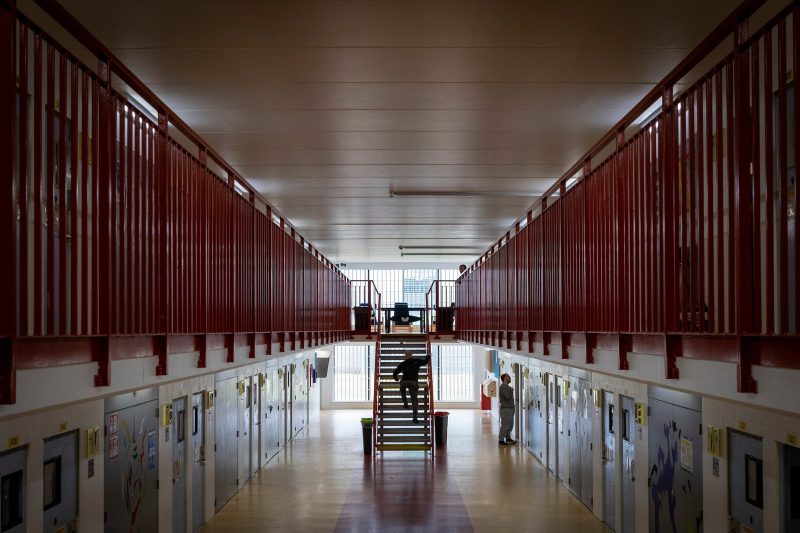
Conditions on the older wings fell short, with ingrained dirt on stairs and corridors and showers long overdue for replacement.
One area stood out positively. Key work, the regular one-to-one sessions with a named member of staff, was much better than in similar prisons. Prisoners valued it, and it helped maintain relationships despite daily frustrations. Inspectors also praised trained neurodiversity peer workers who supported neurodivergent prisoners.
Work and progression
As in 2022, the prison lacked enough activity places, and allocations took too long. About a quarter of prisoners had no work or education and spent the working day locked up. More than 100 men held wing jobs such as cleaning but often had too little to do.
Workshops varied widely. Some offered impressive hospitality training with Greene King or a drywalling course. Others involved mundane tasks such as dismantling CD cases. Attendance had recently improved but was still not good enough.
Prisoners repeatedly complained to inspectors about a lack of sentence progression. Many had no sentence plan, even after months at Onley. Others could not access accredited programmes that might support parole or a move to open conditions. Men serving long or indeterminate sentences often lost out to those due for release.
The Chief Inspector of Prisons said the jail could become more settled and productive if leaders supported the new officers to grow in their role. He added that Onley needed material support from the prison service to reduce the drugs coming in.
About this story
This story is based on HM Inspectorate of Prisons’ report on HMP Onley, published on 4 August 2025, following an inspection that ended in May 2025. All figures and judgements are the inspectorate’s. Read the full inspection report · See the prison’s profile in our directory.