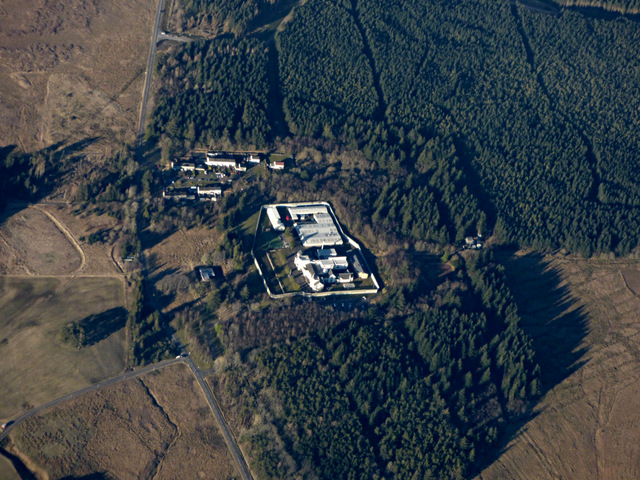
Dungavel House continued to deliver some of the best outcomes in the immigration detention estate, inspectors found. HM Inspectorate of Prisons published its report on Scotland’s only immigration removal centre in November 2021.
HM Chief Inspector of Prisons Charlie Taylor said Dungavel remained “a centre that was providing good care to detainees in challenging circumstances”. He also found that some detainees were held for far too long. They included adults at risk and people the Home Office itself accepted were victims of torture.
Inspectors visited between 19 July and 5 August 2021. GEO Group UK ran the centre, near Strathaven in South Lanarkshire, under contract to the Home Office at the time. Mitie Care and Custody took over management from 25 September 2021. Inspectors found the handover managed in a spirit of cooperation, with no sign that it was harming detainees.
How inspectors graded Dungavel
The inspectorate judges immigration removal centres against four healthy establishment tests: safety, respect, activities, and preparation for removal and release. Each test receives one of four grades: good, reasonably good, not sufficiently good or poor.
Inspectors rated safety, respect, and preparation for removal and release good, the highest grade. Activities was reasonably good.
Safety stayed good, as in 2018. Respect improved from reasonably good to good. Activities fell from good to reasonably good. Outcomes in the fourth area, preparation for removal and release, stayed the same.
Numbers were low throughout the pandemic. The centre held 28 detainees during the inspection, 27 men and one woman, nearly all in single rooms. Its maximum capacity had also been halved to 125. Leaders had managed COVID-19 well, and only one detainee had tested positive since the pandemic began.
Currently, Dungavel remained a centre that was providing good care to detainees in challenging circumstances.
Charlie Taylor, HM Chief Inspector of Prisons
A safe centre, but long detention
The centre was relaxed and calm, and violence was very low. None of the detainees reported concerns about their physical safety. There had been three self-harm incidents in the past year, none of them serious.
However, the centre had held some detainees with a history of violence against women during the pandemic. As a result, staff had to escort detained women around the site. The Chief Inspector of Prisons said detainees who pose risks to women should not be held in a centre with a mixed population.
Eight adults at risk were held at the start of the inspection, some with serious mental health problems. Staff cared for them well, and a new supported living unit provided particularly good facilities. Yet in two cases the Home Office kept people in detention even though it accepted detention was harming their well-being.
Staff submitted Rule 35 reports promptly and thoroughly, and about a quarter led to release. But detention often continued even when the Home Office had accepted evidence of torture.
The longest-held detainee had spent almost a year at Dungavel, with little prospect of removal soon. Many others granted bail in principle stayed in detention because they lacked a suitable release address.
In one case, a detainee was held without a mattress and most of his clothes. The circumstances were not clearly documented, and managers did not oversee it effectively. Some routine searches were disproportionate.
Respect, health and activities
All detainees in the survey, and all those inspectors spoke to, said staff treated them with respect all or most of the time. Leaders promoted a culture focused on detainee care.
One principal concern at the last inspection had been the deteriorating environment. Since then, the centre had seen much-needed investment, with substantial refurbishment and a welcoming visits area. Rooms were clean, suitably furnished and in good repair.
An impressive health care team met significant mental health needs well, and detainees had good access to nurses and GPs throughout the pandemic.
Detainees had controlled access to a range of activities, but most paid employment had stopped during the pandemic. The rationale for removing some roles was unclear. The report said detainees needed enough activity and time in the open air to support their well-being.
As in 2018, many detainee custody officers complained of low morale and understaffing. Inspectors saw no evidence that this had yet affected detainees. The Chief Inspector of Prisons warned it could become a more significant concern as numbers rose.
Since this report
Inspectors have reported on Dungavel House again since, with a full inspection published in December 2025. This story covers the 2021 report only.
About this story
This story is based on HM Inspectorate of Prisons’ report on Dungavel House IRC, published on 11 November 2021, following an inspection that ended in August 2021. It covers an earlier inspection: the prison’s profile has the latest findings. All figures and judgements are the inspectorate’s. Read the full inspection report · See the prison’s profile in our directory.