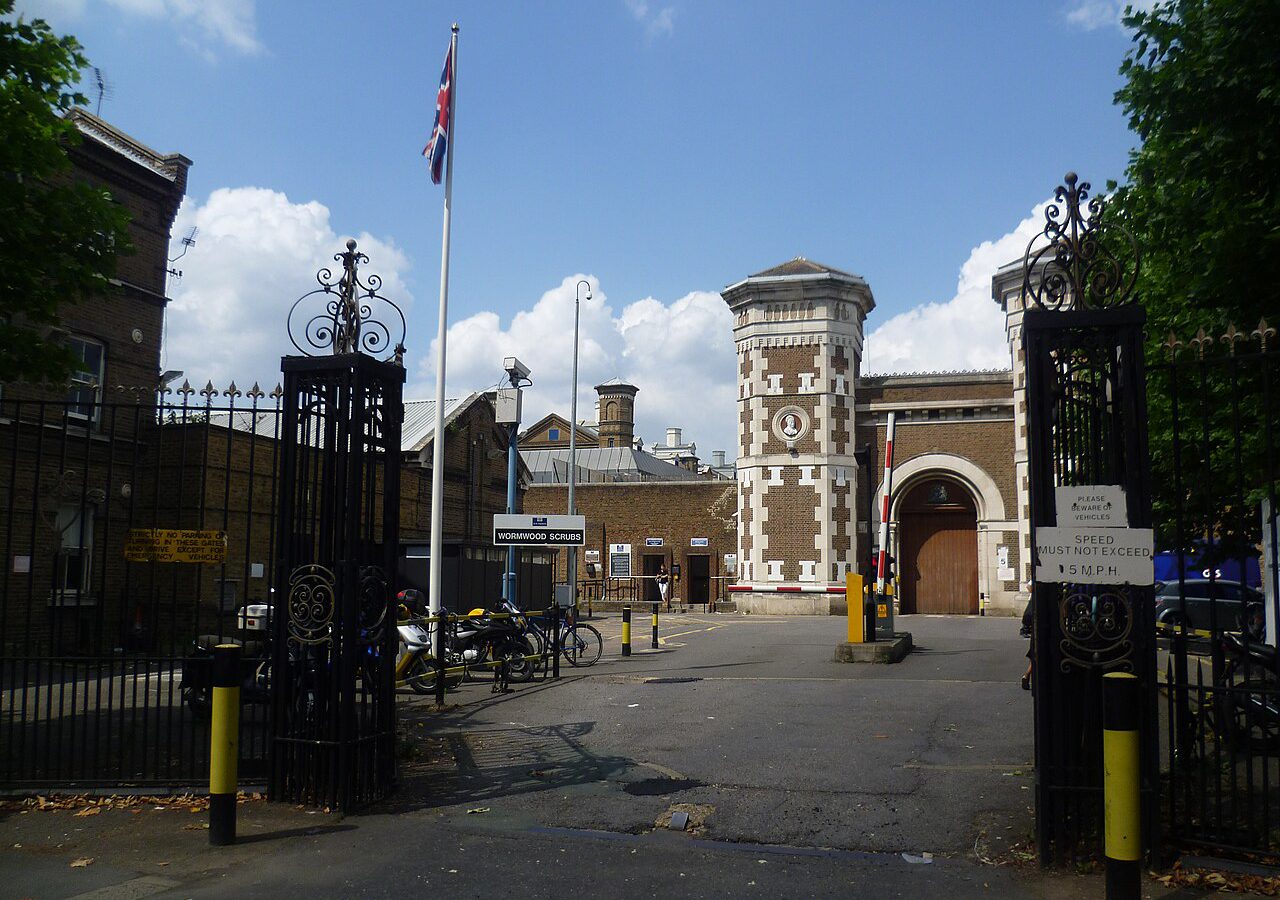
More than a third of random drug tests at HMP Wormwood Scrubs came back positive, and staff corruption was a major problem. HM Inspectorate of Prisons reported these findings in September 2025, after visiting the London prison during a June heatwave.
Inspectors also found that a strict rule keeping prisoners on different wings apart was causing widespread frustration. Unemployed men, who made up 39% of the population, were unlocked for one and a half hours a day at most.
“Many men told inspectors that the prison was still running a Covid-19 regime,” the report said.
Wormwood Scrubs is a category B reception and resettlement prison for adult men. It held 1,144 men at the time of the inspection, against an operational capacity of 1,212.
Two grades down
The inspectorate judges prisons against four healthy prison tests. Safety fell from reasonably good at the previous full inspection, published in September 2021, to not sufficiently good.
Purposeful activity, which covers education, work and time out of cell, dropped from not sufficiently good to poor. Respect stayed reasonably good, and preparation for release remained not sufficiently good.
The 2021 report had raised 42 concerns, seven of them priorities. Of the seven key recommendations, the prison had achieved one and partly achieved another. This time inspectors identified 15 key concerns, six of them priorities.
The inspectorate later carried out an independent review of progress at the prison, published in April 2026.
Many men told inspectors that the prison was still running a Covid-19 regime.
HM Inspectorate of Prisons report
Separation, visits and a limited regime
For some years, a rigid rule had stopped prisoners on different wings from mixing. Charlie Taylor, HM Chief Inspector of Prisons, said this was likely one reason violence was lower than at comparable prisons. However, it was having a negative effect in many other ways.
Library access was very limited. Only men from B, C and E wings could use the better-resourced education hub, while others learned in unsatisfactory classrooms on their wings.
Each wing could receive visits only at set times, which often did not suit families. The Chief Inspector of Prisons called the national visits booking system dysfunctional and said families often found it extremely difficult to book.
Reduced staffing frequently cut the regime further. With little time out of cell, men struggled to show good behaviour and earn enhanced status. They described transactional relationships with officers who lacked time to get to know them.
Attendance at workshops and education was very poor, partly because men were placed in activities that did not interest them. Ofsted noted better teaching in English and maths, but poor attendance held back progress.
Drugs, force and cameras
The security team had improved windows and netting to stem the flow of drugs. However, staff did not always use the body scanner in reception, and gate security was inconsistent.
Oversight of force, a concern at the previous inspection, was still not good enough. Staff recorded only 32% of incidents on body-worn cameras over the past year. In some cases, officers switched cameras off mid-incident. The available footage showed inappropriate and offensive language directed at prisoners.
Inspectors also raised concerns about slow responses to emergency cell bells, overcrowding and showers that lacked privacy. Food remained a frustration, and staff still served meals at the cell door. New arrivals spent long periods in reception and did not always get a phone call to family or friends.
Preparation for release had weaknesses. More than a fifth of prisoners left homeless, and the large remand population received very little housing support.
Well run, with room for optimism
Despite these problems, inspectors found a capable staff team and strong middle leaders. The prison was well organised and ran more efficiently than many similar jails.
The governor, the tenth this century, won praise for her visibility, clear communication and vision. Staff said she occasionally worked alongside them on the landings.
Inspectors recorded seven examples of positive practice. They included the Black Hero’s Journey coaching programme for black and mixed heritage prisoners, and a pharmacist based in the first night centre. In the escape kitchen, men learned barista, baking and sushi-making skills.
The Chief Inspector of Prisons urged the prison to keep safety levels up while easing the rigid rules behind so much frustration. He also called for a concerted effort from the jail and the prison service against drugs.
If the governor and her team stayed in place, he said he had some optimism. In his view, “Wormwood Scrubs can go on to be one of the better reception prisons in the country”.
About this story
This story is based on HM Inspectorate of Prisons’ report on HMP Wormwood Scrubs, published on 8 September 2025, following an inspection that ended in June 2025. All figures and judgements are the inspectorate’s. Read the full inspection report · See the prison’s profile in our directory.