
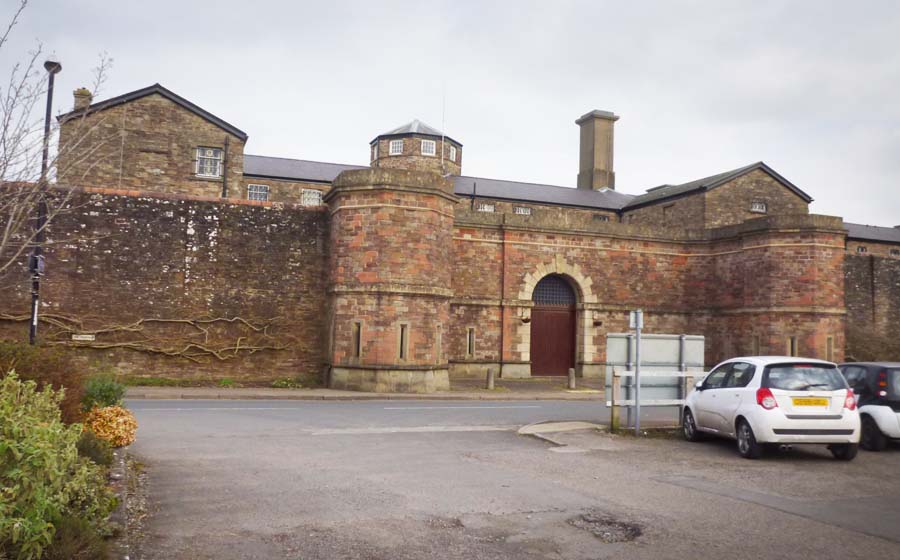
Two linked prisons in Monmouthshire built on an already positive record, according to the prison inspectorate.
The report, published in August 2025, covered HMP Usk and HMP & YOI Prescoed after an inspection that ended in May 2025. The same governor and management team run both sites, which sit a few miles apart.
Usk achieved the top grade, good, on all four healthy prison tests. Prescoed scored good on three tests and reasonably good on the fourth.
The Chief Inspector of Prisons, Charlie Taylor, said outcomes for prisoners had improved even further since the last inspection in 2021. He added: “The governor and his staff should be congratulated for what they are achieving.”
Two prisons, one management team
Usk is a small category C prison dating from the 19th century. It opened in 1844 as a house of correction. It now serves as a national treatment centre for men convicted of sexual offences and as a resettlement prison.
Prescoed is a category D, or open, prison for adult and young adult men. It includes a working commercial farm.
Usk held 274 men during the inspection, against an operational capacity of 276. Prescoed held 249 men, against a capacity of 260.
The four tests cover safety, respect, purposeful activity and preparation for release. Purposeful activity covers education, work and time out of cell.
At the previous full inspection in 2021, inspectors rated safety and respect as good. They rated purposeful activity and rehabilitation and release planning, the forerunner of the current release test, as reasonably good. Usk has now moved up to good on both.
The governor and his staff should be congratulated for what they are achieving.
Charlie Taylor, HM Chief Inspector of Prisons
Safe, stable and respectful
Inspectors found both prisons safe and stable. Staff welcomed new arrivals well and dealt with any risks they presented. Safeguarding involved several departments and worked effectively.
Violence and drug use were rare. Staff hardly ever used force, and neither prison used segregation.
The report called relationships between staff and prisoners “overwhelmingly positive”. Inspectors saw this as the heart of the prisons’ success.
Living conditions were generally good. Older buildings at both sites, especially Prescoed, showed signs of wear and tear. Health care staff earned praise from prisoners, who described them as caring and non-judgemental.
Time out of cell was much better than inspectors normally see. Most prisoners surveyed at both sites said their time inside would make them less likely to reoffend.
Concerns at Prescoed
Inspectors raised eight key concerns, two of them priorities. Both priorities related mainly to Prescoed.
First, education, skills and work did not adapt to changes in Prescoed’s population. National population pressures had brought more short-stay prisoners, and many men working in the prison had too little to do. Leaders had carried out no recent analysis of education and work needs.
Second, delays in approving release on temporary licence, known as ROTL, frustrated many men. ROTL lets prisoners leave for work or home visits to prepare for release.
About 48.6% of men at Prescoed were receiving some form of ROTL at the time. Leaders did not collect or use data well enough to improve this area, inspectors found, and the same applied to education and health care.
Inspectors also found some communal and outdoor areas at Prescoed poorly cleaned. Staff were not visible enough on the wings. The open prison lacked enough phones, many offered no privacy, and self-catering facilities fell short of what men needed to prepare for independent living.
Across both sites, health care governance had gaps, including low incident reporting. Patients could not get the same range of medicines available in the community.
Families and rehabilitation
Work to support family ties was strong, despite the safeguarding challenges posed by Usk’s population. Inspectors recorded six examples of notable positive practice.
At Usk, some prisoners attended parent-teacher meetings for their children after a risk assessment. Teachers could tour the prison to understand what a child experiences on a visit. The family services provider had also set up free legal advice clinics on family matters with local law firms.
At Prescoed, the farm gave men vocational skills and qualifications for work after release. Inspectors said it helped some prisoners who would otherwise struggle to find work.
Work to help men progress, reduce their risk and confront their offending was good at both prisons. Leaders had built strong offender management teams, and offender managers kept in regular contact with prisoners.
The prisons had achieved both key recommendations from 2021, which concerned respect.
About this story
This story is based on HM Inspectorate of Prisons’ report on HMP Usk and HMP & YOI Prescoed, published on 12 August 2025, following an inspection that ended in May 2025. All figures and judgements are the inspectorate’s. Read the full inspection report · Directory profile: Usk · Directory profile: Prescoed.



