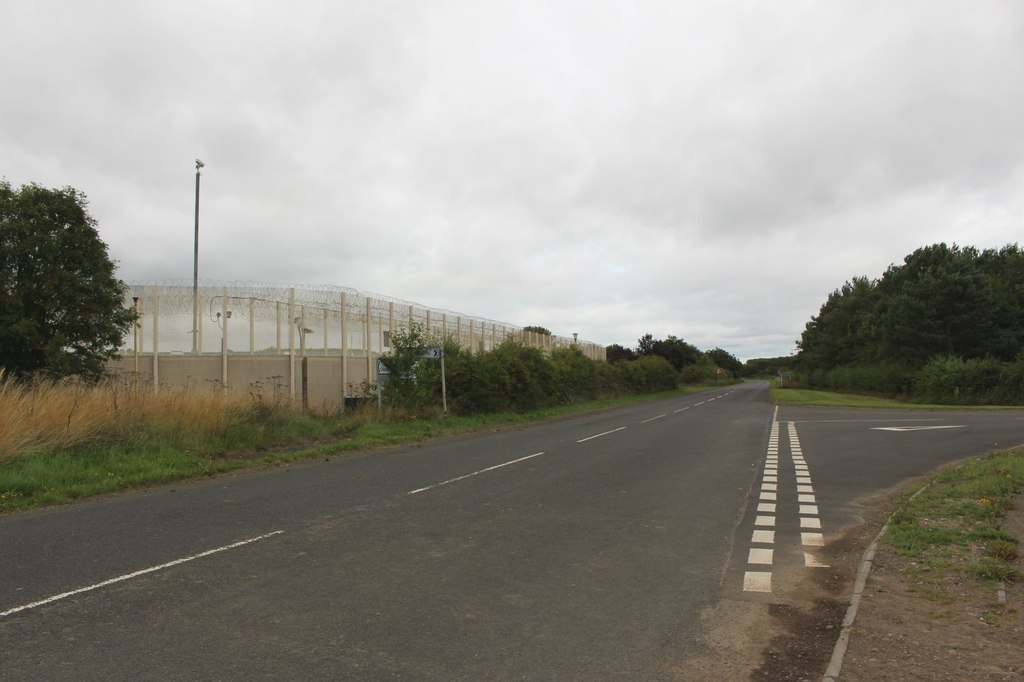
HMP Northumberland achieved reasonably good grades in all four healthy prison tests, according to the inspectorate’s report published in December 2025. The Chief Inspector of Prisons described it as “a positive inspection of a well-run category C training and resettlement prison”.
The result marked a clear improvement in two areas. At the previous full inspection, reported in December 2022, purposeful activity was not sufficiently good. Rehabilitation and release planning, as the release test was then known, was poor.
Inspectors also found that violence between prisoners had increased significantly since that visit. They linked much of it to the availability of illicit drugs.
The prison, run by Sodexo, held 1,223 men when the inspection ended in September 2025, against an operational capacity of 1,236. More than 400 had convictions for sexual offences.
How the grades compare
The four healthy prison tests cover safety, respect, purposeful activity and preparation for release. Purposeful activity means education, work and time out of cell. Each test receives one of four grades: good, reasonably good, not sufficiently good or poor.
Safety and respect held steady at reasonably good. Purposeful activity and preparation for release each moved up to the same grade.
Of the 12 concerns raised at the last inspection, inspectors found that leaders had addressed 10. They had dealt with every concern about purposeful activity and preparation for release. This time inspectors identified nine key concerns, six of them priorities, and 10 examples of notable positive practice.
With scores of reasonably good across all four of our healthy prison assessments, this was a positive inspection of a well-run category C training and resettlement prison.
Charlie Taylor, HM Chief Inspector of Prisons
Concrete closures and building work
The prison faced a major infrastructure problem. Staff had discovered reinforced autoclaved aerated concrete, known as RAAC, across the large site in the previous year. The discovery forced the closure of the main education building, three houseblocks, reception, a gym, the prisoner property store and the chapel.
Inspectors said leaders had acted swiftly and creatively to keep the prison running. A large building project was under way. It included refurbishment of five wings, which should eventually improve living standards for many men.
Other parts of the prison, particularly those holding vulnerable prisoners, were showing their age. However, leaders kept the wings clean, and men appreciated living mostly in single cells.
Drugs, violence and support
The positive rate in random drug testing sat below most category C prisons. Inspectors still called it much too high. Drugs often caused violence between prisoners.
Assaults on staff, by contrast, were among the lowest in the country. Inspectors put this down partly to generally good relations between staff and prisoners.
Even so, inspectors raised concerns about the depth of those relationships. Key work, the regular one-to-one sessions with a named officer, took place only intermittently. Staff did not spend enough time on landings, particularly during association periods.
A priority concern centred on incentives. The report said leaders had not given men enough reasons to behave well or enough sense of progression. Many prisoners complained about a shortage of places on accredited programmes. The Chief Inspector of Prisons suggested this frustration might also have contributed to the high level of drug taking.
Care for the most vulnerable men was good, with creative ideas to help them cope. Support for others at risk of self-harm was patchier, and leaders had not embedded learning from serious incidents. The prison provided well for its many older men but gave foreign national prisoners too little support.
Staff numbers had recovered, and a training package for new officers had improved retention. Morale remained low, however. Only 9% of frontline operational staff who responded to the survey described it as high or very high.
Education, work and release
Ofsted graded the overall effectiveness of education, skills and work as good. It noted some particularly good teaching in education and in some workshops. Attendance was much better than in most prisons, and men in work spent more time out of their cells.
Men not yet allocated to education or work had only 2.5 hours a day unlocked, and their waits were too long. At weekends, prisoners spent six hours out of their cells, which inspectors said was better than usual. Some workshops focused too heavily on income generation rather than training.
Very few men left the prison on temporary licence to work outside, and inspectors urged leaders to expand this. The offender management unit, which plans each prisoner’s sentence and release, had improved considerably. Its links with community services were good.
Two weaknesses stood out. Monitoring of prisoners’ mail and telephone calls for public protection reasons remained a concern, despite warnings at the last two inspections. Employment rates after release were among the lowest of similar prisons.
The Chief Inspector of Prisons said he was confident of further improvement at a future inspection if the current leadership remained in post. He called Northumberland “a decent, productive jail”.
About this story
This story is based on HM Inspectorate of Prisons’ report on HMP Northumberland, published on 2 December 2025, following an inspection that ended in September 2025. All figures and judgements are the inspectorate’s. Read the full inspection report · See the prison’s profile in our directory.