
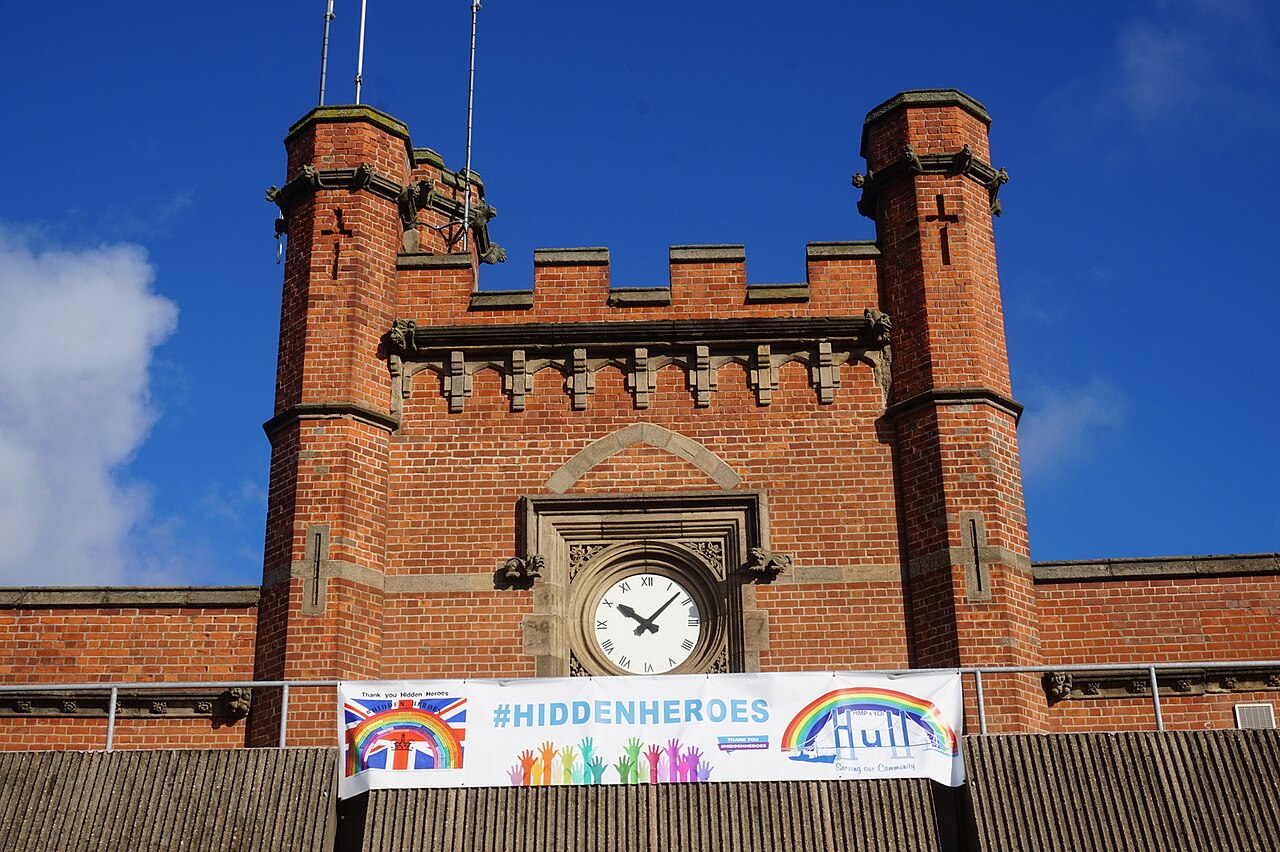
HMP Hull improved in three of four areas inspectors examine, but the amount of work, education and time out of cell fell to the lowest grade, according to the prison inspectorate.
HM Inspectorate of Prisons published its report in September 2024, after an inspection that ended in July. The prison held 954 men at the time, against an operational capacity of 968.
Hull mainly serves as a reception prison for men remanded by local courts. It also holds a longer-term population of men convicted of sexual offences. Since the last inspection in 2021, pressure on prison places had changed its population. By 2024, 48% of men were on remand or unsentenced, arriving from across the North of England.
Charlie Taylor, HM Chief Inspector of Prisons, said staff had coped well despite a much larger number of men passing through. New arrivals had more than doubled to an average of 320 a month.
How the grades changed
The inspectorate judges prisons against four healthy prison tests: safety, respect, purposeful activity and preparation for release. Purposeful activity covers education, work and time out of cell.
Inspectors rated Hull reasonably good for safety, respect and preparation for release. At the previous full inspection, reported in November 2021, all four areas were not sufficiently good.
Purposeful activity went the other way. It fell from not sufficiently good to poor. The report said concerns in this area had not been addressed and outcomes had worsened considerably.
Inspectors raised 11 key concerns, six of them priorities. The inspectorate later published an independent review of progress at Hull in May 2025.
I left Hull feeling optimistic that the good progress we have seen will continue under an effective governor and senior team.
Charlie Taylor, HM Chief Inspector of Prisons
Locked up and bored
Many men spent up to 22.5 hours a day locked in particularly cramped shared cells. Nearly two-thirds of prisoners lived in cells originally built for one.
Prisoners told inspectors they were bored. They had little to do on the wings, because pool tables and table tennis had gone during the pandemic and never returned.
The report said: “It was disappointing that the regime remained so poor.” Little progress had been made on time unlocked since 2021, even though more officers were now available.
Education, skills and work places could not meet the needs of about a third of the population. Attendance at education was poor, partly because some teaching was not good enough. Teaching in functional English and maths was weak.
Workshops sometimes closed because no staff were available. The governor was pressing the education provider to improve, but progress had been much too slow.
Staff held two training days a month to build their skills. On those days, however, many men stayed in their cells for even longer than usual.
Drugs, security and safety
Hull did not have the level of drugs entering it that inspectors see in many prisons. Even so, random testing had shown a rise in positive results in recent months. In the inspectorate’s survey, 40% of prisoners said it was easy to get drugs.
The governor had repeatedly asked for better gate security and grilles on outward-facing windows. Those bids had not led to more funding from HM Prison and Probation Service.
Violence remained relatively low despite a more volatile remand population. More prisoners than at the last inspection, however, said they felt unsafe.
Leaders collected plenty of data but did not use it well. They lacked a clear understanding of the causes of violence and self-harm.
Several areas had improved. Inspectors found better oversight of the segregation unit and use of force, and better health care. Officers on the PIPE and well-being units, which support some of the most troubled men in the system, were capable and well trained.
Staff broadcast anonymised data on the use of force on in-cell televisions to improve prisoners’ sense of fair treatment. Inspectors recorded this as notable positive practice.
Release planning and homelessness
Offender managers gave prisoners better support, and more key work took place than inspectors usually see in reception prisons. The management of higher-risk men returning to the community had also improved.
Yet too many men still left prison homeless. About 20% of all prisoners released had nowhere to live, including many freed under the 70-day early release scheme. The Chief Inspector of Prisons warned that these men were very likely to be recalled.
The report said a contract with Shelter had not kept pace with the change in the population, and that national leaders had been slow to respond.
The Chief Inspector of Prisons said he left Hull “feeling optimistic that the good progress we have seen will continue”. He called for a real focus on the regime and on cutting both the supply of and demand for drugs. He added that the prison service must help to improve the fabric and physical security of the prison.
About this story
This story is based on HM Inspectorate of Prisons’ report on HMP Hull, published on 30 September 2024, following an inspection that ended in July 2024. All figures and judgements are the inspectorate’s. Read the full inspection report · See the prison’s profile in our directory.



