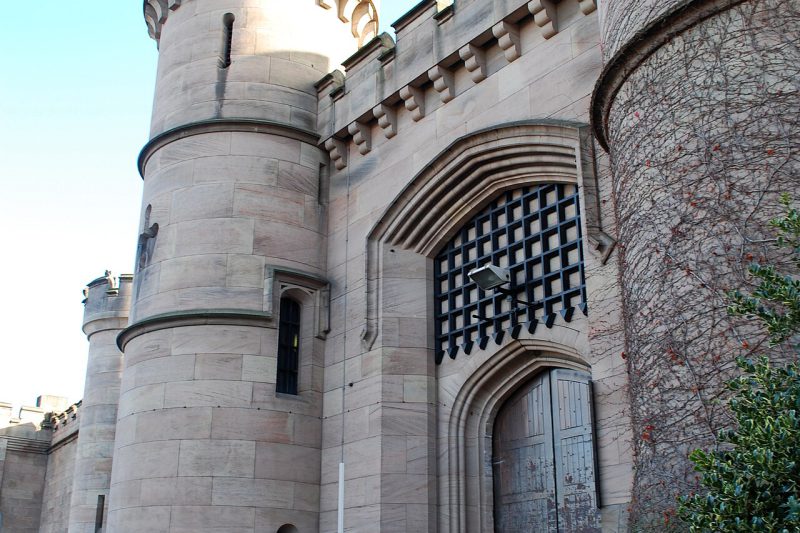
HMP Frankland, one of a handful of high security prisons able to hold the most dangerous men, remains a calm and stable jail, according to the prisons inspectorate. Its report, published in July 2024, rated the prison reasonably good against all four of its healthy prison tests.
Inspectors also found that too many men spent the working day behind their doors. They warned that parts of the site needed repair and that leaders had not given enough priority to equality.
Charlie Taylor, HM Chief Inspector of Prisons, wrote: “This is a good report that again describes Frankland as a calm and well-run prison.” He added that leaders and staff were clear about their priorities and mission, despite the complexity of the jail.
Grades held steady since 2020
The inspectorate judges every prison against four healthy prison tests. These are safety, respect, purposeful activity and preparation for release. Purposeful activity covers education, work and time out of cell. Each test receives one of four grades: good, reasonably good, not sufficiently good or poor.
Frankland scored reasonably good on all four. The result matched the previous full inspection, which the inspectorate published in May 2020. Mr Taylor said the prison had achieved similar findings despite the upheavals of recent years.
The fieldwork for the latest inspection ended on 14 March 2024. At that point the prison held 821 men against an operational capacity of 846. Operational capacity is the number of prisoners the jail can hold.
Frankland sits on the outskirts of Durham, next to Low Newton women’s prison. It opened in 1983 as the first purpose-built dispersal prison. It now holds category A and B convicted men and category A men on remand.
This is a good report that again describes Frankland as a calm and well-run prison.
Charlie Taylor, HM Chief Inspector of Prisons
Safety and the risk of self-harm
Inspectors found the prison safe overall. It recorded fewer assaults than similar establishments and used force less often. Violence and use of force had risen since 2020, but levels stayed below those in other category A jails. The report credited detailed oversight by leaders for part of that.
Leaders had also worked to reduce self-harm. Levels had fallen since the previous inspection and sat below those at other high security prisons. Even so, one prisoner had taken his own life in recent years. Two more men took their own lives during and shortly after the inspection.
Half of the men who answered the inspectorate’s survey said they had felt unsafe at some point during their stay. Inspectors described that figure as high. They suggested it might reflect the challenge of being held in a prison such as Frankland.
The security task is considerable. Of the 821 men, 258 held category A status, and the prison judged 13 of those to be high risk. Two-thirds of the population, 66%, were serving indeterminate sentences, including life terms. A further 31% had sentences of 10 years or more. The prison released only four men into the community in the previous 12 months.
Security leaders and a well-resourced team kept a good grip on the large flow of intelligence, the report said. Structures and incentives to encourage good behaviour worked reasonably well.
Strong staff and weak spots
Staffing stood out as a strength. The prison had a full complement of officers and had recruited beyond its own needs, so it could send officers to cover shortages elsewhere. Staff attrition, at 3.69%, ranked among the lowest in the country. Almost 30% of officers had fewer than two years’ service, but experienced colleagues supported them well.
Most prisoners felt staff respected them. Inspectors described relationships between staff and prisoners as a real strength of the institution. Key work, where an officer meets an individual prisoner regularly to offer support, also drew praise.
The physical fabric told a different story. Inspectors said prison service leaders had not invested enough in parts of the site. Internal walkways and staff rooms had leaking roofs. Heating in workshops had broken down. The Westgate unit, which treats men with severe personality disorders, had damp and mould.
Equality work fell short too. Inspectors found that the prison still did not give enough priority to fair treatment and inclusion. Too many discrimination incident reporting forms had not received proper handling. The report also flagged the safe delivery of medicines as inadequate. Some storage cabinets lacked locks and the rooms ran too hot.
Education praised but activity places short
Time out of cell was one of four priority concerns. Inspectors wrote: “We found more than one in four prisoners locked in their cells during the working day.” The prison also lacked enough full-time activity places for its population.
Education told a more positive story. Ofsted, working alongside the inspectorate, judged the overall effectiveness of education, skills and work provision to be good. The report said that is better than inspectors usually see. The library and the gym were busy and popular, and the prison had restored evening association, when men can mix outside their cells.
Inspectors found five examples of notable positive practice. They included a reading strategy that improved prisoners’ literacy and confidence, and English and maths lessons run through the gym. Another project in the Westgate unit helped some men return to normal wings after long spells in segregation.
Work to reduce reoffending and protect the public was very effective, the report said. The prison was also pioneering a new-generation offending behaviour programme. However, prisoners did not always understand the order in which they had to complete their sentence plan targets.
In total, inspectors raised eight concerns, four of them priorities. These covered repairs, equality, time out of cell and activity places. The inspectorate asked leaders to send it a plan setting out how and when they would resolve each one.
About this story
This story is based on HM Inspectorate of Prisons’ report on HMP Frankland, published on 8 July 2024, following an inspection that ended in March 2024. All figures and judgements are the inspectorate’s. Read the full inspection report · See the prison’s profile in our directory.