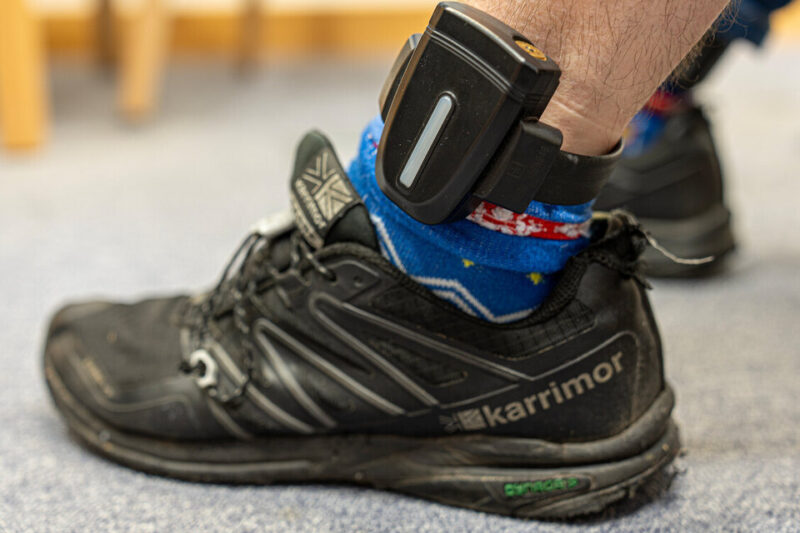
Failings in the way the justice system uses electronic tags are leaving victims and the public exposed to risk, a joint inspection has found.
HM Inspectorate of Probation carried out the work with HM Inspectorate of Constabulary and Fire & Rescue Services (HMICFRS). Their report draws on two strands of fieldwork. One looked at how police forces deal with breaches of bail conditions monitored by tag. The other examined how probation uses tags to manage people on community sentences and on licence after release.
Tagging now sits close to the centre of the criminal justice system. With prisons badly overcrowded, the system leans on it more and more as an alternative to custody.
Inspectors found committed officers, staff and probation practitioners working hard to meet the rising demand. Yet both strands exposed serious gaps in guidance, systems and the sharing of information.
Police response to bail breaches
National guidance for forces on tagged bail breaches was thin, and practice differed widely from one force to another. In the cases inspectors reviewed, an alleged breach did not reliably prompt proper thought about the risk to victims, witnesses or the wider public.
Weak record-keeping also left forces struggling to grasp the demand they faced, or whether their response worked.
Michelle Skeer, HM Inspector of Constabulary and Fire & Rescue Services, said officers and staff handling these breaches faced “a substantial and increasing workload”. She said: “Every breach notification can have consequences. Forces need clearer guidance, better recording and stronger scrutiny arrangements, so they can consistently respond to breaches with the rigour the public rightly expects.”
Separately, the Metropolitan Police has said it will no longer investigate and detain people over minor tagging breaches. Its examples included arriving home 15 minutes late, or stepping outside for a cigarette while on home detention. The force said it would focus instead on serious breaches that could put others in danger.
Probation and fairness
On the probation side, inspectors concluded that regional electronic monitoring teams had improved overall. But staff must find their way through a growing and complex mix of technologies and systems. Teams often made too little use of monitoring data, and many problems first identified in 2022 remained.
The report also raises concerns about fairness. HM Prison and Probation Service has not yet put arrangements in place to check whether the use and outcomes of tagging differ between people with different protected characteristics.
The inspectorates make thirty recommendations in all. Their targets are the National Police Chiefs’ Council, chief constables, the Ministry of Justice and the prison and probation service. They cover guidance, risk assessment, information-sharing, contact with victims and data quality.
Martin Jones, HM Chief Inspector of Probation, said tagging had “real potential to strengthen public protection and support rehabilitation”. He added: “But technology on its own cannot deliver these benefits.”
He said that as tagging grows under the Sentencing Act 2026, the Ministry and the prison and probation service must act fast to simplify processes, improve data and give practitioners the skills and confidence to use the technology well. “The public, victims and those subject to monitoring deserve a system that is reliable,” he said.