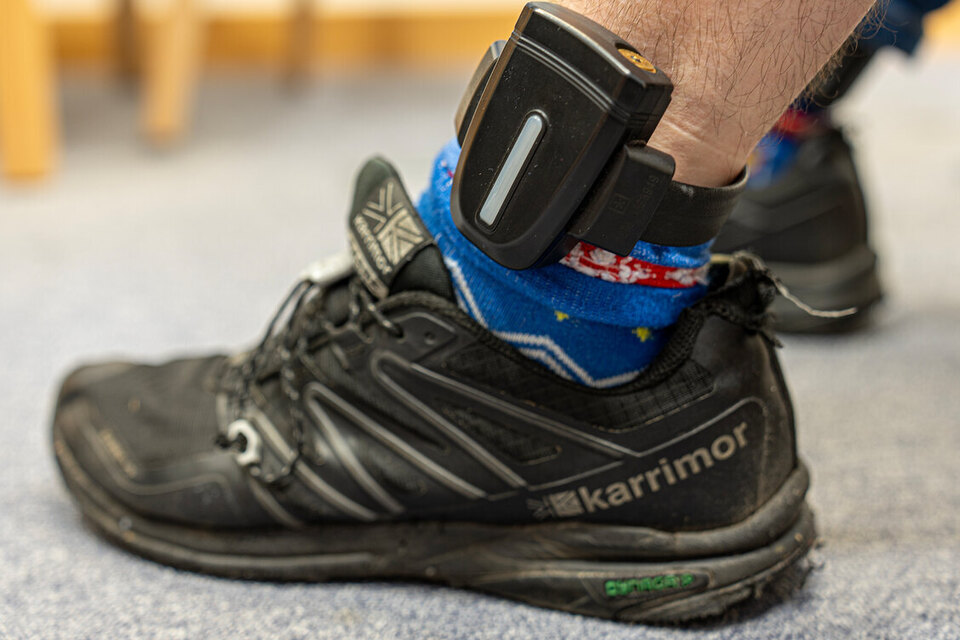
The Metropolitan Police will let some people on electronic tags break their conditions without facing arrest.
England’s largest force said pressure on officers’ time had forced the change. Its officers will no longer investigate tag breaches that last less than an hour. Two exceptions apply: where the person is a high-risk offender, such as a domestic abuser, or where there is evidence of a further crime.
The Met gave examples of the cases it has in mind. One was a person on a home curfew who steps outside for a cigarette for under an hour. Another was a call to police after a GPS tag showed someone getting home 15 minutes late.
The move follows warnings from the Met Commissioner, Sir Mark Rowley. He said the Government’s early release scheme for prisoners was adding to the strain on an “overloaded” criminal justice system. He recently revealed that his officers were handling more than 100 tag breaches every week.
Most people who leave prison must follow licence conditions. These range from keeping away from their victims to arriving on time for probation appointments. A breach can lead to recall to prison. Thousands of people on bail also wear tags and must follow similar rules.
In a statement, the force said the rise in minor breaches was pulling officers away from the most dangerous offenders. It now plans to make those offenders its priority.
A Met spokesperson said: “We understand the pressures across the criminal justice system. To best protect the public, those pressures cannot always fall on policing, and certainly not without prioritisation. Offenders who are high risk, such as domestic abusers, are a priority.”
The spokesperson said that in cases where breaches had led to no consequence in the courts, the force was working with partners on a suitable penalty. The aim, they said, was to free officers for work that does more to protect the public, including action on high-risk breaches.
They added: “Where there is a risk to the public, particularly if someone is breaching conditions designed to protect a victim, we will absolutely respond.”
The Met said it would review every breach to check for any safeguarding risk.