Self-harm at HMP Winchester had doubled and reached levels higher than at any other local prison in the country, inspectors found. Their report, published in January 2020, described a disappointing inspection.
HM Inspectorate of Prisons visited between 17 June and 5 July 2019. In the main local prison, inspectors found significant deterioration since their previous inspection in 2016. Seven prisoners had taken their own lives since that visit, three of them in the previous 12 months.
HM Chief Inspector of Prisons Peter Clarke said he gave serious consideration to invoking the Urgent Notification process. That would have required the Secretary of State to produce an action plan for improvement within 28 days. “It would have been very easy to justify doing so,” he wrote.
He decided against it. He judged that the changes needed were within the prison’s own power, and that new managers had arrested the decline.
Two prisons in one
Winchester was in effect two prisons in one. It combined a traditional category B local prison for adult and young adult men with a separate category C unit. It held some 486 prisoners during the inspection, 122 of them on the category C unit.
Inspectors therefore graded each part separately against their four healthy prison tests. These cover safety, respect, purposeful activity, and rehabilitation and release planning. Purposeful activity covers education, work and time out of cell.
The local prison declined in three of the four tests. It scored poor, the lowest grade, for safety and for purposeful activity. It scored not sufficiently good for rehabilitation and release planning. Respect remained not sufficiently good.
The category C unit stayed reasonably good for safety and respect. However, outcomes there deteriorated for purposeful activity and for rehabilitation and release planning.
Staffing was a notable feature. The prison had a full complement of staff, but about 70% of prison officers had less than 2 years’ experience.
It would have been very easy to justify doing so. However, as I have indicated previously, the process is not intended to be triggered as an automatic response to poor grades, but by the judgement of the Chief Inspector.
Peter Clarke, HM Chief Inspector of Prisons
Not safe enough
Inspectors said Winchester was not safe enough. Staff carried out only limited checks on new arrivals during their first night. Violence remained rare on the category C site but had increased markedly in the local prison, particularly against staff.
Most recorded incidents did not count as serious. Even so, almost a quarter of survey respondents said they felt unsafe. Well over half of all prisoners said they had felt victimised.
Use of force had risen, which the prison partly put down to inexperienced staff. Inspectors called for training in de-escalation techniques.
Inspectors wrote that “the segregation unit remained a dismal place”. They repeated their recommendation that the prison replace it completely.
Staff did not act on a significant backlog of intelligence reports. The mandatory drug testing positive rate had fallen from 30% to 16%. Despite this, 59% of prisoners still thought drugs were easy to obtain.
A considerable number of prisoners were on ACCT case management plans. Case management varied, and care too often fell short. Many men in crisis spent too long locked up without distraction.
Long hours behind doors
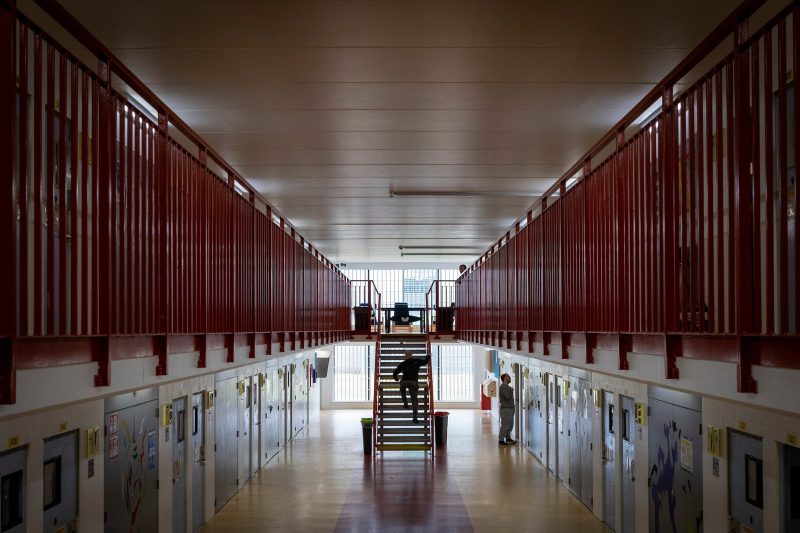
Time out of cell in the local prison was very poor. During the working day, inspectors found about a third of prisoners locked up. Those not in work or education typically spent just 90 minutes a day out of their cells on weekdays. Men on the basic regime had as little as 45 minutes.
Ofsted judged the provision of work and skills ineffective. The local prison lacked enough work and education places, and men did not use the available places fully.
Most prisoners said they could turn to staff for help, and most interactions were polite. Many still felt frustrated that they could not get basic things done. Keyworker arrangements had been introduced successfully and worked well.
Cells on the category C unit were well equipped and reasonable. In the local prison, overcrowding and damaged cells were common. Health care outcomes were reasonably good overall.
A chance to improve
The quality of offender management was adequate, and most prisoners had a sentence plan. Release planning was also adequate, although only half of those released went into settled accommodation.
Peter Clarke said senior managers had arrived relatively recently and had a clear vision for the prison. He said managers needed to focus on the basics and measure improvement critically, based on evidence.
Since this report
Inspectors have reported on HMP Winchester several times since. Full inspection reports followed in May 2022, January 2025 and May 2026. An independent review of progress appeared in January 2023, and an Urgent Notification in October 2024.
About this story
This story is based on HM Inspectorate of Prisons’ report on HMP Winchester, published on 7 January 2020, following an inspection that ended in July 2019. It covers an earlier inspection: the prison’s profile has the latest findings. All figures and judgements are the inspectorate’s. Read the full inspection report · See the prison’s profile in our directory.