
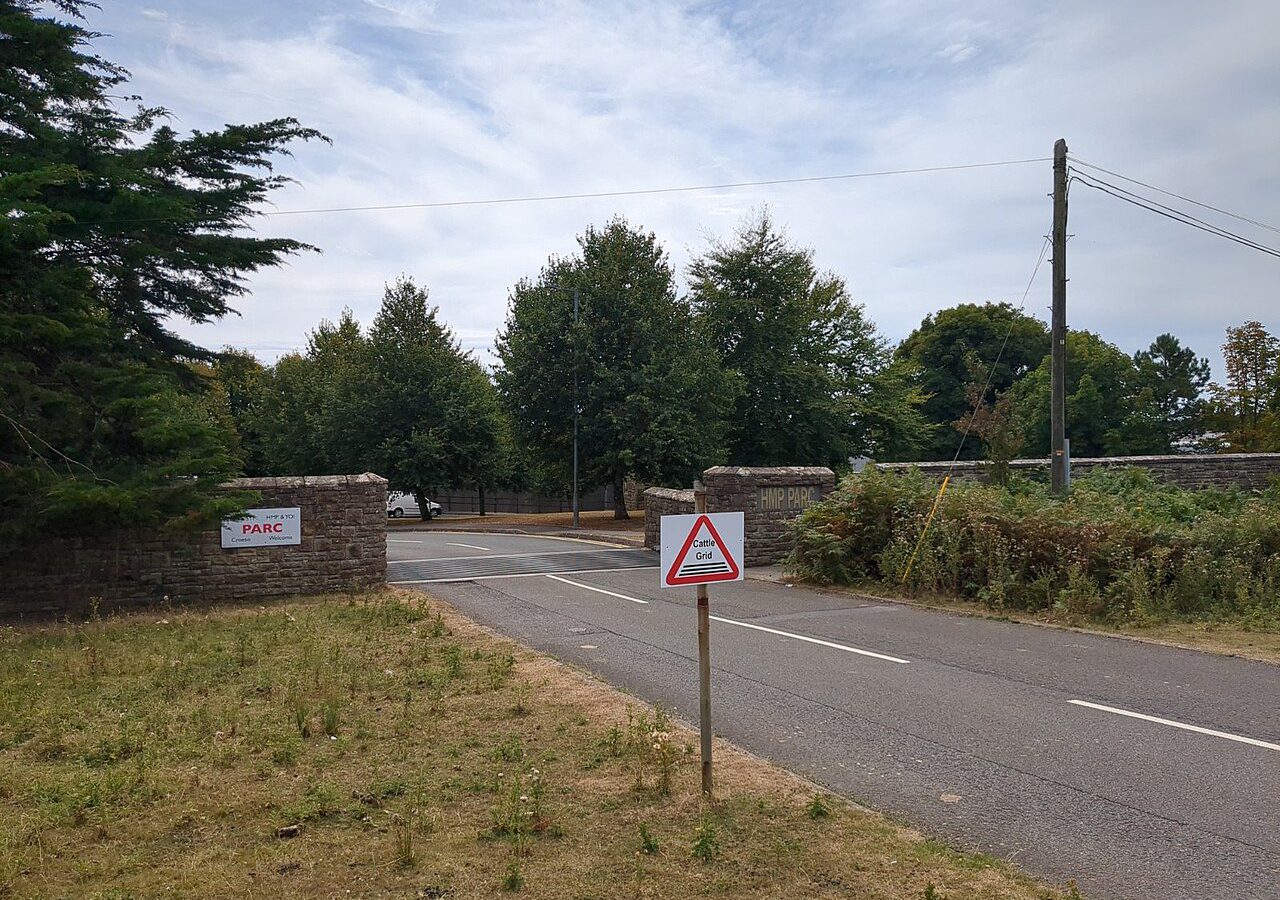
HMYOI Parc remained the best young offender institution in England and Wales, despite a decline in education. That was the finding of HM Inspectorate of Prisons in a report published in January 2024.
HM Chief Inspector of Prisons Charlie Taylor wrote that “the YOI at Parc is the best in England and Wales, and something of a benchmark for the four others currently in operation”.
Inspectors visited between 9 and 19 October 2023. They rated safety, care and resettlement good, the highest grade. Purposeful activity, however, had fallen from good to not sufficiently good.
The young offender institution, or YOI, held boys aged 15 to 17 within the much larger Parc prison near Bridgend in South Wales. G4S operated it. It could hold up to 46 boys on two separate units, but just 28 were there at the time.
About a third of them were 18. They had stayed at the YOI because of population pressures in the adult prison estate.
How the YOI was graded
The inspectorate assesses YOIs against four healthy establishment tests: safety, care, purposeful activity and resettlement. Each receives one of four grades: good, reasonably good, not sufficiently good or poor.
At the previous inspection in 2022, Parc scored good on all four tests. This time safety, care and resettlement stayed good, which Mr Taylor called a significant achievement. Purposeful activity, which covers education, work and time out of cell, dropped to not sufficiently good.
In 2022 inspectors made 11 recommendations, four of them about key concerns. Parc had achieved two of those key concerns but not the other two. This time inspectors identified 11 key concerns, six of them priorities. They also found nine examples of notable positive practice.
As this report and our recent visits show, the YOI at Parc is the best in England and Wales, and something of a benchmark for the four others currently in operation.
Charlie Taylor, HM Chief Inspector of Prisons
Education in decline
A new contract for Parc from December 2022 brought new health care and education providers. Inspectors found disruption from that change still evident 10 months later.
Estyn, the education inspectorate in Wales, judged that a more limited curriculum and weaker teaching had pulled education down to adequate. Estyn had rated education at Parc excellent as recently as July 2022.
The YOI lacked specialist teachers and gave poor access to learning resources. Many children were disengaged and made slow progress towards qualifications. Attainment in a few subjects was low, and the curriculum was not vocational enough.
There was no reading strategy. Children who wanted to read could not search for and get a book of their choice. Partners had been slow to support the change of provider, though leaders had recently improved partnership working.
Enrichment activity, which runs separately from education, was a strength. Most children received at least nine hours a week, and inspectors saw some regularly getting 25 hours. Boys generally had reasonable time out of their cells.
Safety and care
Mr Taylor described Parc as a safe institution where staff treated boys well from the moment they arrived. An active regime and a full range of incentives promoted good behaviour and helped reduce violence.
All new arrivals went to the E1 unit, which ran as a peaceful community where children were expected to mix. Inspectors praised the incentives scheme, built on three simple principles that children could easily follow.
Leaders addressed concerns from use of force incidents promptly, thanks to rigorous oversight by a lead officer and three restraint advisers. Safeguarding and work to prevent self-harm were also effective.
Separation was a weakness. Some children spent too long apart from others under excessive restrictions, and oversight had deteriorated. Leaders had also not prioritised equality work.
Living conditions were good, with plans to refurbish the units. Staff built caring relationships with the boys, so they could resolve most problems informally. Health care oversight, however, was inadequate, and children’s clinical records were poor.
Families and resettlement
Many children had difficult backgrounds. Some 75% said they had been in local authority care at some point, and 40% had been excluded from mainstream education before custody. About 35% were on remand.
Children received excellent support to keep in touch with people important to them. Social visits and secure video calls were widely used, and a family lounge offered a relaxed space for visits with younger siblings or small children.
Caseworkers kept youth offending teams well informed about children’s progress. A dedicated team followed children up after release, through home visits or meetings in the community. However, some risk assessments for temporary release and some public protection information-sharing reports were poor.
Mr Taylor said good leadership, caring staff and an active regime defined Parc’s success. He said “leaders and staff should be congratulated for what they have achieved”.
Inspectors have reported on the YOI again since, with an independent review of progress published in January 2025 and a full inspection in June 2026.
About this story
This story is based on HM Inspectorate of Prisons’ report on HMYOI Parc, published on 23 January 2024, following an inspection that ended in October 2023. It covers an earlier inspection: the prison’s profile has the latest findings. All figures and judgements are the inspectorate’s. Read the full inspection report · See the prison’s profile in our directory.



