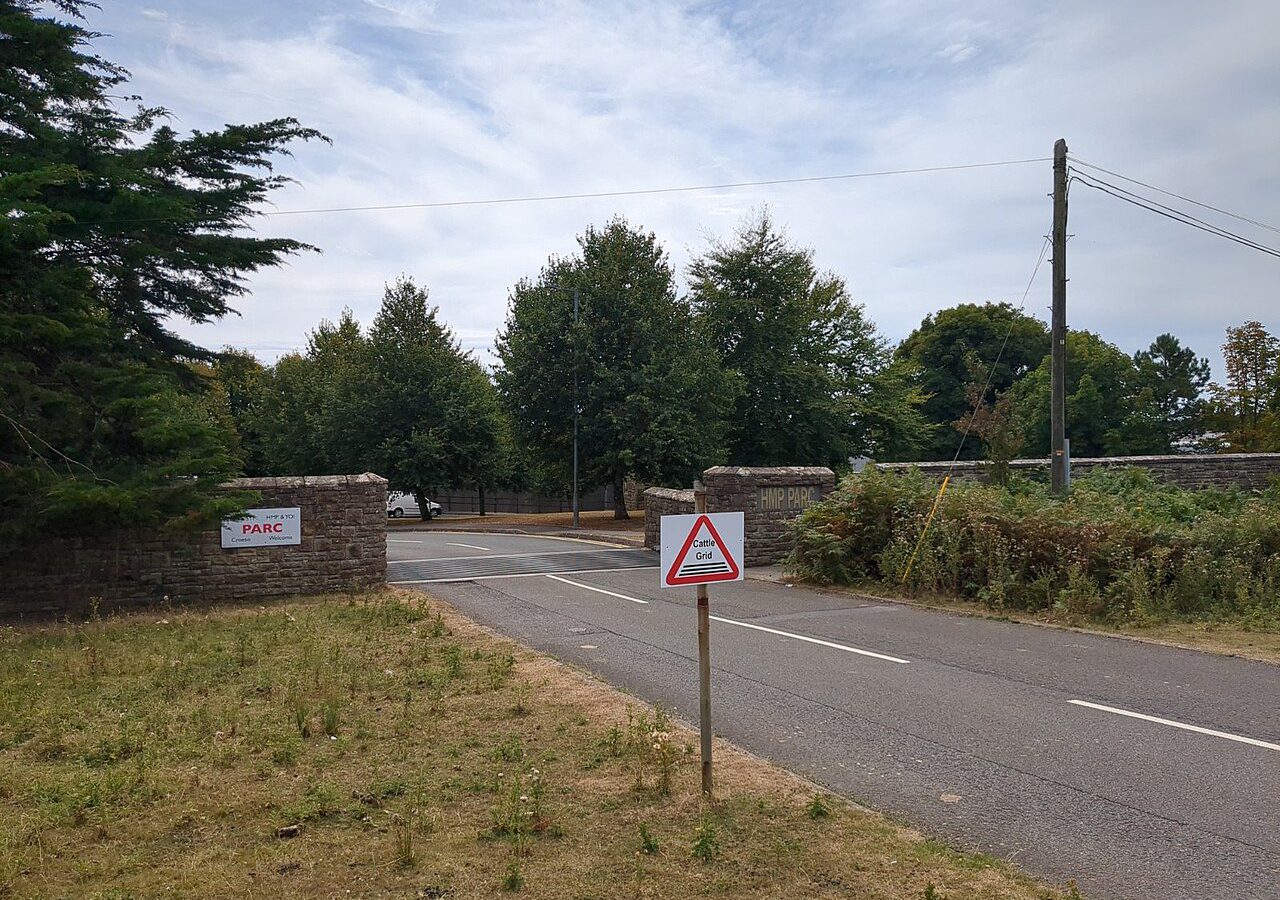
HMYOI Parc achieved the top grade on all four tests inspectors use to assess young offender institutions. That was the finding of HM Inspectorate of Prisons in a report published in July 2022.
HM Chief Inspector of Prisons Charlie Taylor wrote that “this inspection has again shown the facility to be arguably the best performing young offender institution in the country”.
Inspectors visited between 28 March and 8 April 2022. They rated safety, care, purposeful activity and resettlement all good.
The young offender institution, or YOI, held boys aged 15 to 17 within Parc prison near Bridgend in South Wales, but operated as a separate unit. G4S ran it under contract. It could hold up to 60 children, but only 20 were there at the time of the inspection.
Mr Taylor said excellent relationships between children and staff lay behind Parc’s success. The culture was one of engagement, high expectations and rewards for good behaviour.
How the YOI was graded
The inspectorate assesses YOIs against four healthy establishment tests: safety, care, purposeful activity and resettlement. Each receives one of four grades: good, reasonably good, not sufficiently good or poor.
Safety improved from reasonably good in 2019 to good. Care and purposeful activity, which covers education, work and time out of cell, both stayed good. Resettlement also improved to good.
Parc had made mixed progress on earlier recommendations. Of four key concerns from 2019, Parc had achieved the one on resettlement. It had not achieved the one on safety or the two on respect.
Inspectors had also made a scrutiny visit in April 2021, during the COVID-19 pandemic. Parc had achieved one of the two key concerns from that visit.
Operated under contract by the private company G4S, this inspection has again shown the facility to be arguably the best performing young offender institution in the country.
Charlie Taylor, HM Chief Inspector of Prisons
Safety and behaviour
No children told inspectors they felt unsafe, and children confirmed this in private interviews. On almost every safety measure, such as violence and use of force, levels were lower than at comparable institutions.
Staff carried out effective safety interviews at reception, and ninety per cent of children said they felt safe on their first night. Care for children at risk of self-harm was good.
Staff modelled high standards of behaviour and stepped in quickly when violence started, with mediation after fights. Inspectors saw only good behaviour across the unit. However, ongoing conflict between children on the two residential units harmed the overall ethos.
Use of force had fallen and was mostly low level. Few children experienced separation, and the separation regime usually mirrored that of other children.
Inspectors raised one serious concern. A child assessed as needing a specialist mental health bed had spent 14 days in 2021 on the intensive support unit before moving to hospital.
Care, education and time out of cell
Children spoke positively about staff and responded well to the unit’s nurturing ethos. Communal areas were clean and food had improved, with plenty of chances for children to cook. Senior managers served lunch and the evening meal, giving them time with the children. The windows, however, were in poor condition.
Health care had weaknesses. Senior health care managers provided very limited oversight of the children’s unit, though they responded appropriately when inspectors raised this. Two highly motivated nurses provided skilled care.
Time out of cell was much better than at other YOIs. Most children spent between eight and 11 hours a day out of their cells during the week, and four to six hours a day at weekends.
Leaders had sustained this regime through most of the pandemic by managing risk sensibly. Mr Taylor said this was to their great credit.
Estyn, the education inspectorate in Wales, also reported very positively. Nearly all children built skills and gained a good range of qualifications. They made good progress in literacy and numeracy, often from a very low starting point. Attendance, punctuality and behaviour in class were excellent.
Families and resettlement
Parc prioritised family ties. All but one child lived more than 50 miles from home, yet evening and weekend visits and other initiatives encouraged family contact. Inspectors also praised work on sentence management and resettlement planning.
During the year to February 2022, Parc received 59 children and released 46 into the community. On average 43% had been in local authority care before custody.
Mr Taylor described Parc as a very well led institution with visible managers and high morale. He noted one caveat: like other YOIs, it held fairly few children, and a higher roll would likely test its standards.
Even so, he wrote that “on its current performance Parc is setting a standard for the management of children and young people in custody”.
Inspectors have reported on the YOI again since, with an independent review of progress published in March 2023 and a full inspection in January 2024. A further independent review of progress followed in January 2025, and a full inspection in June 2026.
About this story
This story is based on HM Inspectorate of Prisons’ report on HMYOI Parc, published on 20 July 2022, following an inspection that ended in April 2022. It covers an earlier inspection: the prison’s profile has the latest findings. All figures and judgements are the inspectorate’s. Read the full inspection report · See the prison’s profile in our directory.