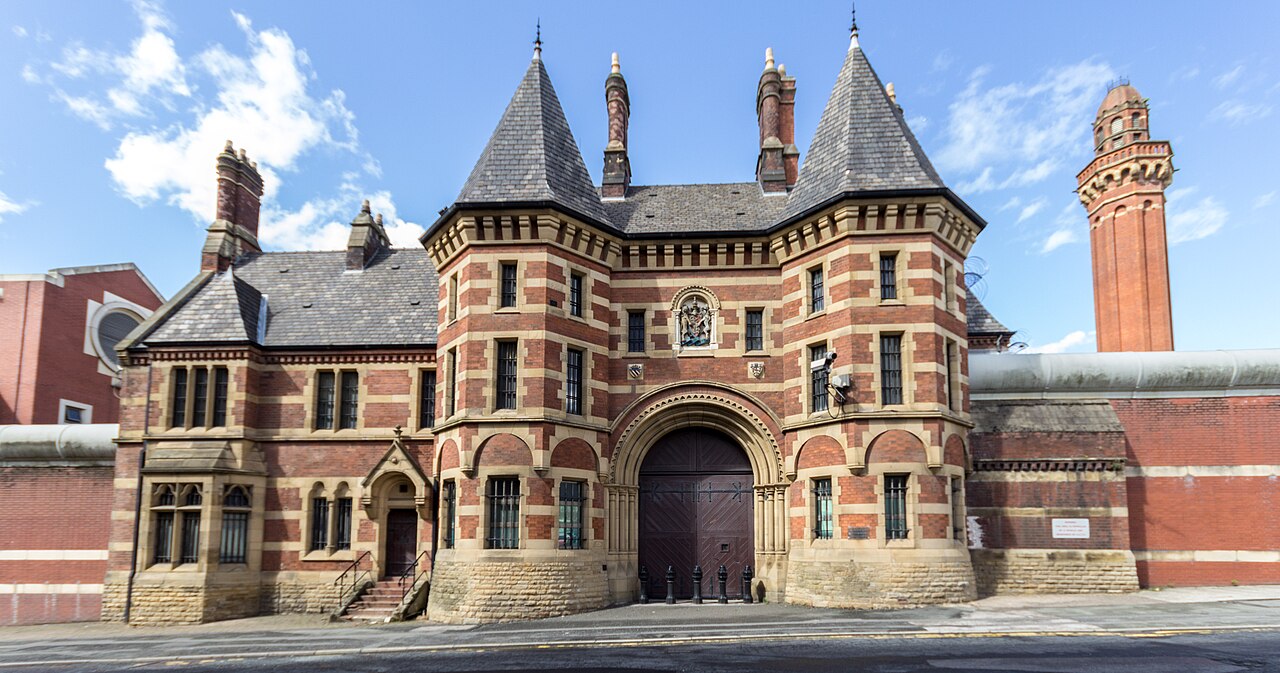
Prisoners at HMP Manchester had little trust in staff, inspectors found, even as leaders worked to change the culture of the prison. The inspectorate’s report, published in December 2021, described a jail in the middle of a difficult transformation.
In 2020, Manchester changed from a local prison to a category B training prison. It kept a small category A function and a separate close supervision centre. At the time of the inspection it held 624 men, and a third of them were serving indeterminate sentences.
Inspectors visited between 6 and 17 September 2021. HM Chief Inspector of Prisons Charlie Taylor said the governor had taken on the challenge of refocusing staff on the rehabilitation of men serving long sentences. However, the COVID-19 pandemic had delayed or derailed much of this work.
Grades at a glance
Inspectors assess every prison against four healthy prison tests. They grade each one as good, reasonably good, not sufficiently good or poor.
Manchester scored not sufficiently good for safety, the same as in 2018. Respect, which covers how staff treat prisoners and their living conditions, improved to reasonably good. Purposeful activity, which covers education, work and time out of cell, scored not sufficiently good. Rehabilitation and release planning, which looks at preparing men for release, also scored not sufficiently good.
Progress on earlier key concerns was limited. The prison had not achieved the single 2018 key concern on safety or the one on purposeful activity. Of three key concerns on respect, it had achieved one, partly achieved one and not achieved one.
If HMP Manchester is to make the transformation from a security-focused local prison to a category B training prison that rehabilitates the often challenging and complex men in its care, the prison service will need to make sure that this strong and effective governor has the time and money to complete the job.
Charlie Taylor, HM Chief Inspector of Prisons
Trust, staff culture and safety
Lack of trust ran through the inspection. Prisoners did not believe staff would deal with complaints robustly. They could not get hold of their stored property, and the visits booking line rang unanswered. Applications often went without a response.
Vulnerable prisoners on K wing reported high levels of victimisation by staff.
The governor had moved his office, and those of senior managers, onto the wings to raise their visibility. He had introduced a new complaints system and new checks on responses to discrimination allegations. Inspectors saw many good and caring interactions, and those who had joined the previous inspection noticed an improvement in the atmosphere.
Some officers, however, showed a lack of engagement and poor attitudes. Inspectors criticised reluctance to switch on body-worn cameras and the unnecessary use of an aggressive, barking dog when staff moved prisoners to the segregation unit. They also criticised the strip-searching of prisoners on release.
In the survey, 25% of prisoners said they felt unsafe. Overall violence had fallen since 2018, but the rate of serious assaults had risen. Staff used force less often, although de-escalation was inadequate in many incidents that inspectors reviewed.
Self-harm, segregation and drugs
Since 2018, five men had taken their own lives. Five other deaths had not come from natural causes, and some had links to drug use.
The report said the prison had neglected its strategic approach to reducing self-harm. Monthly safety meetings had poor attendance, and leaders had not analysed data to understand the causes. Only 50% of prisoners who had been on an ACCT, the case management process for those at risk of suicide or self-harm, said they felt cared for.
The segregation unit had improved markedly. Inspectors had criticised it heavily at the previous inspection. This time they found a better physical environment and good work to help men with complex needs return to the main prison, with impressive input from psychologists.
Leaders had held a drug summit, where staff and prisoners discussed how to reduce the supply of drugs. An action plan followed, and inspectors said it looked promising. Drug testing, however, lost some of its effect because staff did not always act on a positive result.
Regime, conditions and what came next
With COVID-19 restrictions still in place, many prisoners spent too long in their cells. Few jobs existed, offending behaviour programmes were very limited, and face-to-face education was practically non-existent. Staff shortages restricted access to the library, gym and workshops.
Living conditions had improved in some ways. All but a few prisoners had single cells, showers had improved, and new wing kitchens would soon let men cook their own food. Some cells still needed refurbishment, including broken windows and damp.
The Chief Inspector of Prisons noted that 10 governors had led the prison since the turn of the century. He said this turnover explained why so many deep-set problems remained. In his view, “the prison service will need to make sure that this strong and effective governor has the time and money to complete the job”.
Inspectors have reported on HMP Manchester again since. The Chief Inspector of Prisons issued an Urgent Notification in October 2024, and full inspection reports followed in January 2025 and April 2026.
About this story
This story is based on HM Inspectorate of Prisons’ report on HMP Manchester, published on 21 December 2021, following an inspection that ended in September 2021. It covers an earlier inspection: the prison’s profile has the latest findings. All figures and judgements are the inspectorate’s. Read the full inspection report · See the prison’s profile in our directory.