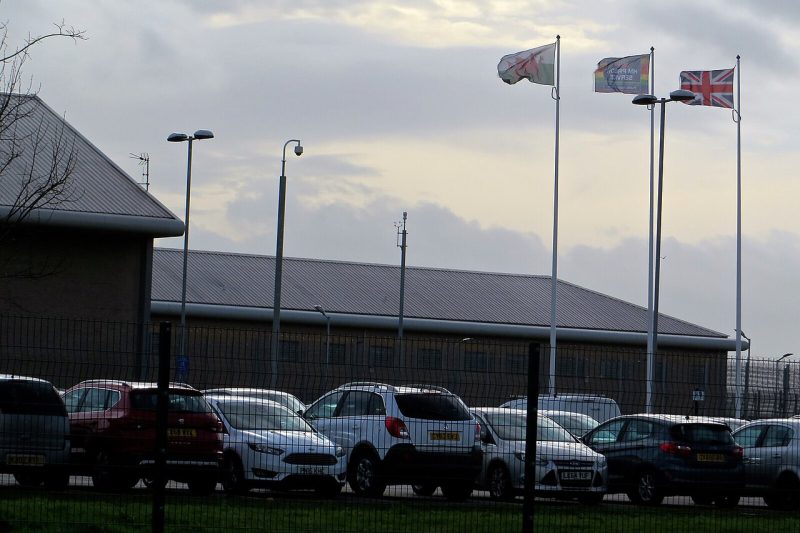
HMP Holme House in Stockton was falling well short of its purpose as a category C training prison. That was the verdict of HM Inspectorate of Prisons in a report published in June 2020.
Inspectors judged outcomes not sufficiently good against all four of their tests. The situation was no better than at the previous inspection in 2017. In one area, purposeful activity, it had become worse.
HM Chief Inspector of Prisons Peter Clarke wrote that it was clear “the prison was falling well short of achieving its purpose as a training prison for category C prisoners”. He pointed to poor relationships between staff and prisoners as a root cause.
The inspection took place in late February and early March 2020, just before the full onset of the COVID-19 crisis. The report therefore did not address the effect of the pandemic on the prison.
How inspectors graded the prison
The inspectorate assesses prisons against four healthy prison tests. At the time, these were safety, respect, purposeful activity, and rehabilitation and release planning. Purposeful activity covers education, work and time out of cell. Rehabilitation and release planning covers family ties, offender management, public protection and preparation for release.
At Holme House, inspectors judged all four not sufficiently good. Safety, respect, and rehabilitation and release planning stayed at that level from 2017. Purposeful activity fell from reasonably good.
The prison opened in May 1992 as a category B jail. It became a category C training prison in 2017 and formed part of the Tees and Wear Prisons Group. At the time of the inspection, it held 1,183 men against an operational capacity of 1,210. Over a third of prisoners lived in overcrowded conditions.
At the 2017 inspection, the inspectorate made 62 recommendations. By 2020 the prison had achieved 24 and partly achieved eight. It had not achieved 29.
Overall it was clear to us that the prison was falling well short of achieving its purpose as a training prison for category C prisoners.
Peter Clarke, HM Chief Inspector of Prisons
Safety: drugs down, self-harm up
The prison was still not safe enough, the report found. Arrangements to receive and induct new prisoners were inadequate. More than one in five prisoners said they felt unsafe.
Overall levels of violence matched those at similar prisons. Even so, inspectors said the prison could have done much more to improve safety and reduce violence further. The use of force was not proportionate in every case inspectors reviewed. They also had concerns about the regime and the behaviour of some staff in the segregation unit.
There was better news on drugs. Significant investment and a coordinated strategy had cut the availability of illicit substances sharply. In 2017, the report noted, the problem had been almost out of control. Positive drug testing rates had dropped significantly.
The prison was part of the Drug Recovery Prison project, which was set to bring around £9 million over three years. Its substance misuse therapeutic community was one of only two in England and Wales. Inspectors called it a well-managed national resource.
Since the last inspection, three prisoners had taken their own lives, and self-harm had increased significantly. The report described the prison’s response as inconsistent. The quality of support for men struggling to cope was too variable.
Relationships and daily life
The report placed relationships at the centre of the prison’s difficulties. Peter Clarke wrote that “at the heart of many of the prison’s problems were poor staff-prisoner relationships which were due partly to staff indifference”. He called for a more proactive culture that supported rehabilitation.
The prison had embedded a reasonably effective keyworker scheme, in which officers meet individual prisoners regularly. However, the general environment, overcrowding and the quality of accommodation needed improvement. So did the food and the systems that let prisoners raise complaints.
The promotion of equality was getting better, and health outcomes were good.
Time out of cell fell below what inspectors expect at a training prison. They found a third of prisoners locked up during the working day. Attendance and punctuality at activities were sporadic and inconsistent. The curriculum did not fully meet prisoners’ needs, and allocation to classes and workshops was not good enough.
Ofsted, which inspects prison education, judged the overall effectiveness of education, skills and work as requires improvement. That is its second lowest grade.
Release planning and later inspections
Offender management showed some progress. The prison had a well-resourced offender management unit, now better linked with its resettlement work. OASys risk assessments were more up to date than in 2017, though direct contact between offender managers and prisoners was disappointing. Public protection measures were satisfactory, and release planning was reasonably good.
The Chief Inspector of Prisons said the prison seemed reasonably well resourced and its purpose clearly defined. Success, he wrote, would depend on staff engaging constructively and consistently with prisoners, raising their expectations and lifting standards generally.
Inspectors have reported on Holme House again since, with a full inspection published in June 2023. This article covers the report published in June 2020.
About this story
This story is based on HM Inspectorate of Prisons’ report on HMP Holme House, published on 17 June 2020. It covers an earlier inspection: the prison’s profile has the latest findings. All figures and judgements are the inspectorate’s. Read the full inspection report · See the prison’s profile in our directory.