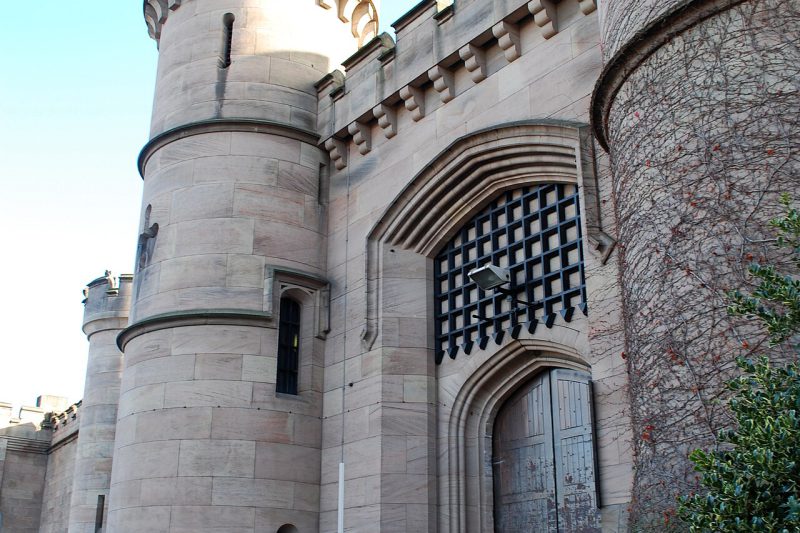
HMP Frankland, one of the most secure prisons in the country, continued to deliver reasonable outcomes for the men it held, inspectors found. HM Inspectorate of Prisons rated the jail reasonably good against all four of its healthy prison tests.
The inspectorate’s report, published in May 2020, followed an inspection between 13 and 24 January 2020. It also found that self-harm had risen and that about 30% of prisoners were locked up during the working day.
Frankland, near Durham, held around 840 convicted adult men at the time. More than 250 were category A, the highest security classification, and nine of those were high-risk category A. Almost all were serving more than ten years, and most were serving indeterminate or life sentences. Frankland opened in 1983 as the first purpose-built dispersal prison.
The grades
The inspectorate judges prisons against four healthy prison tests. At Frankland these covered safety, respect, purposeful activity, and rehabilitation and release planning. Purposeful activity covers education, work and time out of cell.
Inspectors rated all four reasonably good. Safety, respect, and rehabilitation and release planning held the same grade as at the previous inspection in 2016. Purposeful activity slipped from good to reasonably good.
At the 2016 inspection, inspectors made 31 recommendations. This time they found that the prison had achieved 19 and partially achieved one. It had not achieved the remaining 11.
The prison also contained a separation unit for a small number of men judged to pose a particular risk to national security. That unit did not form part of this inspection. The inspectorate said it would inspect it separately.
In the context of a settled and stable training establishment we were surprised to find about 30% of prisoners locked up during the working day, including the majority of those who had reached retirement age.
Peter Clarke, HM Chief Inspector of Prisons
Safety, drugs and self-harm
Most prisoners reported feeling safe, and overall violence was low despite the risks the population posed. New arrivals received a good induction. Use of force had increased but remained lower than at similar prisons, and accountability for it was generally good.
The regime in segregation stayed limited and many stays there were very long. But relationships on the unit were good. A promising case management approach showed early signs of breaking the cycle of long-term segregation.
The security department was extensive and well resourced. Inspectors heard of robust procedures for monitoring potential extremism and corruption. Drug testing, however, suggested more illicit drugs were available than at other high security prisons. Prisoners told inspectors that drugs were easy to get hold of.
Since the last inspection, one prisoner had taken his own life. Levels of self-harm had increased and were higher than at similar prisons. HM Chief Inspector of Prisons Peter Clarke wrote that the prison’s response was mixed and that the issue needed greater priority. Case management of men in crisis varied greatly, though those inspectors spoke to felt cared for.
Respect, work and education
Inspectors found relationships between staff and prisoners relaxed and informal, and most men felt respected. Living conditions were satisfactory across most of the prison. The chaplaincy was a strength, and health care and substance misuse services were good. Work to promote equality and diversity needed improvement.
The share of men locked up during the working day surprised inspectors. Peter Clarke described Frankland as “a settled and stable training establishment”. Yet about 30% of prisoners were in their cells during the working day, including most of those past retirement age.
Leaders and managers had worked well together to provide a reasonably good regime and education. Teaching and learning were good, and peer supporters gave useful help. Achievements were generally high despite low attendance in education. Workshops and prison work, however, offered too little accreditation.
Ofsted judged the overall effectiveness of education, skills and work as good.
Managing risk
The prison had a good understanding of prisoner risk and need, and public protection arrangements were robust. Most prisoners had an up-to-date OASys assessment, and most of these were of good quality. Staff caseloads were high, though, and case management was too often poorly coordinated.
There were enough offending behaviour interventions to meet most need, along with very good psychology-led one-to-one work. Inspectors recognised the Westgate units, which treat complex personality disorders, as centres of excellence.
Peter Clarke called Frankland “a large and complex high security prison with many challenges”. He said outcomes for prisoners continued to be good despite this.
Since the inspection
Inspectors have reported on Frankland again since. A full inspection report followed in July 2024.
About this story
This story is based on HM Inspectorate of Prisons’ report on HMP Frankland, published on 5 May 2020, following an inspection that ended in January 2020. It covers an earlier inspection: the prison’s profile has the latest findings. All figures and judgements are the inspectorate’s. Read the full inspection report · See the prison’s profile in our directory.